Open Nav

The Chinese Electronics Manufacturing landscape has undergone a dramatic transformation over the past three decades, evolving from a labor-intensive assembly hub to a sophisticated center of automated production excellence. Within this evolution, Surface Mount Technology has emerged as the dominant assembly methodology for mass production, fundamentally reshaping how companies approach PCB assembly when scaling from prototype volumes to millions of units. Understanding why Smt Assembly has achieved this dominance over traditional Through-hole Technology provides essential insights for companies seeking to optimize their manufacturing strategies in China or globally.
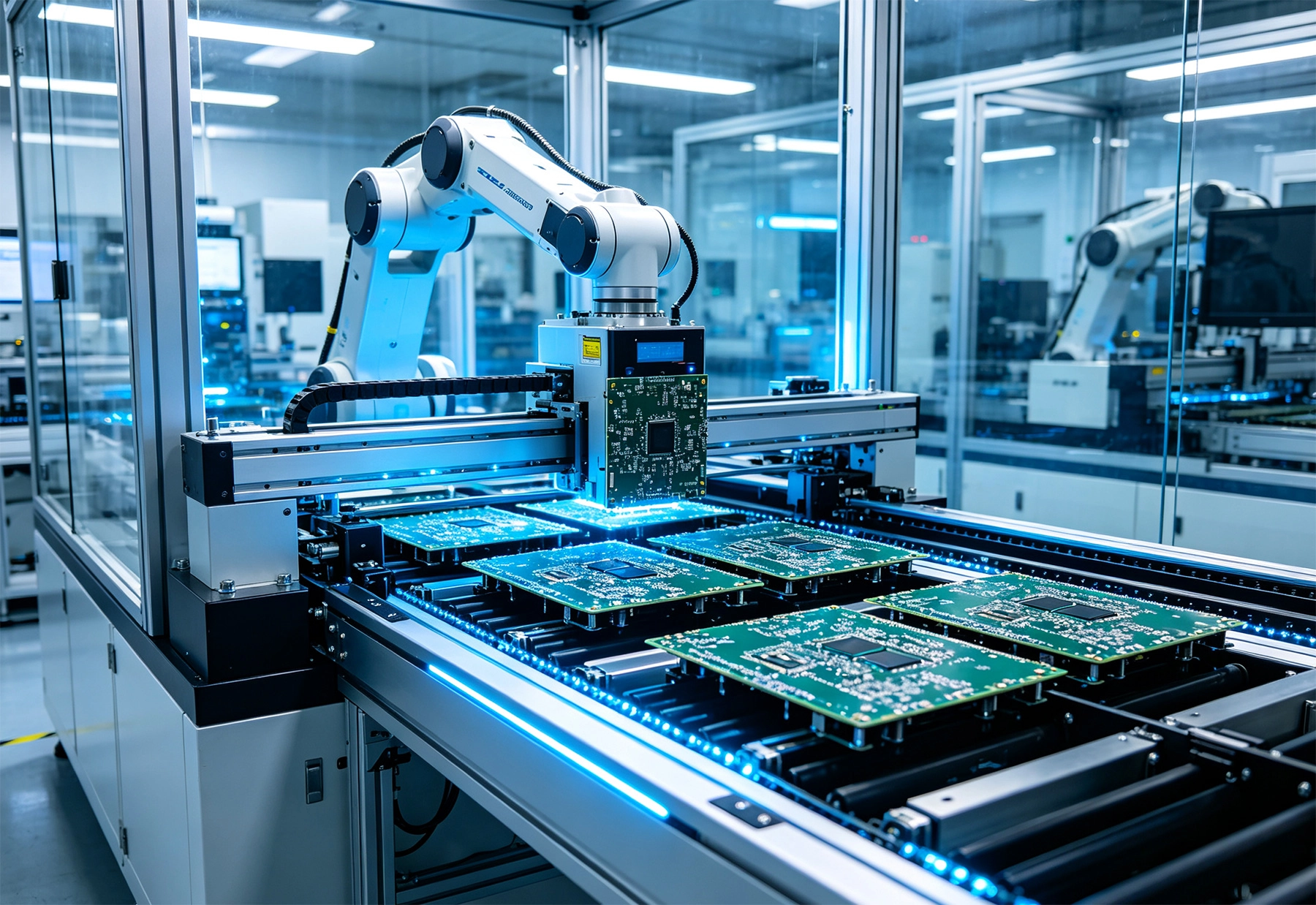
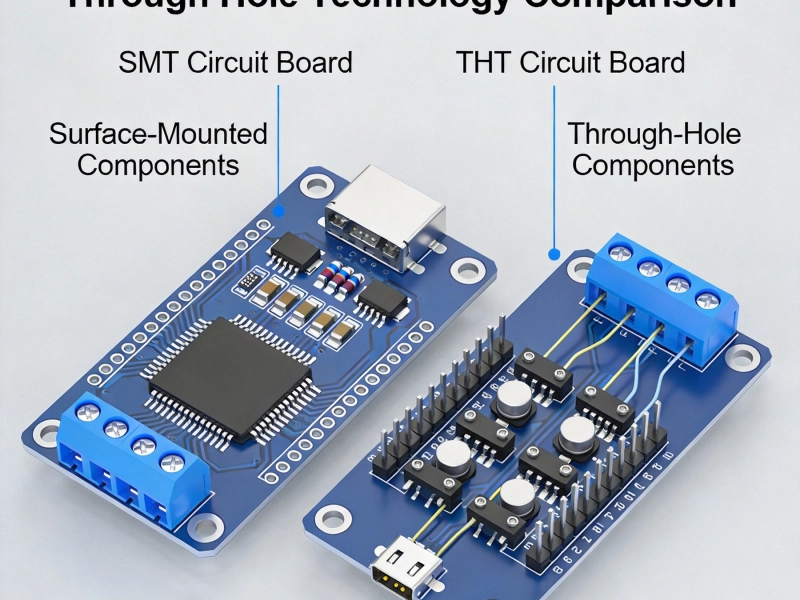
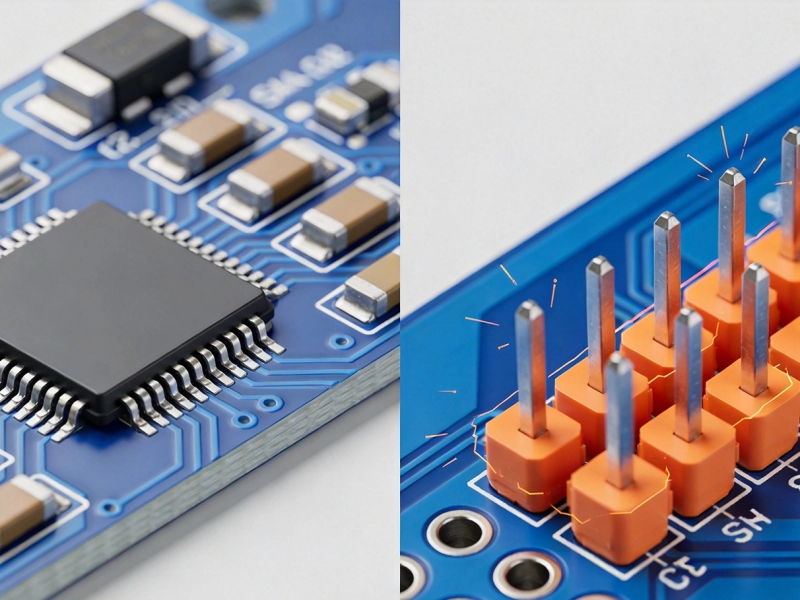
Surface Mount Technology and Through-hole Technology represent fundamentally different approaches to mounting electronic components onto printed circuit boards. Through-hole technology, the older of the two methods, involves inserting component leads through holes drilled in the PCB and soldering them to pads on the opposite side. This approach creates strong mechanical bonds suitable for applications requiring rugged interconnections but consumes significant board area and requires more complex board structures to accommodate the drilling operations.
Surface Mount technology takes a different approach, placing components directly onto the surface of the PCB with their leads or termination points resting on pads without requiring drilled holes. Components are held in place by solder paste applied to the pads before placement, with the solder reflowing during heating to create permanent electrical and mechanical connections. This methodology enables much higher component densities, smaller board sizes, and more automated production processes than through-hole methods can achieve.
The comparison between these technologies becomes particularly relevant for mass production decisions where efficiency, cost, and quality consistency drive profitability. While through-hole technology retains advantages in specific applications including high-power components, connectors requiring mechanical robustness, and components subject to significant stress, the broader production economics strongly favor SMT for the majority of contemporary Electronics Manufacturing scenarios.
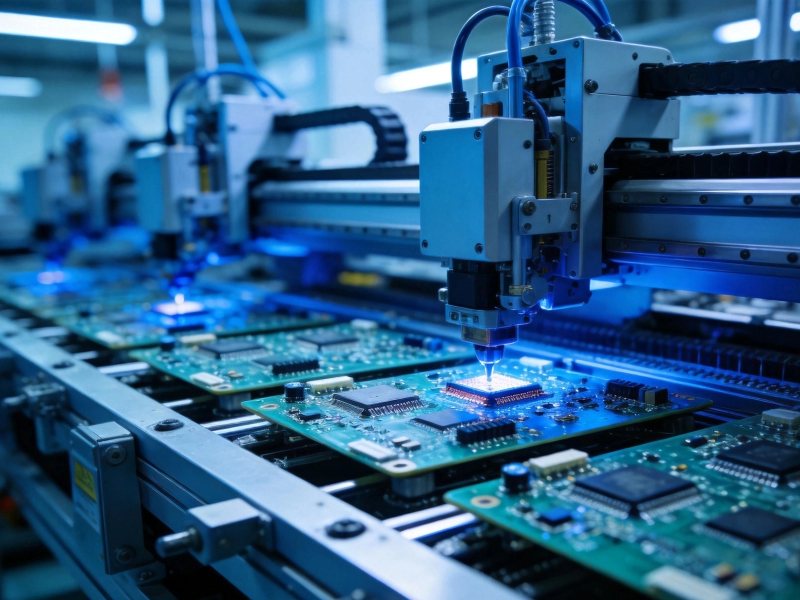
Pick And Place machines represent the core automation technology enabling Smt Assembly dominance, capable of positioning thousands of components per hour with placement accuracies measured in microns. These sophisticated systems employ vision systems for component recognition, flexible feeding systems for component delivery, and precision motion control for accurate placement. Modern high-speed Pick And Place lines can achieve placement rates exceeding 50,000 components per hour while maintaining placement accuracy better than 0.05mm, volumes and precision impossible for human assembly operators to match consistently.
The automation extends beyond placement to encompass the entire Smt Assembly Process. Solder paste printers apply precise quantities of solder paste to pads with accuracy measured in贴片 thickness variation of microns. Automated Optical Inspection systems verify paste deposition before Component Placement, identifying missing paste, insufficient paste, or paste bridging that could cause defects. Reflow ovens provide controlled heating profiles that ensure consistent solder melting and solidification across entire production panels, eliminating the variability inherent in hand soldering operations.
Conveyor systems and material handling automation integrate these individual operations into continuous production lines that operate with minimal human intervention. Panel loaders and unloaders, automated storage and retrieval systems for components, and automated packaging of finished boards create fully automated workflows from bare board input to completed assembly output. This level of automation enables production facilities to operate with remarkably few operators relative to production volume, dramatically reducing labor costs per unit produced.
Labor cost differentials between SMT and THT assembly become starkly apparent when examining mass production economics. SMT automation enables a single operator to oversee production lines capable of assembling thousands of boards per shift, with the operator's role shifting from active assembly to monitoring, troubleshooting, and material replenishment. Through-hole Assembly, by contrast, requires significant operator involvement in component insertion, inspection, and correction, creating labor requirements that scale directly with production volume.
China's evolving labor cost structure makes this automation advantage increasingly significant. Rising wages, reduced labor availability, and increasing worker expectations have fundamentally changed the economics of labor-intensive assembly. Facilities that invested early in SMT automation now enjoy cost structures that remain competitive despite higher average wages, while those relying on labor-intensive Through-hole Assembly struggle with escalating costs that erode competitiveness in mass production scenarios.
Material efficiency also favors SMT assembly in most production scenarios. SMT components generally cost less than equivalent through-hole versions due to simpler construction and higher production volumes in the component industry. Board area efficiency reduces PCB costs by enabling smaller boards for equivalent functionality. The elimination of drilling operations in SMT boards removes a manufacturing step while reducing material waste associated with drill bit consumption and drilled-hole reliability issues.
Automated SMT assembly achieves levels of quality consistency that human operators cannot match over extended production runs. Machines do not experience fatigue, boredom, or distraction that cause quality variations in manual assembly operations. Placement accuracy remains constant throughout a production run regardless of whether the line runs for one hour or twenty-four hours continuously. Solder paste deposition and reflow profiles maintain consistency that eliminates the variability inherent in hand-soldered connections.
Statistical process control capabilities in automated SMT lines enable real-time monitoring of production quality with immediate detection of process drift. Automated inspection systems identify defects as they occur rather than after entire batches complete processing, enabling immediate corrective action that prevents defect propagation. This real-time feedback creates closed-loop control systems that maintain quality within specification limits throughout production runs.
Traceability systems integrated with automated assembly equipment enable complete tracking of components, processes, and quality data for every board produced. When quality issues arise, traceability data identifies which components from which lots were used, what process parameters occurred during assembly, and what inspection results were recorded. This traceability proves invaluable for root cause analysis and for demonstrating due diligence in regulated industries where documentation requirements are stringent.
Production throughput in automated SMT assembly vastly exceeds what through-hole methods can achieve for most board configurations. A modern high-speed SMT line can assemble a complex consumer board containing hundreds of components in seconds, with the limiting factor being oven conveyor speed rather than placement time. Through-hole assembly, requiring individual component insertion and Wave Soldering or selective soldering processes, operates at fractions of SMT line speeds for equivalent component counts.
The speed advantage compounds through production planning efficiency. Faster cycle times enable just-in-time production models that reduce inventory carrying costs while maintaining delivery commitments. Facilities can respond more quickly to order fluctuations without maintaining excessive safety stock. The agility enabled by fast production throughput provides operational flexibility that through-hole dominated facilities cannot match.
Quick changeover capabilities in modern SMT lines enable efficient production of varied board types without extended setup times. Tooling systems for different board sizes, feeder configurations for different component sets, and program libraries for different board types enable changeovers measured in minutes rather than hours. This flexibility supports high-mix production scenarios where multiple board types run in smaller batches, a scenario increasingly common as product lifecycles shorten and customization increases.
The component industry has overwhelmingly embraced Surface Mount packages, with many new components available exclusively in SMT configurations. While some through-hole components remain essential for specific applications, the availability advantage strongly favors surface mount. Components designed for Smt Manufacturing benefit from automated handling and placement, with packages optimized for pick and place compatibility. The Continuous Improvement of SMT packages by component manufacturers ensures that surface mount technology remains at the leading edge of Miniaturization.
New technology introductions consistently favor surface mount packages, with advanced components available only in the smallest SMT footprints. Ball grid arrays, chip scale packages, and wafer level chip scale packages provide functionality impossible in through-hole packages while enabling the Miniaturization consumers demand. Companies committed to through-hole assembly face increasing component availability constraints that ultimately limit their ability to incorporate advanced functionality into their products.
The secondary market for components similarly reflects SMT dominance, with greater availability of surplus and obsolete SMT components compared to through-hole equivalents. This availability advantage extends the productive life of designs by enabling longer production runs even as components transition through their lifecycle phases. Companies can maintain production continuity more easily when SMT component availability remains robust.
Chinese Electronics Manufacturing has developed specialized expertise in SMT assembly that represents a significant competitive advantage for companies producing there. The concentration of SMT equipment manufacturers, component suppliers, and experienced personnel in China creates an ecosystem that continues advancing capabilities while reducing costs. Investment in the latest SMT equipment flows to Chinese facilities first, ensuring that production capabilities remain at the global technology frontier.
Training and expertise development in SMT operations has become deeply embedded in Chinese manufacturing culture. Technical schools and training programs produce qualified SMT operators, technicians, and engineers who understand surface mount technology thoroughly. This human capital development supports Continuous Improvement and innovation in SMT processes, creating expertise advantages that other regions struggle to match given smaller manufacturing scales.
Supply chain integration in China provides additional SMT advantages through proximity to component suppliers, equipment manufacturers, and supporting services. The just-in-time delivery models that SMT enables work most effectively when supply chains are short and responsive. Chinese manufacturing clusters where components flow from suppliers to assembly lines within hours rather than days enable the inventory efficiency that SMT production models require.
Despite SMT's overwhelming advantages for mass production, through-hole technology retains relevance in specific scenarios where its characteristics provide unique benefits. Connectors requiring high mechanical retention force for cable connections benefit from through-hole mounting that provides superior pull-out resistance. Components subject to physical stress including large electrolytic capacitors, transformers, and relays often benefit from through-hole mounting that withstands mechanical loading without solder joint fatigue.
High-power components generating significant heat may require through-hole mounting that provides superior thermal conductivity from component to PCB. The direct thermal path through the board in through-hole mounting exceeds what surface mount thermal interface materials can achieve, making THT appropriate for power components where Thermal Management is critical. High-current paths also benefit from through-hole plating that provides lower resistance than surface mount termination geometries.
Repair and rework considerations sometimes favor through-hole for products requiring field service. While modern SMT repair has become quite capable, through-hole connections remain somewhat easier to service with basic tools. Products intended for military or aerospace field deployment where sophisticated repair equipment may not be available sometimes retain through-hole components to ensure serviceability under challenging conditions.
Most sophisticated electronics products employ hybrid assembly strategies that combine SMT and THT based on the specific requirements of each component. This approach captures the automation and efficiency benefits of SMT for most components while retaining through-hole for components requiring its specific advantages. Selective soldering equipment enables efficient through-hole assembly on boards already processed through SMT lines, integrating both technologies without the complexity of Wave Soldering.
Planning for hybrid assembly requires thoughtful component selection and Pcb Design that accommodates both technologies. Component Placement planning must sequence operations to prevent SMT components from interfering with through-hole insertion or soldering. PCB designers must specify through-hole and surface mount versions of components appropriately based on application requirements and production volume expectations.
The trend toward increasingly hybrid approaches will likely continue as products combine shrinking SMT components with specific through-hole elements. Even highly miniaturized products like smartphones retain a small number of through-hole components for connectors and components requiring specific mechanical or thermal characteristics. Understanding how to design for hybrid assembly enables product architectures that capture benefits from both technologies.
SMT technology continues advancing with ever-increasing automation capabilities that will further entrench its position against through-hole alternatives. Artificial intelligence and machine learning are beginning to transform SMT operations through intelligent process optimization, predictive maintenance, and automated defect detection. These technologies will increase automation levels further while reducing the expertise required to achieve consistent quality.
Advanced packaging technologies including embedded components and 3D assembly will extend SMT capabilities into domains previously requiring different approaches. Components embedded within PCB substrates, while still emerging, promise to eliminate surface mount area requirements entirely for some component types. These developments will expand the range of applications where SMT can provide solutions rather than requiring alternative assembly approaches.
Sustainability trends favor SMT through reduced material consumption, lower energy requirements per unit produced, and better end-of-life recyclability. The smaller boards enabled by SMT require less raw material to produce, while more efficient automation reduces energy consumption. These environmental advantages align with growing emphasis on sustainable manufacturing that will increasingly influence production technology decisions.
The dominance of SMT assembly in Chinese mass production stems from fundamental advantages in automation capability, cost efficiency, quality consistency, and throughput speed that through-hole technology cannot match for the majority of Electronics Assembly scenarios. These advantages have been amplified by China's manufacturing ecosystem investments in SMT expertise, equipment, and supporting infrastructure that position Chinese facilities at the global technology frontier.
Companies making manufacturing strategy decisions should recognize SMT as the default choice for mass production while reserving through-hole for specific applications where its unique characteristics provide necessary benefits. Hybrid assembly strategies enable capturing advantages from both technologies while minimizing their respective limitations. The continued evolution of SMT capabilities will only strengthen this position, making investment in SMT expertise and equipment increasingly essential for competitive Electronics Manufacturing.
The strategic implications extend beyond individual production decisions to encompass broader manufacturing ecosystem considerations. Companies committed to through-hole assembly will find themselves increasingly marginalized as component availability, cost pressures, and capability gaps compound over time. Those who embrace SMT and develop expertise in its capabilities position themselves to capture the ongoing benefits of automation-driven efficiency improvements that will continue accelerating the shift away from labor-intensive assembly methods.
The Evolution of Electronics in China: From THT to High-Density SMT PCB AssemblyAugust/06/2026
SMT vs THT PCB Assembly in China: Which Technology is Right for Your Project?June/08/2026
Mixed Assembly Explained: Combining SMT and THT on One PCB in ChinaSeptember/01/2026

The Pros and Cons of SMT and THT in China's Electronics Manufacturing LandscapeJune/25/2026
Which Technology is Right for Your Project?May/29/2026
Understanding the Mechanical Strength Differences: SMT vs THT Assembly in ChinaJuly/27/2026
Cost Comparison: SMT vs THT PCB Assembly Services in ChinaJuly/07/2026
How to Reduce SMT PCB Assembly Costs in China with Early DFM AnalysisJune/17/2026