Open Nav

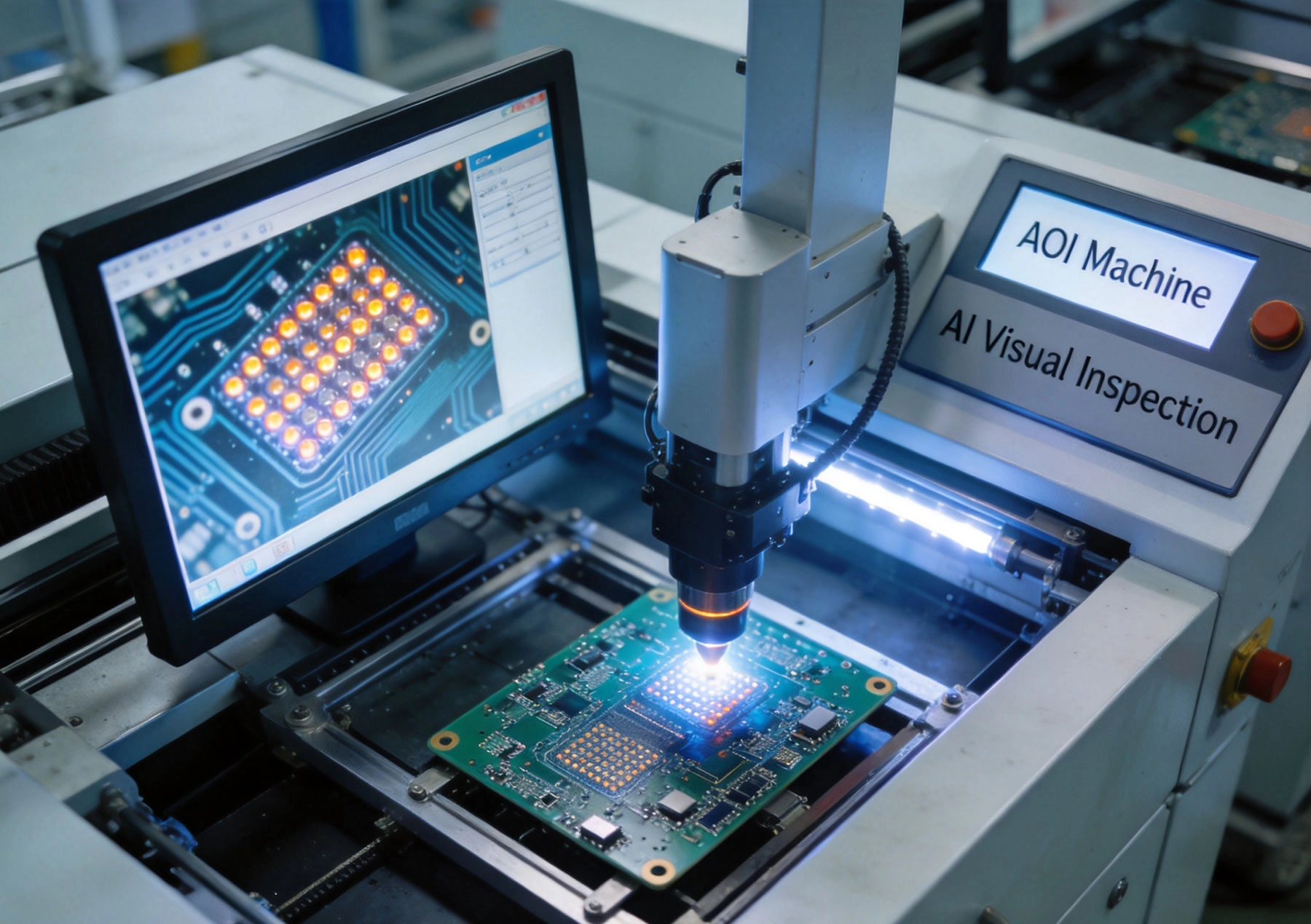
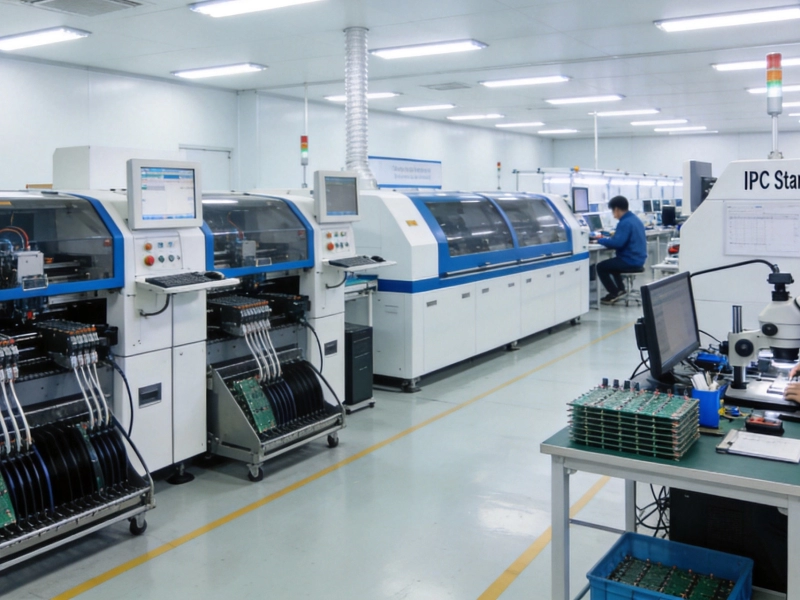
Walk through any modern Smt Assembly line in Shenzhen, Suzhou, or Dongguan today, and you'll notice something remarkable: quality inspection happens continuously, automatically, and with precision that would be impossible for human inspectors alone. At the heart of this transformation is Automated Optical Inspection (AOI) technology—a cornerstone of China's Electronics Manufacturing dominance that ensures every circuit board meets exacting quality standards before it reaches your hands.
China's Electronics Manufacturing industry produces over 50% of the world's Consumer Electronics and a substantial portion of industrial, automotive, and Medical Electronics. This massive scale demands quality control systems that can inspect millions of components daily without fatigue, inconsistency, or error. AOI has become the unsung hero enabling this manufacturing miracle, catching defects that would otherwise escape to cause field failures, customer returns, and reputational damage.
Having worked with electronics manufacturers across China's manufacturing heartlands, I've seen AOI evolve from a luxury add-on to an essential production line component. The technology has matured dramatically over the past decade, with Chinese manufacturers often deploying the most advanced AOI systems globally. Understanding AOI's role helps appreciate how China maintains quality at the massive scale required for global electronics production.
Automated Optical Inspection (AOI) uses machine vision technology to inspect populated PCBs for defects without physical contact. An AOI system consists of high-resolution cameras, specialized lighting, sophisticated image processing algorithms, and automated handling systems that work together to examine every board passing through the production line.
Modern AOI systems can inspect:
Unlike human inspectors who tire, get distracted, and interpret inconsistently, AOI systems provide consistent, repeatable inspection results 24 hours a day, 7 days a week.
Aoi Inspection follows a systematic process:
This process happens in seconds per board, enabling 100% inspection without creating production bottlenecks.
AOI is one of several inspection technologies used in Smt Manufacturing:
The most effective quality strategies combine multiple inspection technologies, with AOI serving as the primary inspection method for most boards.
AOI technology in China has evolved through distinct generations:
Chinese manufacturers have been rapid adopters of the latest AOI technologies, often implementing advanced systems years before Western competitors. This technology embrace has been essential for maintaining quality at the massive volumes Chinese factories produce.
Several factors have driven China's leadership in AOI adoption:
The combination of these factors has created a self-reinforcing cycle where leading manufacturers continuously upgrade inspection capabilities.
The first AOI checkpoint occurs after Solder Paste Printing:
SPI (Solder Paste Inspection) uses 3D measurement technology to verify paste deposits meet specifications before components are placed. This inspection point can prevent the majority of assembly defects when properly implemented.
After component placement but before reflow:
This inspection point is critical for components that are expensive, difficult to rework, or that would be damaged by reflow before detection.
The most comprehensive inspection point:
Post-reflow AOI provides the most complete picture of assembly quality and serves as the primary quality gate for most production lines.
Before boards leave the factory:
Some manufacturers add additional inspection points based on specific product requirements or customer quality specifications.
Modern AOI systems use 3D measurement technology:
3D AOI provides significantly better detection capability for solder defects compared to 2D systems, especially for fine-pitch components and BGAs.
The latest AOI systems incorporate artificial intelligence:
AI-powered AOI can reduce false positive rates by 50-70% compared to traditional rule-based systems, dramatically reducing operator review workload and improving inspection efficiency.
Advanced systems inspect across multiple domains:
These capabilities enable comprehensive inspection coverage that catches defects invisible to single-mode systems.
AOI's primary benefit is catching defects:
Well-implemented AOI systems can achieve defect detection rates exceeding 95% for most defect types, dramatically reducing escaped defects reaching customers.
AOI data enables Continuous Improvement:
Leading manufacturers use AOI data not just for pass/fail decisions but as a continuous process improvement tool.
Despite equipment costs, AOI reduces overall manufacturing costs:
The ROI calculation typically shows AOI paying for itself within 12-24 months through these savings.
AOI provides documented quality assurance:
In today's quality-conscious market, AOI capability has become a prerequisite for winning contracts with demanding customers.
The most significant AOI challenge is false positives:
High false positive rates waste inspector time and can lead to "inspection fatigue" where real defects are missed. Modern AI systems have dramatically reduced this problem.
AOI cannot detect all defects:
These limitations are why X-ray Inspection remains important for boards with BGA and QFN components.
Challenging boards create inspection difficulties:
These challenges require careful AOI system selection and configuration for specific product types.
AOI systems require significant setup effort:
Modern AOI systems have reduced programming time significantly, but setup remains a consideration for high-mix manufacturing environments.
Position AOI checkpoints strategically:
Not every product needs every inspection point—match inspection strategy to product requirements and defect history.
Choose systems matching your requirements:
Chinese AOI manufacturers like Allied, Saki, and Omron have strong market positions, but international brands also serve the Chinese market effectively.
AOI requires ongoing attention:
The best AOI implementations are continuously improving, not just passively inspecting.
Human factors affect AOI effectiveness:
Even with AI assistance, human operators remain essential for AOI system effectiveness.
AOI is embracing advanced AI:
AI-powered AOI will continue improving, approaching human-level detection capability while maintaining consistency and speed.
AOI is becoming part of smart factory ecosystems:
Smart factories of the future will use AOI not just for inspection but as a sensor network feeding continuous improvement across all processes.
New imaging technologies are expanding AOI capabilities:
These advanced imaging technologies will enable detection of defects currently invisible to conventional AOI systems.
Consumer products drive massive AOI deployment:
Consumer Electronics manufacturers have pioneered advanced AOI techniques now spreading to other industries.
Automotive demands exceptional quality:
Automotive manufacturers have some of the most rigorous AOI requirements globally, with Iatf 16949 certification mandating comprehensive quality systems.
Medical Electronics require extreme reliability:
Medical device manufacturers use AOI as part of comprehensive quality systems meeting regulatory requirements.
Leading AOI equipment suppliers in China:
Selection should balance capability, cost, support, and integration with your existing systems.
When outsourcing production, evaluate potential partners' AOI capabilities:
A Contract Manufacturer's AOI capability directly impacts the quality of products you receive.
Automated Optical Inspection has become indispensable in China's Smt Assembly lines, evolved from a simple verification tool to a sophisticated quality management system. The technology enables Chinese manufacturers to maintain exceptional quality at massive production volumes that would be impossible with manual inspection alone.
AOI's benefits extend beyond defect detection. When properly implemented, AOI systems provide continuous process feedback, drive improvement initiatives, and build customer confidence through documented quality assurance. The investment in AOI technology consistently pays for itself through reduced rework, fewer field failures, and improved manufacturing efficiency.
As AOI technology continues advancing—with AI, machine learning, and Industry 4.0 integration—the technology's role in electronics manufacturing will only grow. Future AOI systems will not just detect defects but predict and prevent them, becoming true partners in the quest for manufacturing excellence.
For electronics manufacturers, investing in robust AOI capability is no longer optional—it's a competitive necessity. Whether operating your own production lines or working with contract manufacturers, ensuring comprehensive AOI coverage protects your products, your customers, and your brand reputation.
In China's dynamic electronics manufacturing landscape, AOI stands as a testament to how technology enables quality at scale. The next time you use an electronic device, remember that AOI likely played a role in ensuring its reliability—working tirelessly to catch every defect before it could cause problems.
AOI (Automated Optical Inspection) is a machine vision technology that automatically inspects populated PCBs for defects. Using high-resolution cameras, specialized lighting, and image processing algorithms, AOI systems detect component placement errors, solder defects, and other assembly issues without physical contact. AOI has become essential for maintaining quality in high-volume electronics manufacturing.
AOI checkpoints are typically placed at three key points: after Solder Paste Printing (SPI), after component placement, and after Reflow Soldering. Some production lines add additional inspection points for high-reliability products. The goal is catching defects at the earliest possible point while providing comprehensive final inspection.
AOI can detect missing components, wrong components, rotated or reversed components, shifted components, solder bridges, insufficient solder, excess solder, cold solder joints, tombstones, lifted leads, component damage, and PCB surface defects. However, AOI cannot see hidden solder joints under BGAs and bottom-terminated QFN packages.
2D AOI uses flat image analysis to detect defects based on visual appearance. 3D AOI uses height and volume measurements to accurately assess solder joint quality. 3D systems provide significantly better detection of solder defects, especially for fine-pitch components and BGAs, but typically require longer inspection time and higher investment.
AI-powered AOI uses machine learning algorithms trained on millions of defect images to improve detection accuracy. Benefits include dramatically reduced false positive rates (often 50-70% reduction), better defect classification, self-improvement from production data, and identification of defect patterns indicating systematic process problems. AI makes AOI more efficient and effective.
AOI cannot detect defects hidden from view, including BGA solder joints, QFN bottom connections, internal delamination, and cracked solder joints that don't show visual symptoms. AOI also requires significant setup time for new products and can generate false positives that waste operator review time. For boards with hidden-joint components, X-ray inspection remains necessary.
AOI system costs range significantly based on capability: basic 2D systems start around $30,000-50,000, advanced 3D systems cost $80,000-200,000, and AI-enabled systems with advanced capabilities can exceed $300,000. Higher-end systems offer better detection capability, faster throughput, and reduced false positives that often justify the additional investment.
Consider your specific requirements: throughput must match production line speed, resolution must detect smallest relevant defects, capabilities must handle your component types and board sizes, integration must work with your existing MES and production systems, and support must include reliable local service. Evaluate multiple vendors, request demonstrations on your actual products, and consider total cost of ownership including maintenance and consumables.
How to Place Fiducial Marks for Accurate SMT PCB Assembly in ChinaAugust/15/2026
The Importance of X-Ray Inspection for BGA in China's SMT Assembly ProcessAugust/03/2026
How a Top High Frequency PCB Manufacturer Ensures Signal IntegrityJune/02/2026
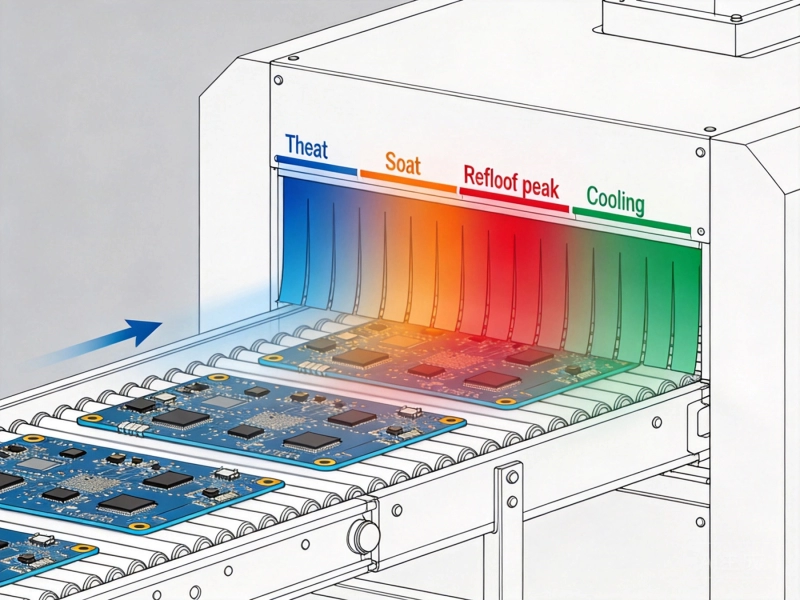
Understanding Reflow Soldering Profiles Used in SMT PCB Assembly ChinaJune/30/2026
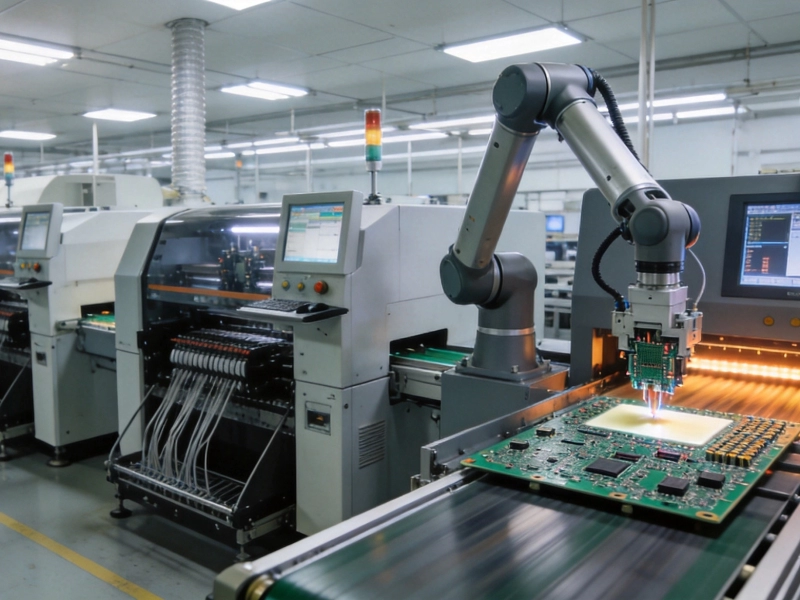
Step-by-Step: From Solder Paste Printing to Final Testing in China SMT AssemblyJuly/13/2026
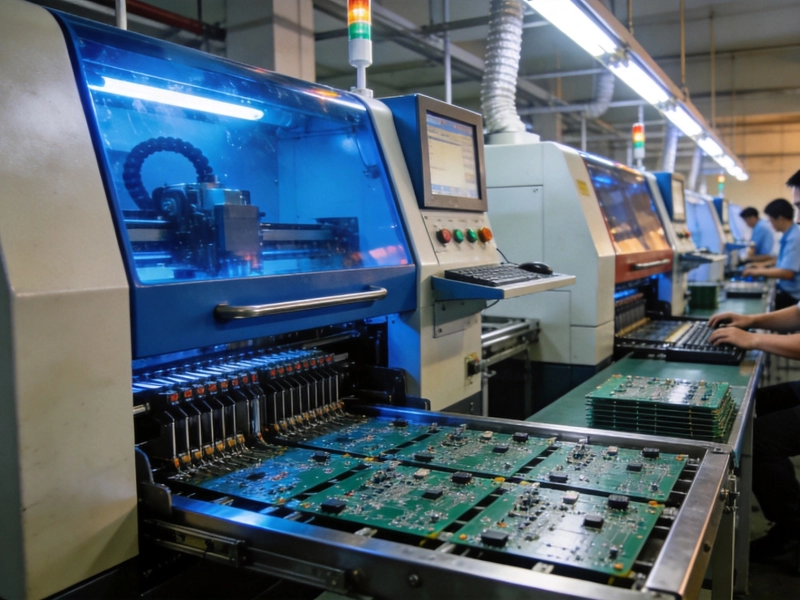
Wave Soldering vs. Reflow: Navigating the SMT PCB Assembly Process in ChinaAugust/12/2026
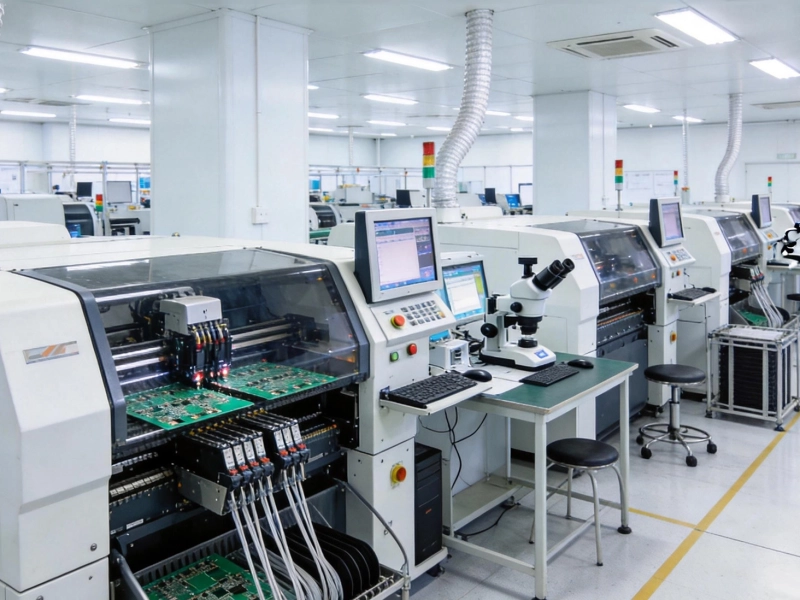
The Complete Process WalkthroughMay/29/2026
How China's SMT PCB Assembly Process Meets International IPC-A-610 StandardsJuly/22/2026