
When a pacemaker delivers a life-saving pulse, when an aircraft navigation system processes data at 30,000 feet, or when an industrial robot repeats the same precise motion on an automotive assembly line — every single time — there is an invisible quality framework holding everything together. That framework is built around Ipc Class 3 standards. For manufacturers offering Smt Pcb Assembly in China, understanding and adhering to these standards is not optional — it is the baseline requirement for serving the most demanding sectors of the global electronics market.
China has emerged as the world's dominant hub for Electronics Manufacturing, and within that landscape, a growing number of facilities have built their reputation on Ipc Class 3 certified processes. Yet the significance of this classification is still widely misunderstood by procurement engineers and product managers outside the industry. This article breaks down exactly why IPC Class 3 matters, what it demands in practice, and how to select the right industrial SMT partner in China.
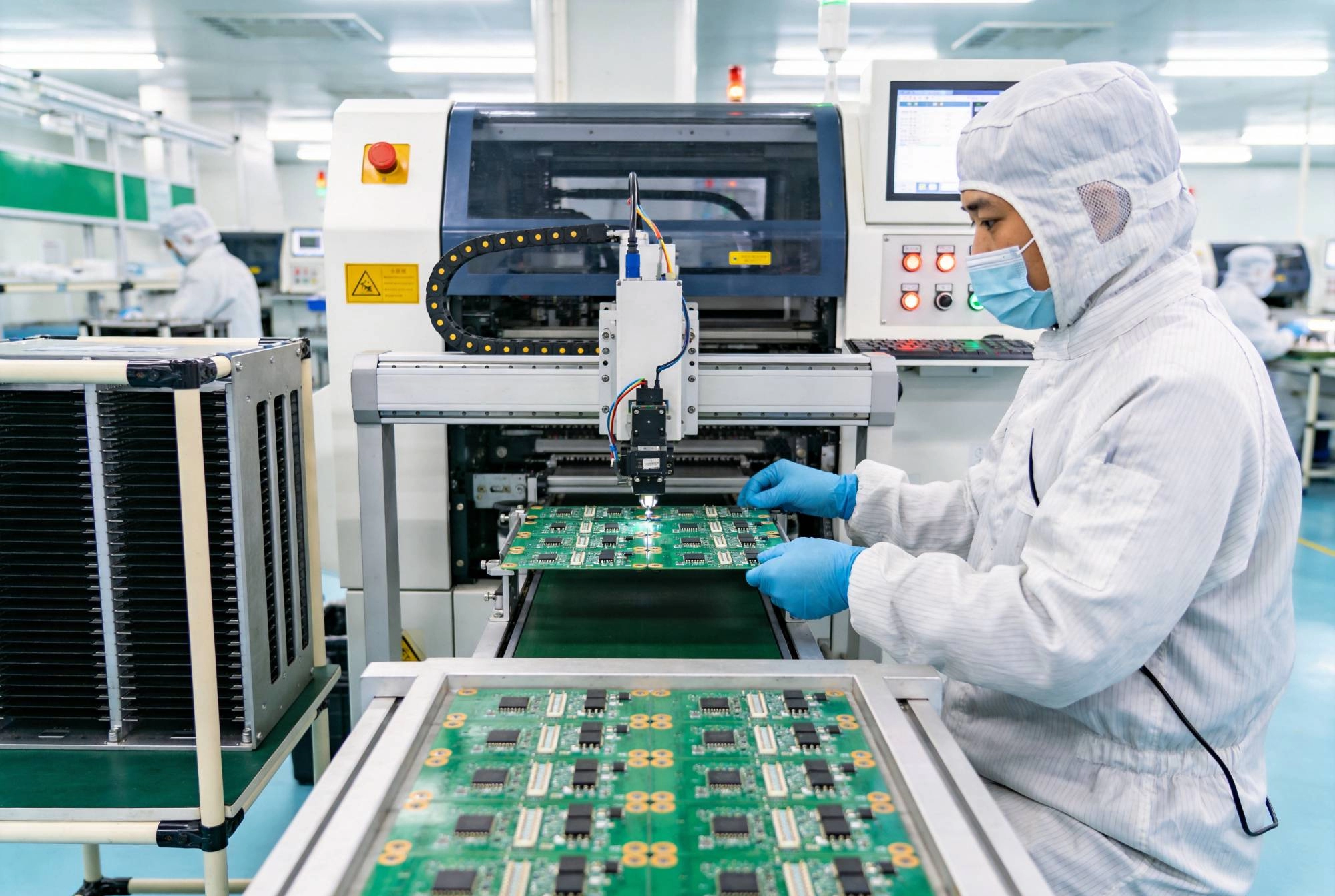
The IPC (Institute for Printed Circuits) classifies electronic assemblies into three tiers based on their performance requirements and the consequences of failure:
IPC Class 3 is the highest quality tier defined by the IPC organization. It sets the bar for everything from component placement accuracy and solder joint integrity to documentation traceability and incoming material inspection. Every solder joint on a Class 3 board must be virtually flawless because the environment it operates in leaves zero margin for error.
Class 3 assemblies demand solder joints that are mechanically strong, electrically reliable, and chemically stable under stress. This goes far beyond visual inspection. Boards must pass:
During our own experience auditing SMT lines in Shenzhen and Suzhou, the factories that consistently meet Class 3 thresholds share one trait: they treat every production run as if it were going into a medical implant, not a consumer gadget. That mindset shift is the foundation of the entire standard.
Class 3 assemblies require full traceability from the raw laminate to the finished board. Each component must be traceable to its lot number, date code, and supplier. This means:
Traceability is not just paperwork. When a field failure occurs, the ability to reconstruct the exact conditions of manufacture — component lot, Reflow Profile, operator ID, equipment calibration date — determines whether the root cause gets found and fixed, or remains a mystery waiting to happen again.
IPC Class 3 demands written procedures for virtually every step of the SMT process. This includes:
A well-run industrial SMT line in China operating under Class 3 will generate an enormous volume of documentation. That documentation is not bureaucracy — it is the audit trail that proves every decision made during production was deliberate, controlled, and verified.
China's Electronics Manufacturing ecosystem is unparalleled in its depth. The sheer volume of production has enabled a subset of manufacturers to specialize exclusively in high-reliability, mission-critical assembly. These facilities have invested heavily in:
Many of these specialized manufacturers serve global Tier-1 customers in Medical Device Manufacturing and aerospace supply chains. They have been audited by FDA-registered customers, AS9100-certified companies, and defense contractors — and they passed.
A common misconception is that IPC Class 3 manufacturing in China is prohibitively expensive. The reality is more nuanced. Labor and facility costs in China remain significantly lower than in North America or Western Europe, but more importantly, the concentrated expertise and optimized supply chains of specialized manufacturers allow them to produce Class 3 assemblies at a cost that is competitive with Class 2 production at general-purpose facilities.
The key is choosing a partner whose core business is Class 3 — not a generalist who dabbles in high-reliability work when it suits them. A dedicated Class 3 manufacturer has already absorbed the cost of the infrastructure, training, and process discipline. That investment shows up in the first-pass yield rate, which ultimately drives the true landed cost of every board.
Imagine a mid-volume industrial motor controller board for factory automation. The product engineer sourced it from a standard SMT line in China that produces primarily consumer electronics. The unit price was attractive. Eighteen months into deployment across a factory floor, the boards begin failing in the field. The root cause: marginal solder joints on fine-pitch QFP packages that cracked during thermal cycling in the unheated warehouse sections of the facility.
Field replacement costs, logistics, reputation damage with the end customer, and potential liability — the math rarely works out in favor of buying cheap when the application demands reliability. A board assembled under IPC Class 3 standards would have been subjected to thermal cycling tests during production qualification, the solder paste profile would have been optimized for the specific thermal mass of the board, and inspection protocols would have caught the marginal joints before they left the factory.
The additional cost of Class 3 production — typically 15% to 30% above standard assembly — is almost always less than the cost of a single field failure incident in a demanding industrial environment.
This is the most widely recognized IPC standard. IPC-A-610 defines the acceptance criteria for electronic assemblies across all three classes, covering everything from component placement to cleaning requirements. For Class 3, the acceptance thresholds are the most stringent. A solder joint that would be accepted under Class 2 may be rejected under Class 3 on the basis of fillet shape, wetting angle, or void content.
J-STD-001 is the process-focused counterpart to IPC-A-610. While IPC-A-610 defines what a finished assembly must look like, J-STD-001 defines how the manufacturing process must be conducted to achieve that result. It covers solder materials, flux selection, cleaning, inspection criteria, and workforce training requirements. Class 3 assembly under J-STD-001 means every step of the process has been validated and documented.
Even in a Class 3 environment, rework sometimes becomes necessary. This standard governs how rework and repair are performed without damaging the board or compromising existing solder joints. Under Class 3, repair procedures are held to the same stringent requirements as original assembly — including post-repair inspection and documentation.
Not every Chinese SMT factory that claims Class 3 capability actually operates to those standards consistently. Here is what to look for and how to verify it:
Ask specifically for their most recent IPC-A-610 and J-STD-001 certificate. Verify the certificate number and expiration date directly with the IPC organization. Be wary of vague claims like "we follow Class 3 standards" — ask for the documented evidence.
A legitimate Class 3 manufacturer will welcome a virtual or in-person process audit. During the audit, look for:
Ask for statistical process control data — defect rates per million (DPMO), first-pass yield percentages, and corrective action reports from the last six months. A Class 3 operation should be targeting DPMO below 500 for solder-related defects. If the factory cannot produce this data, that is a significant red flag.
Class 3 manufacturing requires a structured NPI process before mass production begins. Ask whether they perform:
Since component quality flows directly into assembly quality, ask how they qualify and monitor their component suppliers. Do they source from authorized distributors? Do they perform incoming inspection on component lots? Class 3 assembly at a well-run factory includes a robust supplier quality program, not just a box-checking exercise.
Several converging trends are accelerating the demand for IPC Class 3 Smt Assembly from China-based manufacturers:
As medical device companies increasingly look to reduce manufacturing costs, many have discovered that China's specialized Class 3 SMT facilities can deliver the required quality at a fraction of the cost of domestic manufacturing — without compromising FDA or CE compliance requirements.
The proliferation of smart sensors, industrial controllers, and connected factory equipment has created enormous demand for reliable electronics that can operate in harsh industrial environments. These applications demand Class 3 boards, and Chinese manufacturers have stepped up to serve this market.
EV power electronics, battery management systems, and solar inverter controllers are all Class 3 applications by nature. The explosive growth of the EV sector has driven rapid investment in Class 3 SMT capacity in China, particularly in the Pearl River Delta and Yangtze River Delta regions.
IPC Class 3 Smt Pcb Assembly in China is not the same animal as standard commercial-grade production. It is a disciplined, documentation-heavy, inspection-intensive manufacturing discipline that exists to ensure every board that leaves the factory performs — without fail — in the most demanding environments on earth.
For engineers and procurement professionals sourcing electronics for medical, aerospace, industrial, or any mission-critical application, Class 3 is not an expensive luxury — it is the rational engineering choice that eliminates the far greater cost of field failures. And for those willing to do the due diligence to find the right partner, China's specialized Class 3 SMT facilities offer a combination of quality, capability, and cost efficiency that is genuinely difficult to match anywhere else in the world.
The standard exists for a reason. The manufacturers who respect it are not just producing boards — they are building the reliability that keeps systems running, machines operating, and people safe.
Class 3 requires more stringent acceptance criteria for solder joints, full component traceability, higher inspection standards (including X-ray), and more rigorous process documentation. Class 2 targets continuous-service products; Class 3 targets products where failure could result in risk to life or serious property damage.
Technically possible, but not advisable. True Class 3 production requires dedicated infrastructure, IPC-certified personnel, controlled environments, and documented processes. General-purpose lines are optimized for speed and volume, not the meticulous process control Class 3 demands.
Prices vary by board complexity, volume, and the specific manufacturer, but Class 3 assembly typically costs 15% to 30% more than standard commercial-grade assembly. However, when compared against the total cost of field failures, returns, and reputational damage, Class 3 is almost always the more economical choice for mission-critical applications.
At minimum, look for IPC-A-610 and J-STD-001 certifications for the specific operators working on your boards. Additional certifications such as Iso 13485 (medical devices), AS9100 (aerospace), or Iatf 16949 (automotive) indicate deeper commitment to quality systems and are strong positive indicators.
Request documented evidence: certification numbers, audit reports, SPC data, first-pass yield metrics, and NPI process descriptions. Conduct or commission a process audit. Review their corrective action log. A confident Class 3 manufacturer will provide this information readily.

SMT PCB Assembly for Harsh Environments: Conformal Coating Solutions in ChinaJuly/18/2026
The Demands of Industrial SMT PCB Assembly in ChinaMay/29/2026
Why IPC Class 3 Standards Matter for Industrial SMT PCB Assembly in ChinaJuly/08/2026
Top 10 DFM Mistakes to Avoid Before Sending Files to China for SMT AssemblyJuly/14/2026
The Role of SMT PCB Assembly China in 5G Communication and Network EquipmentJuly/31/2026
High-Reliability SMT PCB Assembly China Applications in the Automotive IndustryJuly/10/2026
How We Helped a US Startup Scale from Prototype to Mass SMT Assembly in ChinaJuly/07/2026
The Role of SMT Assembly in China's Modern Industrial Automation and Robotics SectorAugust/08/2026