
Ball Grid Array (BGA) components have become ubiquitous in modern Electronics Manufacturing, offering superior thermal performance and pin density compared to traditional packages. However, the shift toward increasingly complex BGA assemblies presents significant challenges that require specialized expertise and advanced manufacturing capabilities. This comprehensive guide explores the critical obstacles encountered in complex Smt Pcb Assembly China projects and provides proven strategies for achieving reliable, high-quality results.
When working with contract manufacturers in China, understanding BGA-specific challenges becomes essential for project success. From solder paste application to final inspection, each stage demands precise control and specialized equipment. The stakes are particularly high with fine-pitch BGAs and multi-die packages where rework opportunities are limited or non-existent.
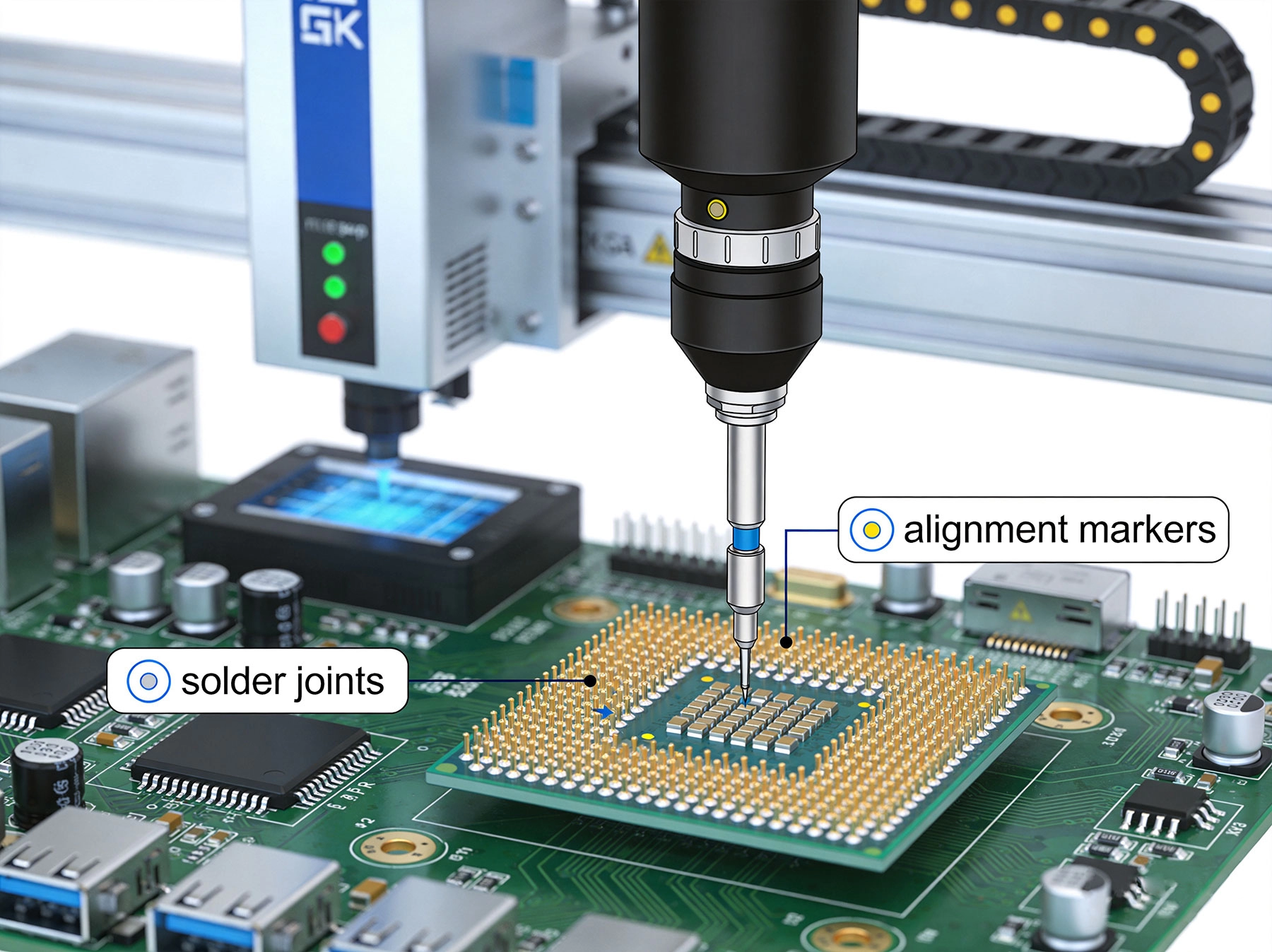
Complex BGA assemblies in SMT environments present unique manufacturing challenges that differ substantially from other package types. Unlike components with visible leads, BGA solder joints are hidden beneath the package body, making traditional visual inspection impossible. This fundamental characteristic introduces a cascade of challenges that must be addressed through process engineering and quality control.
One of the most critical aspects of BGA assembly is managing the thermal profile during Reflow Soldering. The thermal mass of large BGA packages creates uneven heating scenarios that can lead to catastrophic defects. Inadequate thermal profiles commonly result in head-in-pillow defects, where the solder paste partially melts but fails to form a complete joint with the BGA pad.
Professional Smt Assembly services in China implement sophisticated profile optimization strategies. This includes detailed thermal profiling of the entire assembly, considering factors such as Component Placement density, PCB thickness variations, and copper weight distribution. Top-side preheating and bottom-side preheating profiles are often developed separately to ensure uniform temperature distribution across the assembly.
The choice of solder paste significantly impacts BGA assembly success rates. Fine-pitch BGAs with ball pitches below 0.5mm require Type 4 or Type 5 powder to ensure proper paste release from stencils. Lead-free solder pastes, mandated by RoHS compliance, present additional challenges due to their higher melting temperatures and narrower process windows.
Stencil thickness and aperture design become particularly critical for BGA applications. Manufacturers must balance paste volume requirements against the risk of bridging, especially with tight-pitch arrays. Laser-cut stencils with nanoscale coatings have become standard for high-reliability BGA assembly, providing consistent paste transfer efficiency across thousands of components.
Package warpage has emerged as one of the most significant challenges in modern BGA assembly. As packages become thinner and substrate materials diversify, dimensional instability during thermal cycling creates assembly headaches. Warpage values exceeding 0.5mm can result in incomplete solder joints on corner balls, leading to field failures that are difficult to diagnose.
Addressing warpage requires collaborative engineering between the component supplier and the assembly manufacturer. Pre-shipment inspection protocols should include warpage measurement at reflow temperatures, not just at room temperature. Assembly facilities must maintain storage conditions that minimize moisture absorption, as this directly impacts package flatness during reflow.
While BGA packages benefit from self-alignment during reflow, placement accuracy remains crucial for reliable assembly. Modern high-speed placement systems achieve placement accuracies of ±30μm (3σ) for fine-pitch components, but this must be validated through regular maintenance and calibration programs.
Vision systems play a vital role in ensuring accurate placement. Advanced assembly lines utilize 3D paste inspection systems that measure paste height and volume before Component Placement, identifying potential issues before they become defects. This proactive approach significantly reduces the risk of opens and insufficient solder joints that can occur with BGA packages.
Voids in solder joints, while sometimes acceptable, can compromise thermal and mechanical reliability. Large voids (>25% of joint area) in BGA solder joints may lead to premature failure under thermal cycling or mechanical stress. This becomes particularly critical for power electronics applications where thermal conductivity is paramount.
Vacuum reflow processes and specialized flux formulations have been developed to minimize void formation. Some assembly facilities employ nitrogen atmosphere reflow to reduce oxidation and promote cleaner joint formation. X-ray Inspection is essential for quantifying void levels and establishing correlation between process parameters and void percentages.
X-ray Inspection has become the cornerstone of BGA Quality Assurance in Smt Assembly. Unlike optical inspection, X-ray systems can penetrate the package and reveal internal joint structure. 2D X-ray provides overview inspection capabilities, while 3D CT scanning offers detailed volumetric analysis for critical applications.
When selecting a Chinese Contract Manufacturer for BGA assemblies, verify their X-ray inspection capabilities. Key considerations include resolution limits (ideally 2μm or better for fine-pitch BGAs), inspection throughput, and the ability to generate quantitative data rather than just visual images. Automated X-ray Inspection (AXI) systems integrated into production lines provide real-time defect detection without slowing throughput.
Non-destructive inspection methods have limitations, making cross-section analysis an essential complement to X-ray inspection. Periodic destructive testing provides definitive information about joint microstructure, intermetallic compound formation, and potential weaknesses not visible through X-ray.
Establishing a sampling protocol for cross-section analysis helps identify process drift before it affects production yields. Many engineering teams request first-article qualification testing that includes cross-sections of critical joints to validate the manufacturing process before full production release.
While inspection technologies verify physical joint quality, electrical testing confirms functional performance. In-circuit testing (ICT) and flying probe testing can identify open and short circuits, though access limitations may prevent testing all BGA signals directly. Boundary scan testing (JTAG) provides an alternative for testing ball grid arrays without physical probe access.
Functional testing under thermal stress conditions reveals defects that may not appear under room temperature conditions. Thermal cycling tests, often combined with electrical monitoring, identify intermittent failures caused by marginal joints. This approach is particularly valuable for automotive and aerospace applications where reliability is non-negotiable.
Successful BGA assembly begins with design optimization. Dfm reviews should be conducted during the schematic and layout phases, not after design completion. Key considerations include pad size and shape matching to BGA ball dimensions, via placement strategies (via-in-pad vs. dog-bone), and routing density around BGA footprints.
Chinese PCB manufacturers often have extensive Dfm libraries based on their manufacturing capabilities. Engaging the assembly partner early in the design phase can identify potential issues before they become production blockers. This collaborative approach often reveals opportunities for cost optimization alongside manufacturability improvements.
Every manufacturing process operates within a window of acceptable parameters. For BGA assembly, this window includes reflow temperature profiles, paste volume specifications, placement accuracy requirements, and storage conditions. Statistical process control (SPC) helps maintain these parameters within acceptable limits while identifying trends that might indicate approaching out-of-spec conditions.
Process optimization is an ongoing activity, not a one-time exercise. Regular review of defect data, whether from inline inspection or field returns, provides feedback for Continuous Improvement. Six Sigma methodologies offer structured approaches for reducing process variation and improving first-pass yields.
Material consistency plays a surprisingly important role in BGA assembly quality. Batch-to-batch variations in solder paste, flux activity, and even PCB surface finish can affect assembly outcomes. Establishing approved vendor lists and incoming inspection protocols helps maintain material consistency.
Long-term supply agreements with key material vendors can reduce variation by ensuring production of materials to consistent specifications. Some organizations maintain buffer stocks of critical materials to bridge supply disruptions while maintaining production continuity.
Despite best efforts, some BGA assemblies require rework. Defects may include non-wet opens, shorts, or misaligned components. The decision to rework versus scrap involves cost analysis, available rework capability, and the reliability implications of the rework process itself.
BGA rework stations have evolved significantly, offering precise temperature control, optical alignment systems, and vacuum pick-up tools designed specifically for BGAs. However, rework should be considered a last resort for critical assemblies, as even successful rework may introduce latent defects that manifest later in service.
Component recovery and reballing may be economically justified for expensive BGA packages. This process involves removing the component, cleaning old solder from the balls, and applying fresh solder spheres. While technically feasible, component recovery requires strict process controls and verification to ensure recovered components meet original specifications.
The feasibility of reballing depends on the component type, its thermal history, and the quality of the recovery process. Gold-plated BGA packages require special consideration, as improper cleaning can leave contamination that affects subsequent solderability.
Evaluating Chinese SMT assembly manufacturers for BGA projects requires systematic capability assessment. Technical criteria should include equipment specifications, process capability indices (Cpk values), quality certifications (ISO 9001, Iatf 16949 for automotive), and specific BGA handling experience. Requesting capability qualification samples helps validate process capability before committing to production volumes.
Beyond equipment and certifications, assess the engineering team's experience with your specific BGA package types. Different BGA variants—plastic BGAs, ceramic BGAs, PoP packages, and multi-chip modules—present distinct challenges requiring specialized knowledge.
Effective communication with overseas manufacturing partners determines project success. Establish clear documentation requirements, including inspection criteria, defect classification schemes, and escalation procedures. Video conferencing for real-time problem-solving bridges the distance gap effectively.
Documentation should flow both directions. Process traveler records, inspection logs, and material certificates provide traceability essential for Quality Assurance and regulatory compliance. Electronic documentation systems enable real-time visibility into production status and quality metrics.
Overcoming BGA challenges in complex Smt Pcb Assembly China projects requires a multi-faceted approach combining process expertise, quality systems, and effective partnership management. Success hinges on understanding the unique characteristics of BGA packages, implementing appropriate inspection strategies, and maintaining close collaboration with manufacturing partners throughout the product lifecycle.
The investment in proper BGA assembly practices pays dividends through improved yields, reduced field failures, and enhanced customer satisfaction. As electronics continue evolving toward higher density and performance requirements, BGA assembly expertise becomes increasingly valuable for competitive product development.
By implementing the strategies outlined in this guide, engineering teams can confidently pursue complex BGA assembly projects with Chinese manufacturing partners, achieving results that meet or exceed expectations for quality, reliability, and cost-effectiveness.
First-pass yield rates for BGA assembly typically range from 95% to 99.5% depending on package complexity, component quality, and manufacturing process maturity. Fine-pitch BGAs and large body sizes generally yield slightly lower than standard pitch packages due to increased Thermal Management challenges.
X-ray inspection (both 2D and 3D CT) provides comprehensive non-destructive evaluation of BGA solder joints. Automated X-ray Inspection systems can detect voids, bridges, opens, and insufficient solder conditions. Combined with electrical testing, this approach provides high confidence in joint quality without damaging samples.
Industry standards typically specify maximum warpage of 0.4mm to 0.5mm at reflow temperatures for standard BGAs. Some applications with tighter reliability requirements may specify more stringent limits. Package warpage exceeding these values significantly increases the risk of open joints at package corners.
A skilled rework technician typically requires 10 to 20 minutes for single BGA rework, including preheating, component removal, pad preparation, and reballing or new component placement. Complex boards requiring multiple rework operations may take considerably longer, especially when accounting for cooling intervals between operations.
Essential certifications include ISO 9001 for general quality management and ideally Iatf 16949 for automotive applications or AS9100 for aerospace. Ipc-a-610 workmanship certification for assembly personnel demonstrates competency in handling sensitive components. Regular third-party audits provide additional quality assurance.
Solving Thermal Issues in LED SMT PCB Assembly: A Real-World China Factory ExampleJuly/28/2026

From Concept to Reality: Custom IoT SMT PCB Assembly Project in Shenzhen, ChinaSeptember/02/2026
Overcoming BGA Challenges in a Complex SMT PCB Assembly China ProjectMay/29/2026
How We Helped a US Startup Scale from Prototype to Mass SMT Assembly in ChinaJuly/07/2026

Automotive Electronics Success: High-Reliability SMT PCB Assembly China Case StudyJuly/17/2026

How to Get Quick-turn SMT PCB Assembly in Just 24 Hours from ChinaMay/29/2026

Optimizing PCB Design for Chinese SMT ManufacturersJuly/02/2026
Customizing SMT PCB Assembly China Applications for High-Density Interconnect (HDI) BoardsJune/22/2026