Open Nav

The transformation of China's Electronics Manufacturing industry over the past four decades represents one of the most remarkable industrial developments in modern history. What began as a labor-intensive assembly sector focused on simple Through-hole Technology has evolved into a sophisticated manufacturing ecosystem capable of producing some of the world's most advanced electronic products. Understanding this evolution provides context for evaluating China's current capabilities and anticipating future developments in the global electronics supply chain.
The journey from traditional Through-hole Assembly to cutting-edge high-density SMT represents not merely technological change but fundamental restructuring of manufacturing expertise, supply chain architecture, and industrial capability. Each phase of this evolution built upon previous developments while creating foundations for subsequent advancement. Tracing this progression illuminates both how China's electronics industry achieved global significance and where it may be headed in coming decades.
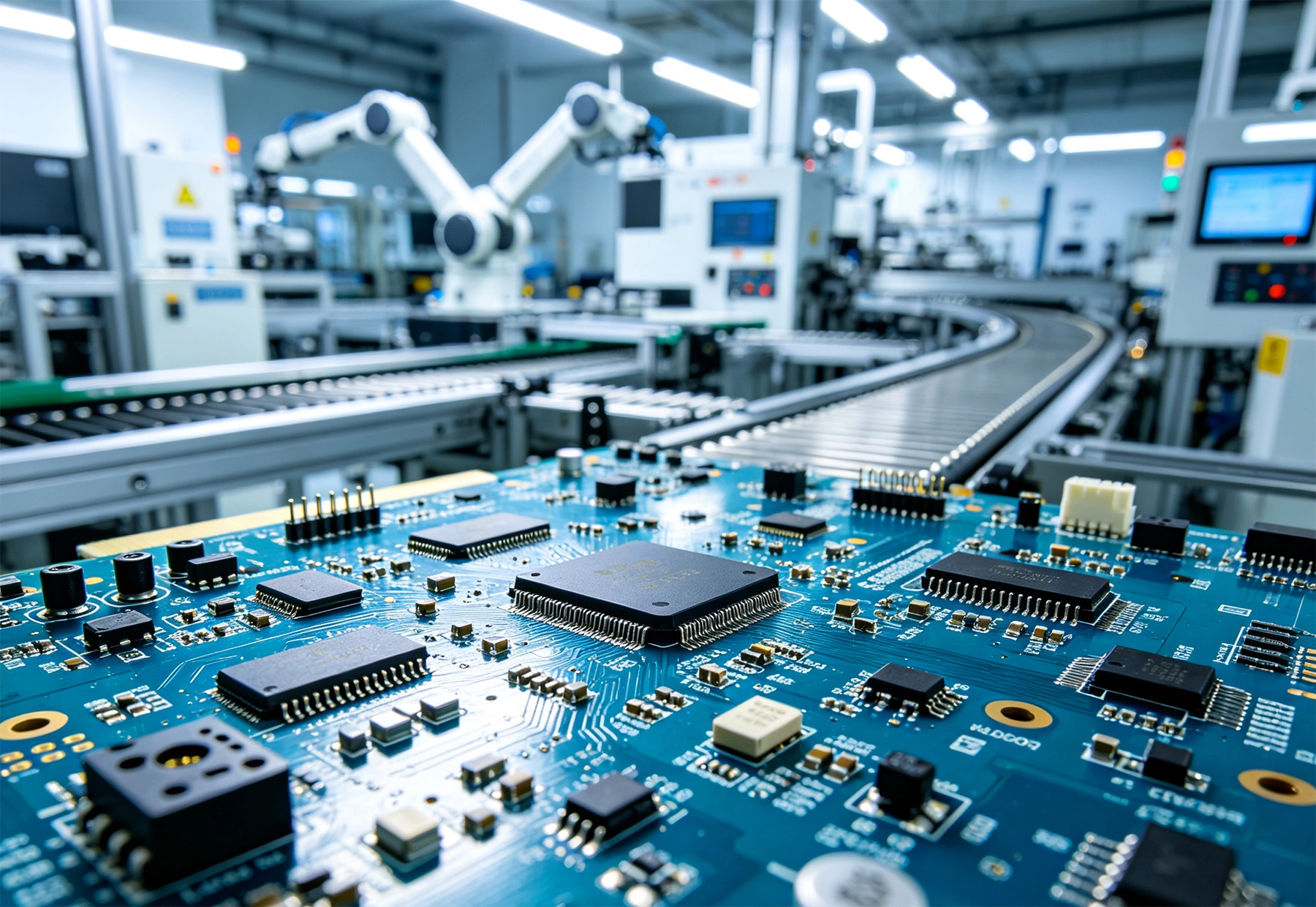
Electronics Manufacturing in China emerged from a distinctively different starting point than the mature Western industries it would eventually challenge. Limited domestic demand, technology access restrictions, and infrastructure constraints shaped early development patterns that influenced subsequent evolution.
The economic reforms initiated in the late 1970s created conditions for foreign investment and technology transfer that launched China's electronics manufacturing sector. Initial engagement focused on labor-intensive assembly operations, often targeting export markets through Hong Kong and Taiwan trading networks. These early operations typically involved simple Consumer Electronics—radios, calculators, and basic telecommunication devices—assembled using established through-hole manufacturing processes.
Through-hole Technology at this stage relied on manual insertion of component leads into drilled holes, with Wave Soldering providing batch interconnection. Assembly processes were labor-intensive, with中国大陆 factories offering wage rates that provided compelling cost advantages despite lower productivity compared to automated Western operations. Quality standards were often inconsistent, reflecting both equipment limitations and process control practices that lagged international expectations.
The 1980s and early 1990s witnessed increasing technology transfer as multinational corporations established manufacturing operations in China. Japanese, American, European, and increasingly Taiwanese and Hong Kong companies transferred production capabilities, bringing process expertise, quality management systems, and increasingly sophisticated equipment. These transfers laid foundations for indigenous capability development that would accelerate in subsequent decades.
Joint ventures between foreign technology partners and Chinese enterprises created structured pathways for knowledge transfer. Chinese engineers and managers working within these partnerships absorbed manufacturing expertise, quality methodologies, and process optimization techniques. While technology licensing arrangements varied in depth, the accumulated learning from multiple partnerships created a growing base of indigenous manufacturing capability.
The introduction of Surface Mount Technology represented a watershed moment in China's electronics manufacturing evolution. This transition fundamentally reshaped production processes, equipment requirements, and skill demands across the industry.
Multiple factors drove SMT adoption in China during the 1990s. Consumer Electronics Miniaturization trends demanded the packaging density that Surface Mount provided. Global supply chain integration required compatibility with international manufacturing standards. Cost pressures incentivized automation that through-hole technology could not support. Component suppliers increasingly offered Surface Mount variants, reducing through-hole availability for new designs.
The transition presented substantial challenges. SMT demanded precision equipment—pick-and-place machines, reflow ovens, and inspection systems—representing capital investments far exceeding through-hole equipment costs. Process control requirements were substantially more demanding. Component handling, storage, and processing demanded humidity and electrostatic discharge management that many Chinese facilities lacked. Quality expectations required statistical process control and documentation practices that represented cultural as much as technical change.
Consumer electronics manufacturers led early SMT adoption, driven by competitive pressure to match international product designs. Color television production, telecommunications equipment, and increasingly sophisticated consumer devices required Surface Mount Assembly capabilities. Manufacturers serving these markets invested in SMT equipment and developed process expertise that later spread to other industry segments.
The geographic distribution of early SMT capability concentrated in coastal regions with existing manufacturing infrastructure. Shanghai, Guangzhou, Shenzhen, and surrounding areas attracted the foreign investment and infrastructure investment that SMT deployment required. This geographic concentration created industrial clusters that would strengthen and expand through subsequent development phases.
The 2000s witnessed acceleration of SMT capability development across China's electronics manufacturing sector. Multiple factors combined to elevate manufacturing sophistication to internationally competitive levels.
Chinese electronics manufacturers invested heavily in state-of-the-art SMT equipment. Japanese, European, and increasingly Korean and Taiwanese equipment vendors established manufacturing and service operations in China, reducing acquisition costs while improving support accessibility. High-speed placement equipment, advanced reflow systems, and automated inspection technologies became increasingly standard across quality-focused assembly operations.
Indigenous equipment development emerged alongside imported technology acquisition. Chinese equipment manufacturers—some spinning off from former state-owned research institutes—began producing pick-and-place machines, reflow ovens, and inspection systems that achieved progressively higher performance levels. While leading-edge equipment often remained imported, Chinese equipment increasingly served mid-market applications with attractive cost-performance ratios.
Beyond equipment acquisition, Chinese manufacturers developed the process expertise required for advanced SMT. Statistical process control, Six Sigma methodologies, and lean manufacturing principles spread from leading-edge operations to broader industry practice. Quality management system certifications—ISO 9001, ISO 14001, and industry-specific standards—became increasingly prevalent across competitive manufacturing operations.
Workforce skill development proved equally important. Technical training programs, both within companies and through educational institutions, built the skilled workforce that advanced manufacturing requires. The combination of equipment, processes, and skilled personnel created manufacturing capability that achieved international recognition for many product categories.
Contemporary electronics manufacturing in China has entered an era characterized by high-density assembly, Miniaturization, and increasingly sophisticated integration. These capabilities position Chinese manufacturers for the most demanding applications across diverse industry segments.
Modern Chinese SMT operations routinely handle components with pitch below 0.4mm, including BGA, CSP, QFN, and0201metric passive components. The equipment capabilities, process controls, and inspection techniques required for these components represent substantially higher sophistication than earlier SMT requirements. X-ray Inspection, Automated Optical Inspection with sophisticated algorithms, and 3D measurement systems have become standard in quality-focused facilities.
Manufacturers serving smartphone, tablet, and wearable electronics markets have pushed miniaturization boundaries that few other regions can match. The assembly densities achieved in some Chinese facilities—thousands of components per square centimeter with high yield rates—represent manufacturing excellence that would have seemed impossible just two decades earlier. This capability development has attracted global flagship product manufacturing that previously might have remained in higher-cost locations.
High-density Interconnect PCB technology has become increasingly standard in China's manufacturing ecosystem. Facilities capable of assembling HDI boards with multiple laser-drilled microvia layers serve demanding applications from smartphones to Automotive Electronics. The combination of HDI board fabrication and advanced Smt Assembly provides capabilities that few other regions can replicate at comparable scale.
Rigid-flex and flexible circuit assembly capabilities have expanded to support the increasingly sophisticated product architectures that miniaturization demands. Wearable electronics, medical devices, and automotive applications increasingly rely on these technologies, and Chinese manufacturers have developed the specialized expertise required for these demanding applications.
System-in-package and advanced packaging technologies represent the frontier of miniaturization that Chinese manufacturers are actively developing. Through-silicon via technologies, fan-out wafer-level packaging, and heterogeneous integration capabilities are expanding within the industry. While some advanced packaging remains concentrated in Taiwan for leading-edge semiconductor applications, assembly and integration capabilities are spreading across the broader Chinese manufacturing ecosystem.
Contemporary Chinese Electronics Manufacturing has achieved quality system sophistication that rivals any global competitor for most product categories.
Chinese manufacturers have increasingly achieved certifications required for demanding applications. Iatf 16949 for Automotive Electronics, Iso 13485 for medical devices, AS9100 for aerospace, and other industry-specific standards have become increasingly prevalent among quality-focused manufacturers. These certifications require systematic quality management approaches that reflect mature manufacturing practice.
The journey to certification often involved substantial investment in documentation systems, process controls, and quality infrastructure. Manufacturers who achieved these certifications did so by genuinely building quality systems rather than merely collecting certificates. The discipline these systems instills has elevated overall manufacturing capability across participating organizations.
Beyond standard certifications, Chinese manufacturers routinely meet customer-specific quality requirements that often exceed generic standards. Apple's Responsible Business Alliance requirements, automotive OEM quality specifications, and medical device company mandates represent demanding expectations that leading Chinese manufacturers meet consistently. This customer-specific compliance demonstrates capability that goes beyond minimum certification requirements.
The ability to satisfy diverse customer-specific requirements—often involving detailed process documentation, Traceability systems, and audit compliance—requires organizational capabilities that reflect mature quality culture rather than superficial process implementation.
The evolution of electronics manufacturing in China has been accompanied by development of supporting supply chain ecosystems that amplify manufacturing capability.
The geographic concentration of electronics manufacturing in China has attracted component suppliers that provide rapid access to materials and components. Distributors, raw material suppliers, and component manufacturers have established operations that support rapid response to manufacturing requirements. This clustering effect reduces logistics costs and improves supply chain responsiveness compared to distributed global supply chains.
Active and passive component suppliers have developed capabilities specifically oriented toward Chinese assembly operations. Local warehouses, technical support resources, and rapid delivery options reduce the supply chain friction that imported components might encounter. The ecosystem development has created a self-reinforcing capability cluster that continues strengthening.
Beyond direct component supply, specialized service infrastructure has developed to support manufacturing operations. Rapid Prototyping services, testing and characterization laboratories, and design-for-manufacturing consultancies provide capabilities that enhance overall industry effectiveness. This supporting infrastructure reduces the burden on individual manufacturers to develop all capabilities internally.
Logistics infrastructure has evolved to serve electronics manufacturing requirements. Temperature-controlled shipping, humidity management, and electrostatic discharge protection have become standard offerings for logistics providers serving the electronics industry. This infrastructure development reduces supply chain risks that might otherwise constrain manufacturing operations.
Human capital development has paralleled technology and equipment advancement throughout China's electronics manufacturing evolution.
Universities, polytechnics, and technical training institutions have developed curricula oriented toward electronics manufacturing requirements. Engineering programs, technician training, and process engineering education have expanded to meet industry demand. The volume of technically trained personnel emerging annually from Chinese educational institutions substantially exceeds what any other single country produces.
Beyond formal education, company-sponsored training programs have developed specific skills that manufacturing requires. Process engineers, equipment technicians, quality specialists, and production supervisors have received training that builds practical capability alongside theoretical knowledge. The combination of educational and experiential training creates workforce competency that supports advanced manufacturing.
Workforce turnover in Chinese Electronics Manufacturing has created both challenges and opportunities for knowledge management. The movement of experienced personnel between employers has facilitated knowledge transfer across organizations. While this turnover can disrupt individual operations, the broader industry effect has been knowledge diffusion that raises overall capability levels.
Leading manufacturers have developed knowledge management practices that capture and retain critical expertise. Documentation systems, process repositories, and mentorship programs help ensure that organizational knowledge survives individual departures. These practices represent management sophistication that may not have existed in earlier industry phases.
The evolution of electronics manufacturing in China continues, with emerging technologies and shifting competitive dynamics creating new opportunities and challenges.
Manufacturing automation continues advancing in Chinese Electronics Assembly. Robotics for component handling, automated storage and retrieval systems, and data integration across production processes represent current focus areas. The labor cost escalation that China has experienced incentivizes continued automation investment that may eventually eliminate the historical cost advantage of Chinese manufacturing.
Industry 4.0 concepts—digital integration, artificial intelligence applications, and smart factory implementation—are actively pursued by leading Chinese manufacturers. While full Industry 4.0 implementation remains aspirational for many operations, progressive adoption of these technologies is underway across the industry. The trajectory suggests increasingly sophisticated manufacturing intelligence in coming years.
Geopolitical tensions and technology sovereignty concerns are reshaping global electronics supply chains. Trade restrictions, technology transfer limitations, and national security considerations are influencing investment patterns and technology access. Chinese manufacturers are responding through accelerated indigenous technology development and supply chain diversification strategies.
The implications for the future evolution of electronics manufacturing in China remain uncertain. The industry's trajectory will depend on how geopolitical dynamics unfold, how technology restrictions affect capability development, and how competitive positioning evolves across different market segments. The historical pattern of continuous capability advancement faces new variables that may alter developmental pathways.
The evolution of electronics manufacturing in China from simple Through-hole Assembly to advanced high-density SMT represents a transformative industrial development. This progression has been driven by foreign technology transfer, indigenous capability development, massive infrastructure investment, and sustained workforce skill building. The capabilities achieved position Chinese manufacturers as essential participants in global electronics supply chains across virtually every product category.
The quality systems, process expertise, and manufacturing infrastructure developed through this evolution create competitive advantages that persist despite wage inflation and geopolitical headwinds. The sophistication achieved in contemporary Chinese electronics manufacturing—for high-density SMT, advanced packaging, and complex assembly—reflects genuine manufacturing excellence that has transformed global production geography.
Looking forward, the continuation of this evolutionary trajectory depends on how emerging challenges—automation economics, technology access restrictions, and competitive repositioning—are navigated. The manufacturing ecosystem that has developed provides resilience and capability that suggests continued evolution, but the specific pathways ahead involve uncertainties that historical patterns may not predict. What remains clear is that China's electronics manufacturing industry has fundamentally transformed from a low-cost assembly location to a sophisticated manufacturing powerhouse whose capabilities will shape global electronics production for decades to come.
China's SMT capability has evolved from rudimentary beginnings in the 1990s to world-class sophistication today. Early adoption focused on consumer electronics with relatively simple surface mount components. Over subsequent decades, investment in equipment, process expertise, and quality systems elevated capabilities to handle fine-pitch components, BGA and CSP packages, and increasingly dense assemblies. Contemporary Chinese manufacturers routinely achieve assembly densities and quality levels that rival any global competitor.
Multiple factors drove SMT adoption: consumer electronics miniaturization requiring higher density packaging, global supply chain integration demanding international compatibility, cost pressures incentivizing automation, and component supplier transitions away from through-hole offerings. The transition required substantial equipment investment and process expertise development that many manufacturers achieved through foreign partnership and indigenous learning.
For most product categories, Chinese manufacturing quality matches or exceeds other major electronics manufacturing regions. Leading Chinese manufacturers meet automotive Iatf 16949, medical Iso 13485, and aerospace AS9100 requirements. Apple, automotive OEMs, and other demanding customers source substantial production from Chinese facilities, indicating quality confidence from the most demanding purchasers. However, quality varies across the supplier landscape, requiring appropriate supplier selection and qualification.
China offers concentrated supply chain clustering that provides rapid component access, reduced logistics costs, and responsive Supply Chain Management. Component distributors, raw material suppliers, and supporting service providers have developed infrastructure specifically serving electronics manufacturing. This ecosystem effect reduces supply chain friction and improves manufacturing responsiveness compared to more distributed global supply chains.
Future challenges include labor cost escalation that erodes historical advantages, technology access restrictions affecting advanced equipment and materials, and geopolitical tensions creating supply chain uncertainty. Manufacturers are responding through accelerated automation, indigenous technology development, and supply chain diversification. The trajectory suggests continued capability evolution, though specific pathways involve uncertainties from geopolitical and competitive dynamics.
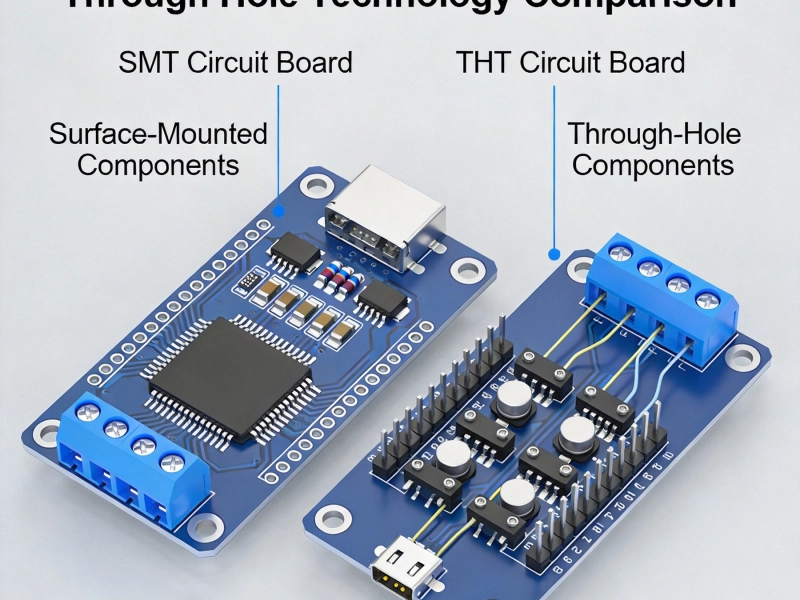
Which Technology is Right for Your Project?May/29/2026
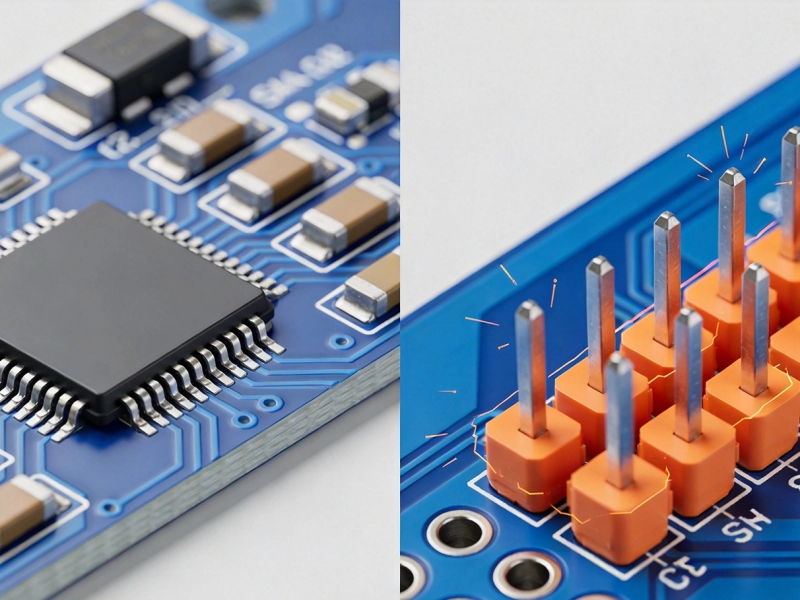
Understanding the Mechanical Strength Differences: SMT vs THT Assembly in ChinaJuly/27/2026
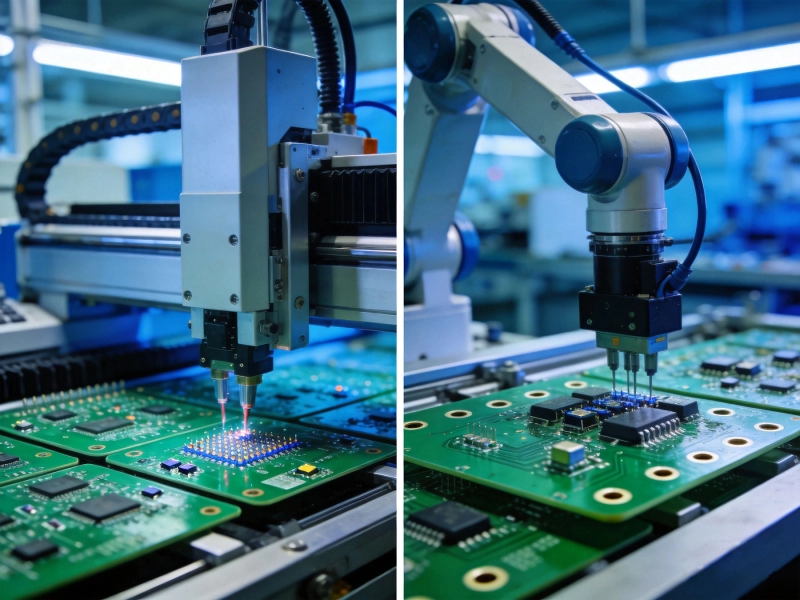
SMT vs THT PCB Assembly in China: Which Technology is Right for Your Project?June/08/2026
Cost Comparison: SMT vs THT PCB Assembly Services in ChinaJuly/07/2026
Mixed Assembly Explained: Combining SMT and THT on One PCB in ChinaSeptember/01/2026
How to Choose the Best Assembly Method for Your PCB Prototype in ChinaOctober/12/2026

The Pros and Cons of SMT and THT in China's Electronics Manufacturing LandscapeJune/25/2026
Design Rules Breakdown: Layout Differences for SMT vs THT Assembly in ChinaSeptember/21/2026