
China's industrial landscape has undergone a remarkable transformation over the past two decades. What began as a manufacturing base for labor-intensive assembly has evolved into a sophisticated ecosystem of advanced electronics production, robotics development, and smart factory implementation. At the heart of this transformation lies Surface Mount Technology (SMT) assembly—the manufacturing foundation that enables the sensors, controllers, and communication modules powering today's automated systems.
The country's Made in China 2025 initiative accelerated this evolution, channeling substantial investment toward intelligent manufacturing capabilities. Industrial robots have moved from novel installations to essential production assets, with China now operating more industrial robots than any other nation. The electronics that give these machines their sensing, thinking, and communicating capabilities depend almost entirely on Smt Assembly processes that have themselves become increasingly automated.
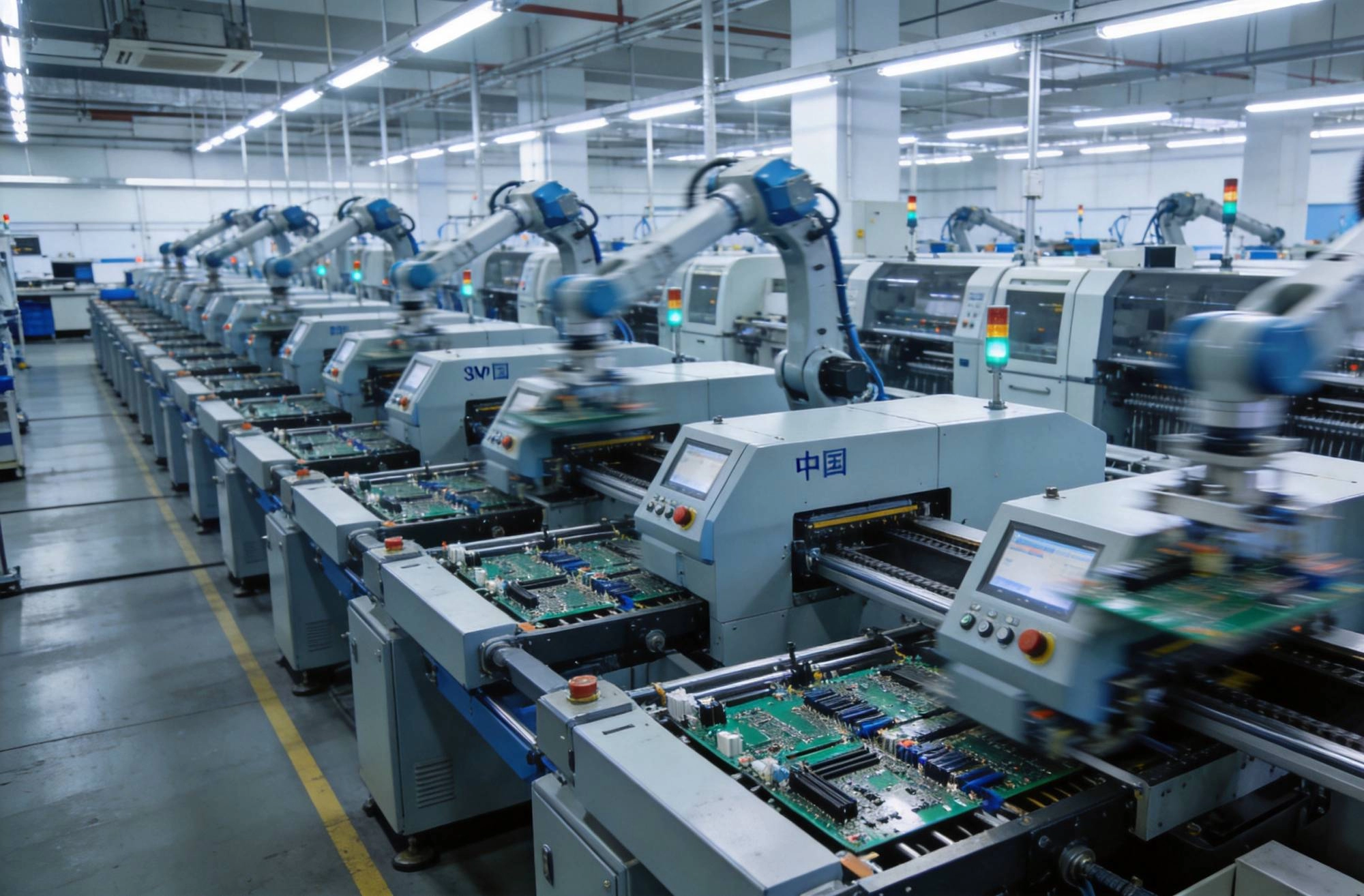
Industrial robots have revolutionized Smt Assembly lines in ways that extend far beyond simple automation. Modern pick-and-place systems achieve placement speeds exceeding 100,000 components per hour while maintaining accuracies measured in microns. These performance levels would be impossible without the precision motion control, Machine Vision, and adaptive algorithms that robotics technology provides.
Collaborative robots—designed to work alongside human operators—have introduced new flexibility into SMT operations. These machines handle tasks requiring human judgment, such as feeder setup, quality inspection, and rework operations. The integration of collaborative robots has improved both throughput and quality while reducing operator fatigue in demanding manufacturing environments.
While robotics advances SMT capabilities, SMT progress simultaneously enables new generations of industrial robots. Smaller, more powerful electronic components allow robot controllers to shrink while processing power expands. Advanced sensors fabricated through SMT processes give robots the environmental awareness that modern applications demand. Communication modules assembled using SMT technology enable the connectivity that smart factory integration requires.
The Miniaturization trends in electronics directly translate to robotics capabilities. When motor drive electronics shrink, robot joints become more compact. When sensor modules become lighter, robot end-effectors can handle more delicate tasks. When control electronics become faster, robot response times improve. Each SMT advancement opens possibilities for robotics innovation that seemed impossible just years before.
China's Smt Manufacturing concentrates in regions with established electronics industry clusters. The Pearl River Delta—including Shenzhen, Dongguan, and Guangzhou—hosts the largest concentration of SMT facilities, serving both domestic robotics manufacturers and international customers. The Yangtze River Delta around Shanghai, Suzhou, and Hangzhou provides additional capacity with particular strength in precision manufacturing.
Second-tier cities have developed SMT capabilities as infrastructure improves and labor costs rise in major manufacturing centers. Facilities in Chengdu, Wuhan, and Zhengzhou serve emerging industrial markets in central and western China, reducing logistics costs while accessing growing pools of technical talent.
The scale of China's SMT operations dwarfs facilities in most other countries. Large contract manufacturers operate production lines hundreds of meters long, processing thousands of board assemblies daily. This scale enables cost structures that make Chinese Smt Services competitive globally while maintaining quality levels that satisfy demanding customers.
Specialization has emerged as a distinguishing characteristic of mature Chinese SMT operations. Some facilities focus exclusively on Automotive Electronics, maintaining Iatf 16949 certification and the rigorous process controls that Automotive Quality demands. Others specialize in medical devices, Consumer Electronics, or industrial controls. This specialization enables deep expertise in specific application requirements rather than superficial competence across all sectors.
Chinese SMT manufacturers serving Industrial Automation customers must meet stringent quality requirements. ISO 9001 certification has become baseline expectation, while sector-specific standards like Iatf 16949 for automotive and Iso 13485 for medical devices add specialized requirements. These certifications demonstrate systematic quality management that international customers require.
AEC-Q100 and AEC-Q200 qualifications verify that electronic components used in SMT assembly meet automotive reliability standards. For robotics manufacturers targeting industrial applications, these qualifications provide assurance that assemblies will perform reliably through years of demanding operation. Chinese facilities have invested substantially in the testing and documentation capabilities that these qualifications require.
Modern SMT operations in China employ sophisticated process control systems that monitor every significant parameter throughout assembly. Solder Paste Printing, Component Placement, reflow profiling, and optical inspection all generate data streams that statistical process control systems analyze in real-time. This monitoring identifies variation before it creates defects, enabling corrective action before quality suffers.
Complete Traceability from component lot to finished assembly has become standard expectation. When a defect emerges in the field, root cause analysis requires tracing the affected unit back through manufacturing records to identify when and where problems occurred. Chinese manufacturers have implemented Traceability systems that satisfy even the most demanding customer requirements.
Robot controllers continue shrinking while functionality expands, driving demand for increasingly dense SMT assemblies. Components that were large packages just years ago have been replaced by chip-scale packages and wafer-level packaging that pack more function into smaller area. SMT processes must accommodate these smaller packages with tolerances that match their reduced margins for error.
The transition to 01005 and even 008004 components—measuring mere millimeters across—has pushed placement accuracy requirements to limits that seemed impossible when Surface Mount Technology first emerged. Chinese manufacturers have invested in next-generation placement equipment and process controls that enable assembly of these tiny components with yields that make production economically viable.
Package-on-package (PoP) and stacked die assemblies have become common in robotics controller applications where board space is precious. These complex assemblies place memory packages directly atop processor packages, tripling circuit density without expanding board area. SMT processes for PoP require precise alignment, careful Thermal Management, and inspection capabilities that verify connections invisible to conventional methods.
Through-silicon via (TSV) and embedded component technologies represent the frontier of Miniaturization. Some manufacturers embed passive components within the PCB substrate, reducing trace lengths and improving electrical performance while eliminating discrete components from the surface. These advanced approaches require capabilities beyond conventional SMT, demanding investments that distinguish leading manufacturers from commodity operations.
Industrial robotics applications require assemblies that survive harsh conditions over long service lives. High-temperature laminates, heavy copper conductors, and premium solders all contribute to reliability that industrial applications demand. SMT processes must accommodate these materials without compromising the precision that modern electronics require.
Lead-free solder adoption has become essentially universal in Chinese SMT operations, driven by RoHS compliance requirements for global markets. While lead-free alloys present processing challenges, Chinese manufacturers have developed expertise in managing these materials to achieve reliability that matches or exceeds traditional tin-lead solders.
Chinese SMT manufacturers have developed sophisticated component sourcing capabilities that serve robotics customers requiring diverse part inventories. Strategic relationships with major distributors ensure access to popular components, while relationships with authorized resellers provide traceability that military and medical customers require. Component Obsolescence management has become a valued service as customers seek partners who can navigate the lifecycle challenges that long-running production programs present.
The semiconductor shortages of recent years tested supply chain resilience across the industry. Manufacturers with established buffer stock programs and diversified supplier relationships maintained customer commitments that competitors with lean supply chains could not. This experience has driven investment in supply chain capabilities that improve resilience against future disruptions.
Leading Chinese SMT manufacturers provide Design For Manufacturability (Dfm) support that helps robotics designers optimize their products for efficient assembly. Early engagement during product development identifies potential manufacturing challenges before they become expensive problems. Recommendations regarding component selection, pad geometry, and routing constraints contribute to designs that achieve both performance targets and manufacturing efficiency.
This Dfm collaboration has evolved into deeper partnerships where SMT manufacturers contribute to component selection, supply chain planning, and inventory management. These partnerships reduce total cost while improving quality through manufacturing expertise applied throughout product development rather than merely during production.
China has invested substantially in technical education that supports advanced manufacturing. Universities and technical institutes graduate thousands of engineers annually with expertise in electronics, materials science, and manufacturing engineering. This talent pool enables Chinese SMT operations to staff increasingly sophisticated capabilities with qualified personnel.
Beyond formal education, industry certification programs verify practitioner competence in specialized skills. IPC certification for soldering and inspection, Six Sigma training for process improvement, and equipment-specific certifications from placement machine manufacturers all contribute to workforce capability. Chinese manufacturers have embraced these certifications as evidence of technical competence that differentiates their operations.
While skilled operators remain essential, automation has reduced dependence on human execution of repetitive tasks. Automated storage and retrieval systems for components, automated solder paste inspection, and Automated Optical Inspection all reduce variability that manual operations introduce. These automated systems improve consistency while enabling inspection coverage that manual processes cannot achieve economically.
Machine learning algorithms increasingly support quality functions that previously required human judgment. Automated Optical Inspection systems trained on defect libraries identify anomalies with accuracy approaching and sometimes exceeding human inspectors. This automation frees technical personnel for problem-solving and process improvement while maintaining quality levels that manual inspection cannot consistently achieve.
Labor costs in China's manufacturing regions have increased substantially over the past decade, reducing the labor cost advantages that initially attracted international customers. However, this increase has been accompanied by productivity improvements that maintain cost competitiveness. Operators today produce far more output than their predecessors through higher levels of automation and better equipment.
The labor cost evolution has accelerated investment in automation that reduces direct labor content per unit. While this transition creates short-term challenges for workers displaced by automation, it enables manufacturers to remain cost-competitive against lower-wage competitors while improving quality through reduced human variability.
Sophisticated customers evaluate total cost of ownership rather than unit price alone. Quality costs—expenses associated with defects, rework, and warranty returns—can exceed apparent manufacturing savings if quality suffers. Logistics costs, inventory carrying costs, and communication overhead all contribute to total cost that unit pricing obscures.
Chinese manufacturers have responded to total cost pressures by improving quality, reducing defects, and developing service capabilities that lower customer overhead. These improvements have sustained competitiveness even as labor costs have risen, demonstrating that China can compete on value rather than merely labor arbitrage.
The fourth industrial revolution—characterized by digital connectivity, data analytics, and cyber-physical systems—promises to transform manufacturing further. Chinese SMT operations are implementing Industry 4.0 concepts that connect machines, systems, and processes into integrated ecosystems. Real-time monitoring, predictive maintenance, and adaptive process control all leverage connectivity that Industry 4.0 enables.
Digital twin technology—creating virtual representations of physical production systems—enables simulation and optimization that improves physical operations. Chinese manufacturers are developing these capabilities that predict how process changes will affect output before implementation, reducing risk while accelerating improvement.
Environmental regulations have tightened across China, driving adoption of cleaner processes and materials. Lead-free Soldering, water-based cleaning, and energy-efficient equipment all contribute to environmental performance. Manufacturers serving global customers must demonstrate environmental responsibility that satisfies increasingly stringent requirements.
Circular economy concepts are influencing material selection and waste management practices. Recycling programs for metal scrap, solvent recovery, and component reclamation all contribute to sustainability while sometimes generating revenue that offsets manufacturing costs. These practices align with customer expectations while improving manufacturing economics.
China's combination of manufacturing scale, established supply chains, technical workforce, and equipment infrastructure creates capabilities that few other regions can match. Decades of investment in Electronics Manufacturing have built expertise, relationships, and infrastructure that new entrants cannot quickly replicate. While labor costs have risen, productivity improvements and ecosystem advantages maintain China's competitive position.
Leading Chinese SMT operations maintain ISO 9001, with many holding sector-specific certifications like IATF 16949 for automotive, Iso 13485 for medical devices, and AS9100 for aerospace. IPC certification for personnel and processes provides additional Quality Assurance. These certifications verify systematic approaches that meet international expectations.
Experienced manufacturers maintain strategic inventory for long-lead and critical components, qualify multiple sources for popular parts, and provide obsolescence management services that alert customers to approaching EOL situations. These supply chain capabilities reduce exposure to shortages while maintaining flexibility for customer requirements.
Order quantity flexibility varies by manufacturer, but many support volumes from prototype quantities through high-volume production. Some operations specialize in low-volume high-mix work while others focus on high-volume production. Finding the right partner depends on matching your volume requirements with manufacturer capabilities.
Reputable manufacturers implement formal IP protection programs including confidentiality agreements, secure data handling, access controls, and employee training. ISO 27001 certification provides frameworks for information security management. While no system is perfect, formal programs substantially reduce IP risk compared to informal arrangements.
Miniaturization continues pushing density higher, advanced packaging enables new product architectures, Industry 4.0 integration connects manufacturing intelligence, and sustainability requirements drive cleaner processes. Manufacturers investing in these capabilities position themselves for future growth as robotics and automation markets expand.
SMT assembly has become foundational infrastructure for China's Industrial Automation and robotics sector. The technology enables the electronic intelligence that transforms mechanical systems into smart machines capable of adapting to their environments, communicating with other systems, and performing tasks that would challenge unaugmented human workers.
China's SMT capabilities have matured alongside the robotics industry they serve. From basic assembly through advanced packaging and intelligent manufacturing, Chinese manufacturers have developed expertise that serves both domestic robotics development and international customers seeking competitive manufacturing partners.
Looking ahead, the continued growth of industrial automation globally creates demand for SMT capabilities that will only intensify. China's investment in next-generation manufacturing infrastructure, workforce development, and technology advancement positions its industry to remain central to this growth. The relationship between SMT assembly and robotics innovation will continue strengthening as both fields advance toward capabilities that today's technology can only imagine.
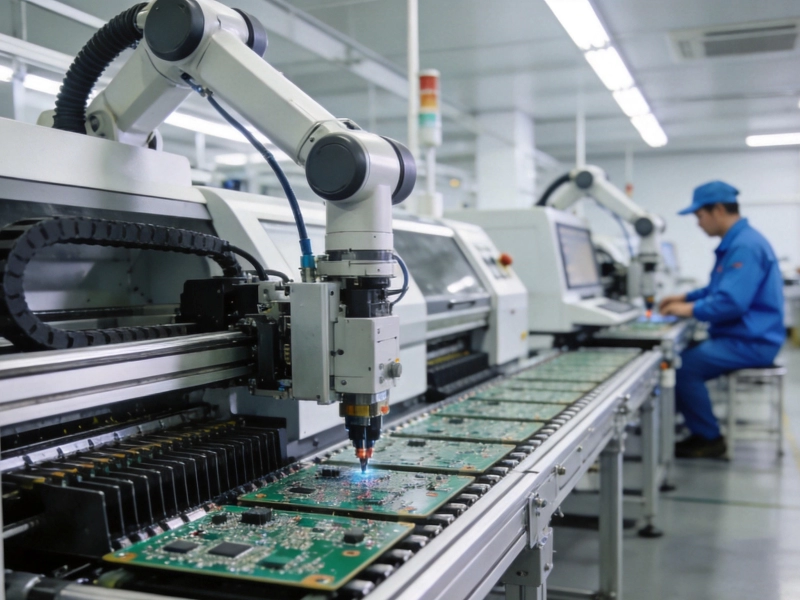
How DFM Analysis in China Can Prevent Costly SMT Assembly DelaysAugust/14/2026
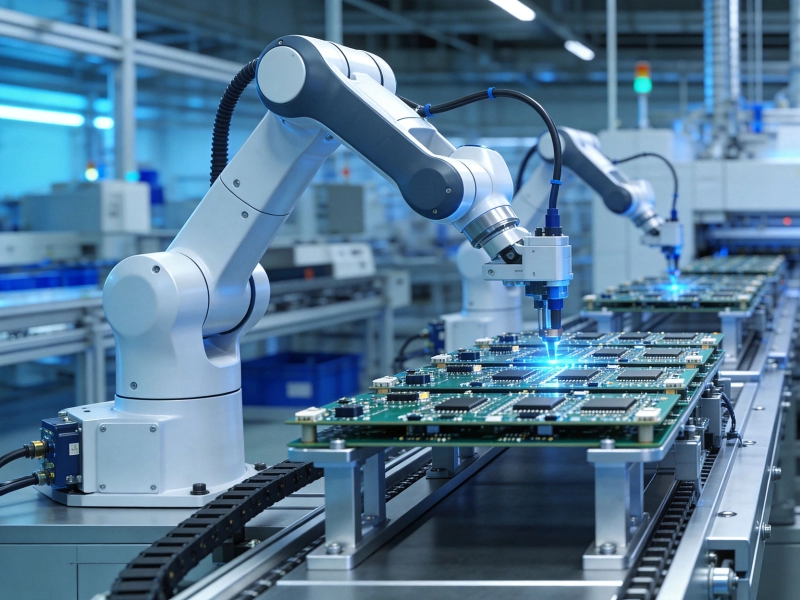
Optimizing PCB Design for Chinese SMT ManufacturersJuly/02/2026
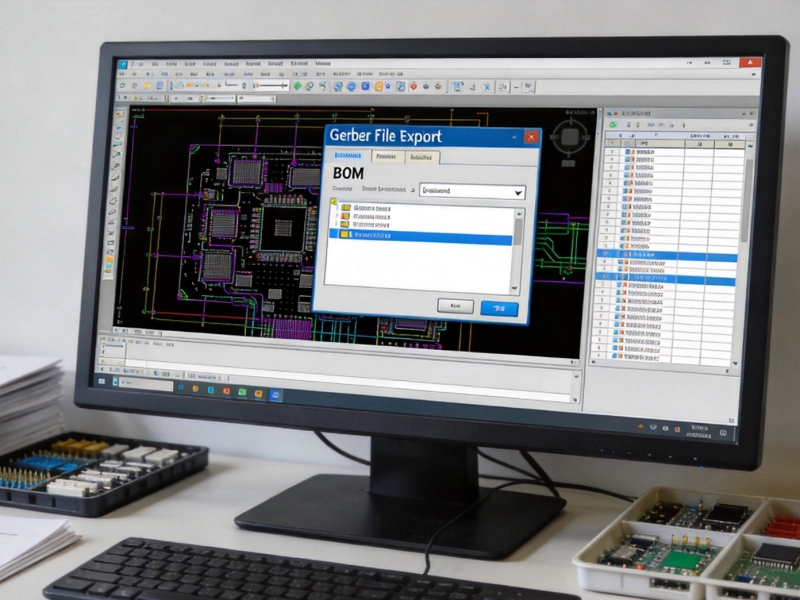
A Practical Guide to Preparing Gerber and BOM Files for China SMT Assembly DFMOctober/09/2026
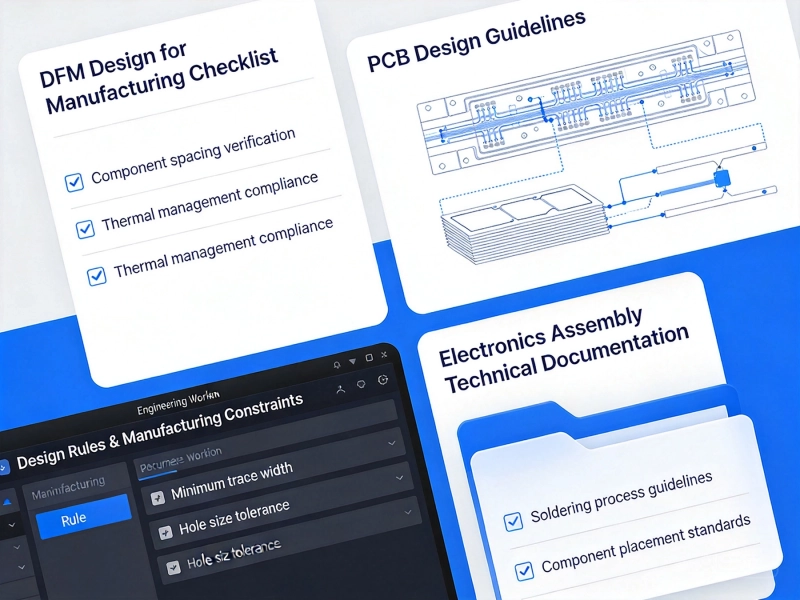
Essential DFM Guidelines for SMT PCB Assembly in ChinaMay/29/2026
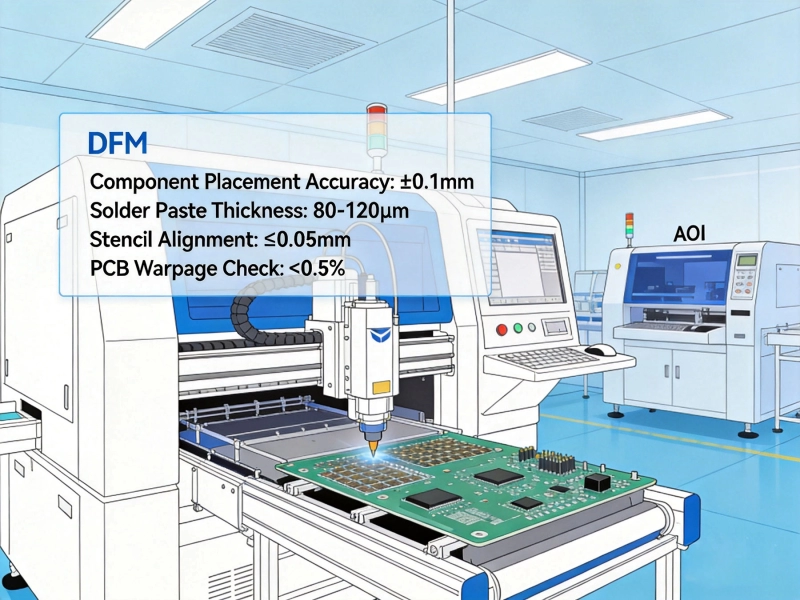
Essential DFM Guidelines for SMT PCB Assembly in ChinaJune/04/2026
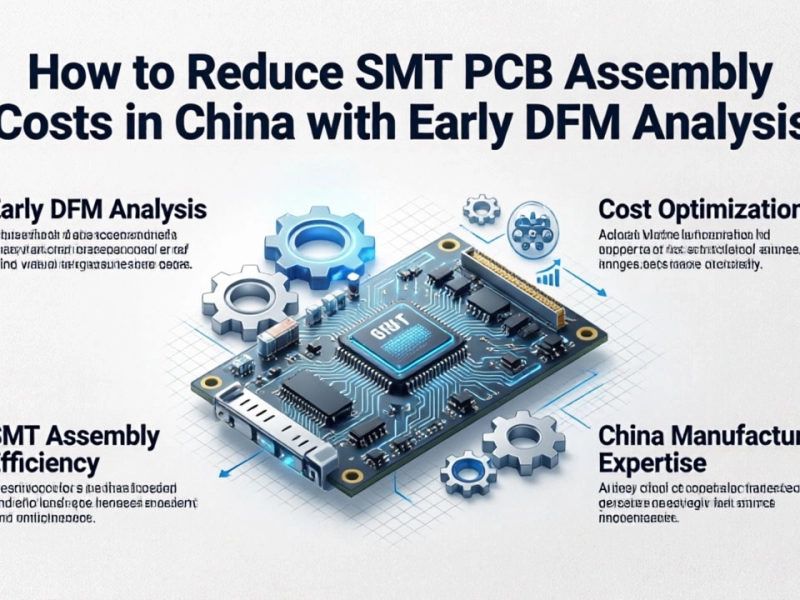
How to Reduce SMT PCB Assembly Costs in China with Early DFM AnalysisJune/17/2026
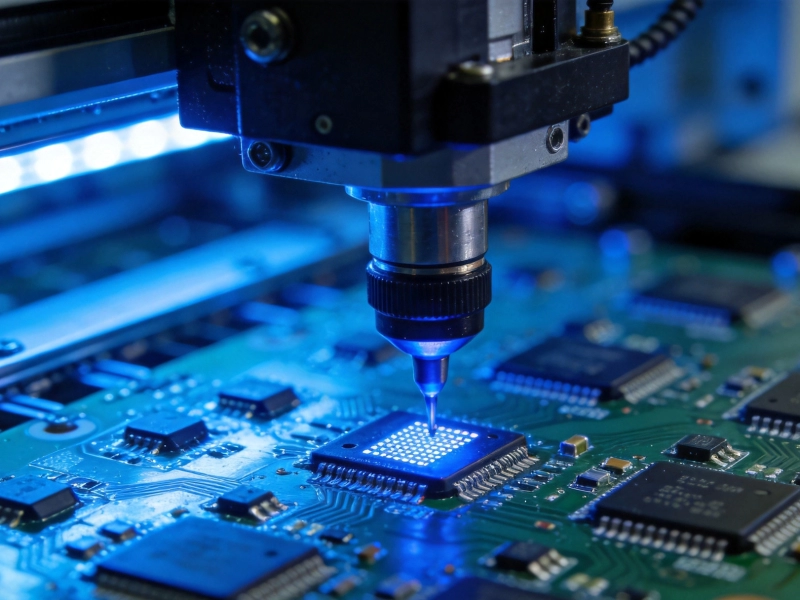
Why DFM is Critical for High-Density BGA SMT Assembly in ChinaJuly/25/2026

Communicating DFM Rules Effectively with Your SMT PCB Assembly China PartnerAugust/03/2026