Open Nav

Working with Chinese SMT manufacturers can slash your production costs by 40-60% compared to domestic assembly houses. But here's the thing: many Western designers stumble at the first hurdle because their PCB files aren't quite right for the factory floor in Shenzhen or Suzhou. The gap between what looks good in Altium and what actually works on a Chinese assembly line is bigger than most people realize.
This guide cuts through the confusion. We'll walk you through exactly what Chinese SMT factories need from your design files, common pitfalls that cause delays, and proven strategies to make your designs manufacture-ready the first time. Whether you're ordering 50 prototypes or 50,000 units, getting this right saves you time, money, and more than a few headaches.

Chinese contract manufacturers operate at massive scale. A typical Shenzhen SMT factory runs dozens of pick-and-place lines around the clock, processing hundreds of different board designs each week. This efficiency comes with certain requirements that differ from what you might be used to working with local assembly shops.
The key difference is standardization. Chinese factories have optimized their workflows for specific file formats, design rules, and communication protocols. When your files match their setup, your boards move through production smoothly. When they don't, you're looking at email back-and-forth that stretches days or even weeks.
Most Chinese SMT factories aren't set up for hand-holding. They need complete, accurate information delivered in specific formats. This isn't about being difficult—it's about maintaining throughput on lines that cost thousands of dollars per hour to run. A single board that causes a line stoppage costs more than most designers realize.
What this means practically: vague instructions like "standard Smt Assembly" will get you vague results. You need to speak their language, which means understanding their requirements before you send anything.
Getting the file formats right is where most designers first run into trouble. Here's what you actually need to send:
Your Gerber Files are the universal language of Pcb Manufacturing. For Chinese SMT factories, you should typically include:
Make sure your Gerber aperture definitions are included. Chinese factories frequently encounter issues when designers export RS-274X format without embedded apertures. If you're not sure what this means, check your CAM software's export settings—you want either RS-274X with embedded apertures or separate aperture files.
Your centroid file (also called a pick-and-place file or XY file) tells the factory exactly where each component goes. This is arguably the most critical file for Smt Assembly. A typical centroid file includes:
Here's a common mistake we see: designers export centroid data from their CAD software without verifying the rotation conventions match standard practice. Chinese factories typically expect rotation measured counterclockwise from the positive X-axis. If your software measures clockwise, you'll get mirror images on one side of the board.
Your Bom needs to be machine-readable, not just human-readable. Send it as a spreadsheet (CSV or XLSX format) with these fields as minimum:
For Chinese manufacturers, including the Chinese translation of component names in a separate column can be surprisingly helpful. This reduces the chance of assembly workers confusing similar-looking components, which does happen more often than you'd think.
Design For Manufacturability isn't just a buzzword—it's the difference between boards that assemble cleanly and boards that come back with errors. Here's what Chinese SMT factories specifically look for:
Chinese factories typically work with Surface Mount Technology that requires certain minimum clearances. For most standard SMT components:
The most common Dfm issues we see from Western designers involve fine-pitch components like QFP or BGA packages. These require tighter tolerances than many designers initially account for. If you're using 0.5mm pitch BGA components, your fabricator needs to know—and your design files need to reflect this.
Via-in-pad technology is increasingly common in modern designs, but it creates challenges for SMT assembly. The solder can wick down through the via, creating voids or tombstoning. If you're using via-in-pad, you should:
Many Chinese factories have become quite skilled at handling via-in-pad boards, but they need to know about it upfront. Don't hide this in your design—call it out explicitly in your documentation.
Fiducial Marks are the alignment targets that SMT machines use to verify board placement accuracy. They're especially important for:
Include three fiducials: two on opposite corners and one at a third location. Each fiducial should be a clear copper circle, minimum 1mm diameter, with a solder mask opening at least 2mm diameter around it. Avoid placing fiducials near board edges or panel rails.
Chinese SMT factories typically panelize boards for production efficiency. Understanding their panelization standards helps you design boards that fit seamlessly into their workflow.
Most Chinese factories work with standard panel sizes like 300mm x 250mm, 330mm x 250mm, or 400mm x 300mm. Your board should be designed to optimize material usage within these constraints. If you need a non-standard panel size, communicate this clearly upfront—the factory may charge extra or have limitations.
Panel rails (the blank borders around your boards in a panel) typically need:
If you're providing panels yourself rather than having the factory panelize, your design files need to reflect this. Include the full panel layout with all routing and tooling hole positions clearly marked.
Even with perfect files, communication gaps can derail your project. Here's how successful designers work with Chinese SMT factories:
Vague requirements create vague results. Instead of "standard SMT assembly," specify:
We recommend creating a one-page manufacturing notes document that accompanies every order. This reduces misunderstandings and gives the factory a single reference point for special requirements.
For new designs or new manufacturers, always request a small sample run before full production. A 5-10 board sample run costs a fraction of a production mistake. Use this opportunity to verify:
This step adds maybe 1-2 weeks to your timeline but can prevent costly full-production errors. We never skip this, even for experienced designers.
Having worked with dozens of designs heading to Chinese SMT assembly, here's our hard-won list of what NOT to do:
Every EDA software (Altium, KiCad, Eagle, OrCAD) has dozens of settings that affect Gerber output. The factory won't tell you "your drill file uses metric but your coordinates are in inches." You need to verify these settings yourself before exporting. Spend an hour learning your CAM export settings—it's worth it.
Run a full DRC (Design Rule Check) in your EDA software, and then run a separate Dfm check with manufacturer-specific rules. Many designers only run the default DRC, which doesn't catch manufacturing-specific issues. Most Chinese factories will catch these errors anyway, but finding out via email exchange with a factory halfway around the world isn't fun.
Just because a component exists in your library doesn't mean it's readily available. Chinese factories often source components from specific distributors. If you're specifying a hard-to-find part, confirm availability before finalizing your design. We recommend providing multiple manufacturer part numbers where possible—a second-source option for critical components saves manufacturing delays.
Moisture-sensitive components (MSL) require special handling and baking before assembly. Most surface-mount ICs are moisture sensitive at some level. If your components arrive from the factory already moisture-damaged, you'll see delamination and popcorn failures. Specify MSL requirements in your documentation and ensure the factory follows proper handling procedures.
Understanding what Quality Assurance measures Chinese factories use helps you specify the right inspection level for your application.
Most Chinese SMT factories run Automated Optical Inspection on every board. This catches placement errors, missing components, and obvious solder defects. For standard commercial electronics, AOI is usually sufficient.
If your boards include BGA packages, QFN packages with hidden pads, or other bottom-terminated components, you should specify X-ray Inspection. BGA solder joint defects aren't visible to AOI, and these packages have high defect rates if not properly inspected. The additional cost for X-ray Inspection is typically $5-15 per board—cheap insurance against field failures.
Functional testing is not typically included in standard SMT assembly quotes. If you need functional test, fixture, or programming services, specify this upfront and get it quoted separately. Many factories have in-circuit test (ICT) capabilities, but fixtures and programming often require additional lead time.
Working efficiently with Chinese manufacturers isn't just about avoiding mistakes—it's also about optimizing your design for their cost structure.
Every unused space on a panel costs you money. Work with your manufacturer to optimize panel utilization. If you can fit 4 boards per panel instead of 2, your per-board cost drops significantly. This requires coordination early in your design process.
Using 10 different resistor sizes where 2 would do increases setup time and component inventory costs. Standardize your passive component sizes across the design. 0402 and 0603 components are easiest for most Chinese factories to handle; smaller packages like 0201 require more expensive equipment and tighter process control.
Chinese factories typically have tiered pricing based on volume. Understanding these tiers helps you plan orders strategically:
If your product roadmap allows, batching orders to hit volume tiers delivers substantial savings.
Optimizing your PCB designs for Chinese SMT manufacturers isn't complicated, but it does require attention to specific details that differ from working with local assembly shops. Here's what to remember:
The factories in Shenzhen and across China have invested heavily in capabilities and expertise. When your design files match their processes, you tap into world-class manufacturing at compelling price points. The gap between "works in CAD" and "works in production" is narrower than you think—you just need to speak their language.
Standard lead time is usually 7-15 days for production runs, plus shipping time. Express options can reduce this to 3-5 days for an additional premium. Prototype runs with faster turnaround are often available. Factor in 2-3 weeks minimum for first-time orders that include sample verification.
Most reputable Chinese manufacturers offer detailed photo documentation of in-process boards, AOI results, and finished assemblies. Some offer live video inspection during production. For critical applications, third-party inspection services in China can provide independent verification at reasonable cost.
This depends heavily on the manufacturer agreement. Always clarify responsibility for defect liability before placing orders. Most factories will rework boards at no charge if defects are clearly manufacturing-related. Design-related defects (like incorrect footprints) typically require you to pay for rework. Get these terms in writing upfront.
This is a legitimate concern that deserves an honest answer. While many Chinese factories operate with excellent business ethics, the risk of IP leakage exists. Practical mitigations include: working with established manufacturers with good reputations, providing files without full documentation, and in some cases, using split manufacturing where sensitive layers are assembled separately. Your risk tolerance and application sensitivity should guide your approach.
Most Chinese factories accept orders starting at 5-10 boards, though pricing becomes more favorable at 50+ units. Some factories specialize in prototype and small-batch work with MOQs as low as 1. For production runs, 100-500 units is a common sweet spot for per-unit pricing.
Whether you're a startup launching your first product or an established company scaling up manufacturing, these principles hold. Start with complete, accurate files. Communicate clearly. Verify with samples. And remember: the factory is your partner, not your adversary. When both sides understand expectations, successful outcomes follow.
Why DFM is Critical for High-Density BGA SMT Assembly in ChinaJuly/25/2026
The Role of SMT Assembly in China's Modern Industrial Automation and Robotics SectorAugust/08/2026
A Practical Guide to Preparing Gerber and BOM Files for China SMT Assembly DFMOctober/09/2026
Essential DFM Guidelines for SMT PCB Assembly in ChinaMay/29/2026

Understanding IPC Standards in DFM for SMT PCB Assembly China ProjectsSeptember/08/2026
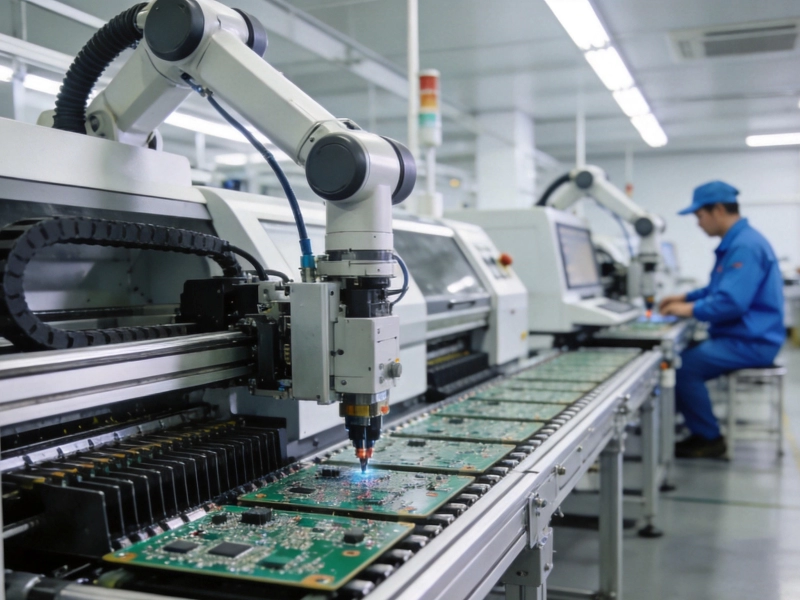
How DFM Analysis in China Can Prevent Costly SMT Assembly DelaysAugust/14/2026

Communicating DFM Rules Effectively with Your SMT PCB Assembly China PartnerAugust/03/2026
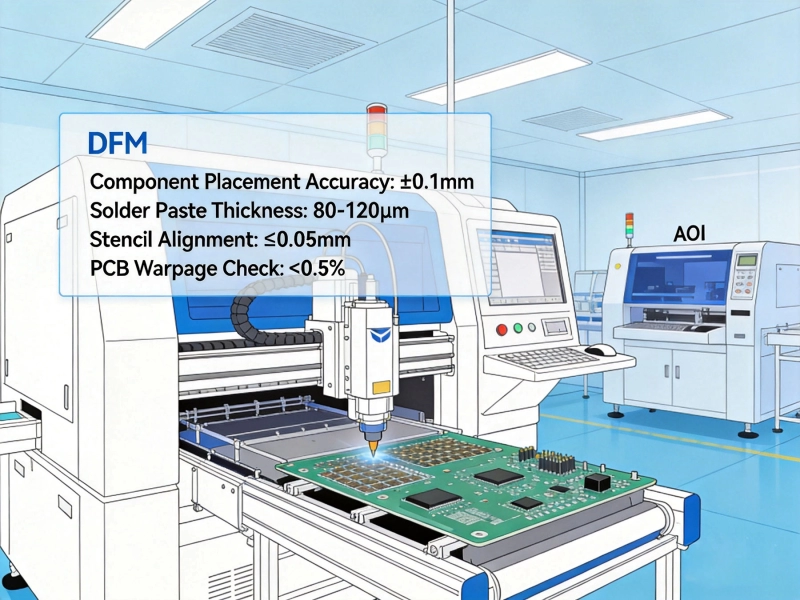
Essential DFM Guidelines for SMT PCB Assembly in ChinaJune/04/2026