Open Nav

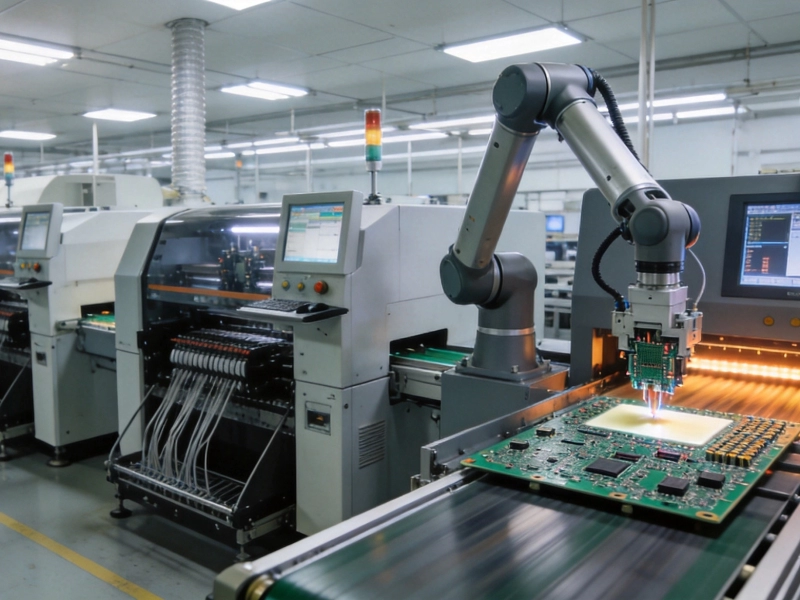
Reflow Soldering stands as the cornerstone of modern Surface Mount Technology (SMT) Pcb Assembly. In China's thriving Electronics Manufacturing hub, mastering Reflow Soldering profiles separates average assembly houses from industry leaders. This comprehensive guide explores the critical temperature profiles that determine solder joint quality, component reliability, and overall manufacturing success.
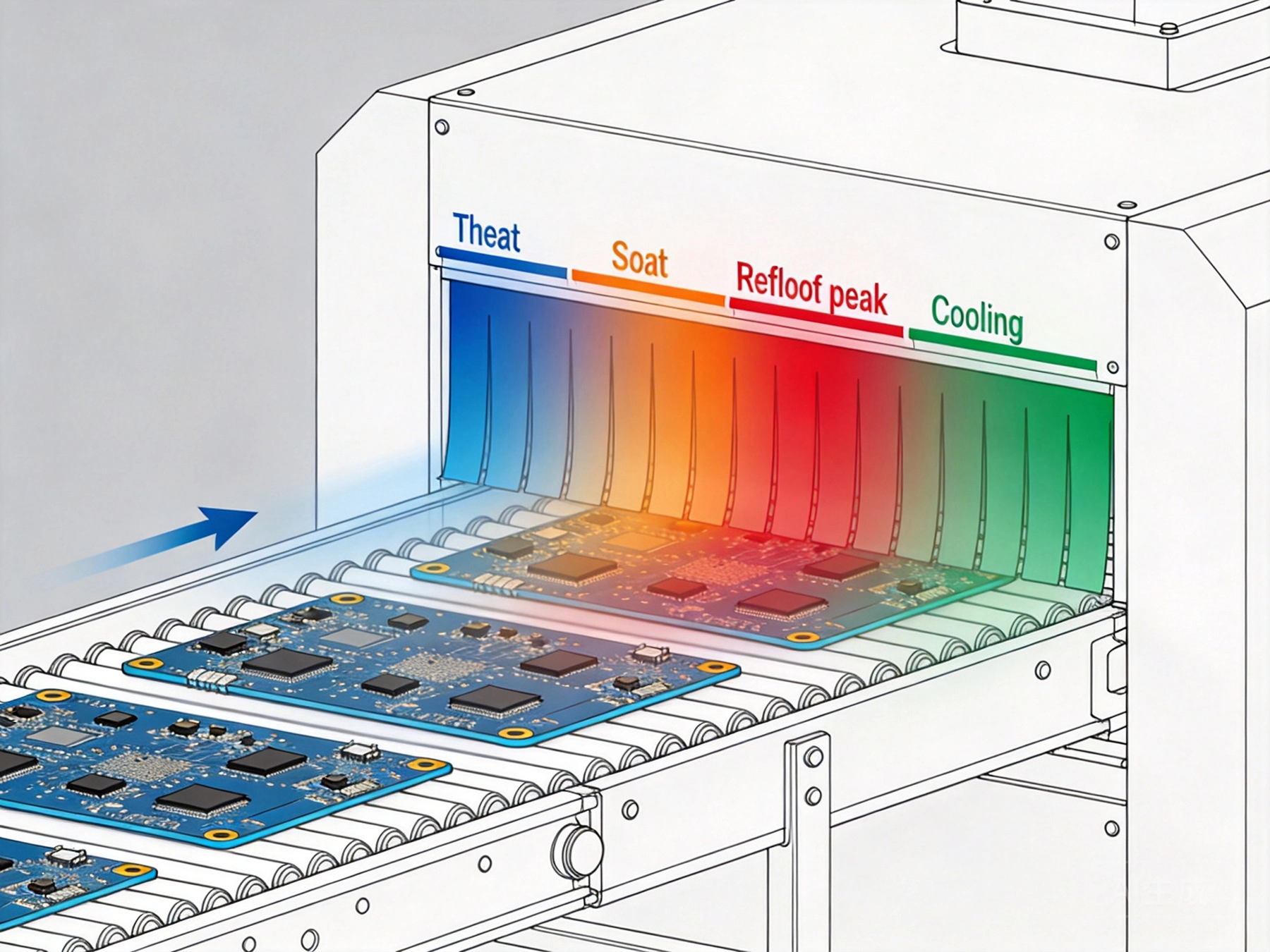
Reflow soldering creates permanent electrical connections between Surface Mount components and PCB pads using solder paste. The process heats the entire assembly in a controlled environment, causing solder paste to melt, flow, and solidify into reliable joints. Without proper temperature profiling, manufacturers risk cold joints, tombstoning, component damage, and costly rework.
China's Pcb Assembly sector handles everything from Consumer Electronics to industrial control systems. Each application demands precise thermal control. A smartphone motherboard tolerates different thermal stress than an automotive control unit. Understanding these nuances helps engineers optimize their reflow profiles for specific product requirements.
Every effective Reflow Profile consists of four distinct thermal zones. Each zone serves a specific purpose in preparing, activating, and completing the solder joint formation process.
The preheat zone gradually raises PCB and component temperatures from ambient to approximately 150°C. This controlled ramp-up serves multiple critical functions. First, it evaporates volatile solvents from the solder paste flux system. Second, it prevents thermal shock that could crack ceramic components or delaminate PCBs. Third, it activates the flux chemistry that cleans metal surfaces for proper wetting.
Chinese SMT facilities typically maintain preheat ramp rates between 1.0°C and 3.0°C per second. Faster ramps risk component damage. Slower ramps waste production time and may over-activate flux before reaching peak temperatures. The optimal rate depends on PCB thickness, copper density, and component thermal mass distribution.
Following preheat, the soak zone maintains a relatively stable temperature between 150°C and 180°C for 60 to 120 seconds. This plateau allows thermal equilibrium across the entire PCB assembly. Large components and thick copper areas heat more slowly than small components and thin traces. The soak zone gives everything time to reach uniform temperature.
Proper soaking ensures consistent solder paste activation across all joints. Uneven temperatures cause some areas to reflow while others remain solid, resulting in poor joint formation. Chinese manufacturers particularly emphasize soak zone optimization for boards with mixed component sizes, from tiny 0201 passives to large QFPs and BGA packages.
The reflow peak zone rapidly elevates temperatures above solder melting points. For standard SAC305 lead-free solder, peak temperatures reach 245°C to 250°C. The time above liquidus (TAL)—typically 217°C for SAC305—should last 30 to 90 seconds. This duration ensures adequate wetting and joint formation without excessive intermetallic growth.
Peak temperature and TAL represent the most critical profile parameters. Insufficient peak temperatures create cold joints with poor mechanical strength and electrical conductivity. Excessive temperatures damage temperature-sensitive components, cause PCB delamination, or trigger solder joint embrittlement. Leading Chinese SMT shops use thermal profiling equipment to verify actual board temperatures match recipe settings.
The cooling zone solidifies molten solder into strong, reliable joints. Controlled cooling at 2°C to 4°C per second creates fine-grained microstructures with optimal mechanical properties. Rapid cooling can cause thermal shock and component cracking. Slow cooling promotes excessive intermetallic compound growth, weakening joints over time.
Some advanced Chinese facilities employ nitrogen cooling or controlled atmosphere cooling to minimize oxidation during solidification. These techniques prove especially valuable for high-reliability applications like aerospace, medical devices, and Automotive Electronics.
China's electronics industry transitioned to lead-free soldering to meet RoHS directives and global environmental standards. Lead-free solders, primarily SAC (tin-silver-copper) alloys, require higher reflow temperatures than traditional tin-lead compositions.
Tin-lead solder profiles typically peak at 210°C to 220°C. SAC305 lead-free profiles demand 245°C to 250°C peaks—a 30°C increase that stresses components and PCBs more severely. This difference necessitates careful profile optimization and sometimes component upgrades to withstand higher thermal exposure.
Chinese manufacturers serving both domestic and export markets maintain dual-capability lines. They switch between leaded and lead-free profiles based on specific customer requirements and target market regulations.
Even experienced SMT operations encounter reflow-related defects. Understanding root causes enables rapid troubleshooting and prevention.
Tombstoning occurs when passive components stand vertically on one pad instead of lying flat. Uneven heating, improper pad design, or excessive solder paste volume typically causes this issue. Optimizing soak zone duration and ensuring uniform thermal distribution across the PCB minimizes tombstoning.
Cold joints result from insufficient peak temperatures or inadequate time above liquidus. These joints appear dull, grainy, and weak. Increasing peak temperature or extending TAL usually resolves cold joint issues.
Component skewing happens when parts shift position during reflow. Excessive paste volume, improper placement pressure, or uneven heating can cause skewing. Adjusting stencil aperture designs and verifying placement accuracy prevents this defect.
Pad delamination and PCB warping indicate thermal stress beyond material capabilities. Lowering peak temperatures, extending soak times for better uniformity, or switching to higher-Tg PCB materials addresses these problems.
Professional PCB assembly operations validate reflow profiles using thermocouple-equipped test boards. These thermal profilers record actual temperatures at critical locations throughout the reflow oven. Regular profiling ensures ovens maintain consistent performance and identifies maintenance needs before defects occur.
Leading Chinese manufacturers profile each new product introduction and re-verify profiles after significant production pauses. They place thermocouples on large components, small components, thick copper areas, and thin board sections to capture the full thermal range experienced across the assembly.
Oven maintenance significantly impacts profile consistency. Conveyor speed calibration, heater element inspection, and airflow verification ensure repeatable thermal performance. Top-tier facilities schedule preventive maintenance based on production hours rather than waiting for defects to appear.
Modern Chinese SMT facilities employ sophisticated techniques to push reflow performance further. Nitrogen atmosphere reflow reduces oxidation, improves wetting, and enables narrower process windows. Vapor phase soldering provides uniform heating regardless of component thermal mass. Vacuum reflow eliminates voids in critical applications like Power Electronics and LED lighting.
Dual-track ovens with independent temperature zones allow simultaneous processing of different products with unique profile requirements. This flexibility supports high-mix, low-volume production increasingly common in China's evolving electronics market.
Mastering reflow soldering profiles distinguishes exceptional SMT PCB Assembly operations from mediocre ones. China's electronics manufacturers have developed deep expertise in thermal process control, supporting everything from high-volume consumer products to precision industrial equipment. Understanding preheat, soak, reflow peak, and cooling zones enables engineers to optimize their processes for maximum quality and reliability.
Whether you're qualifying a new Chinese SMT partner or optimizing your own reflow lines, careful attention to temperature profiling pays dividends in reduced defects, higher yields, and more reliable electronic products. The investment in proper profiling equipment and expertise delivers returns through improved quality and reduced rework costs.
Ready to optimize your SMT PCB Assembly process? Contact our engineering team to discuss your specific reflow requirements and discover how precise thermal profiling can elevate your product quality.
Wave Soldering vs. Reflow: Navigating the SMT PCB Assembly Process in ChinaAugust/12/2026
The Importance of X-Ray Inspection for BGA in China's SMT Assembly ProcessAugust/03/2026
The Role of Automated Optical Inspection (AOI) in China's SMT Assembly LinesJune/16/2026
What to Expect During the First Article Inspection (FAI) of Your SMT PCB Assembly in ChinaSeptember/30/2026
The Complete Process WalkthroughMay/29/2026
How China's SMT PCB Assembly Process Meets International IPC-A-610 StandardsJuly/22/2026
How a Top High Frequency PCB Manufacturer Ensures Signal IntegrityJune/02/2026
Step-by-Step: From Solder Paste Printing to Final Testing in China SMT AssemblyJuly/13/2026