Open Nav

China's automotive industry has undergone a remarkable transformation over the past two decades, evolving from a manufacturing hub for global automakers to a leader in electric vehicle technology and advanced Automotive Electronics. At the heart of this transformation lies sophisticated printed circuit board assembly (PCBA) technology, particularly Surface Mount Technology (SMT) Pcb Assembly, which enables the complex electronic systems that power modern vehicles. The Automotive Electronics market in China represents one of the world's most demanding environments for PCBA manufacturing, combining high production volumes with exceptional reliability requirements and rapid technological advancement. High-reliability SMT PCB Assembly facilities throughout China have developed specialized capabilities to meet these challenges, serving both domestic Chinese automotive brands and international manufacturers seeking competitive advantages in the world's largest automotive market.
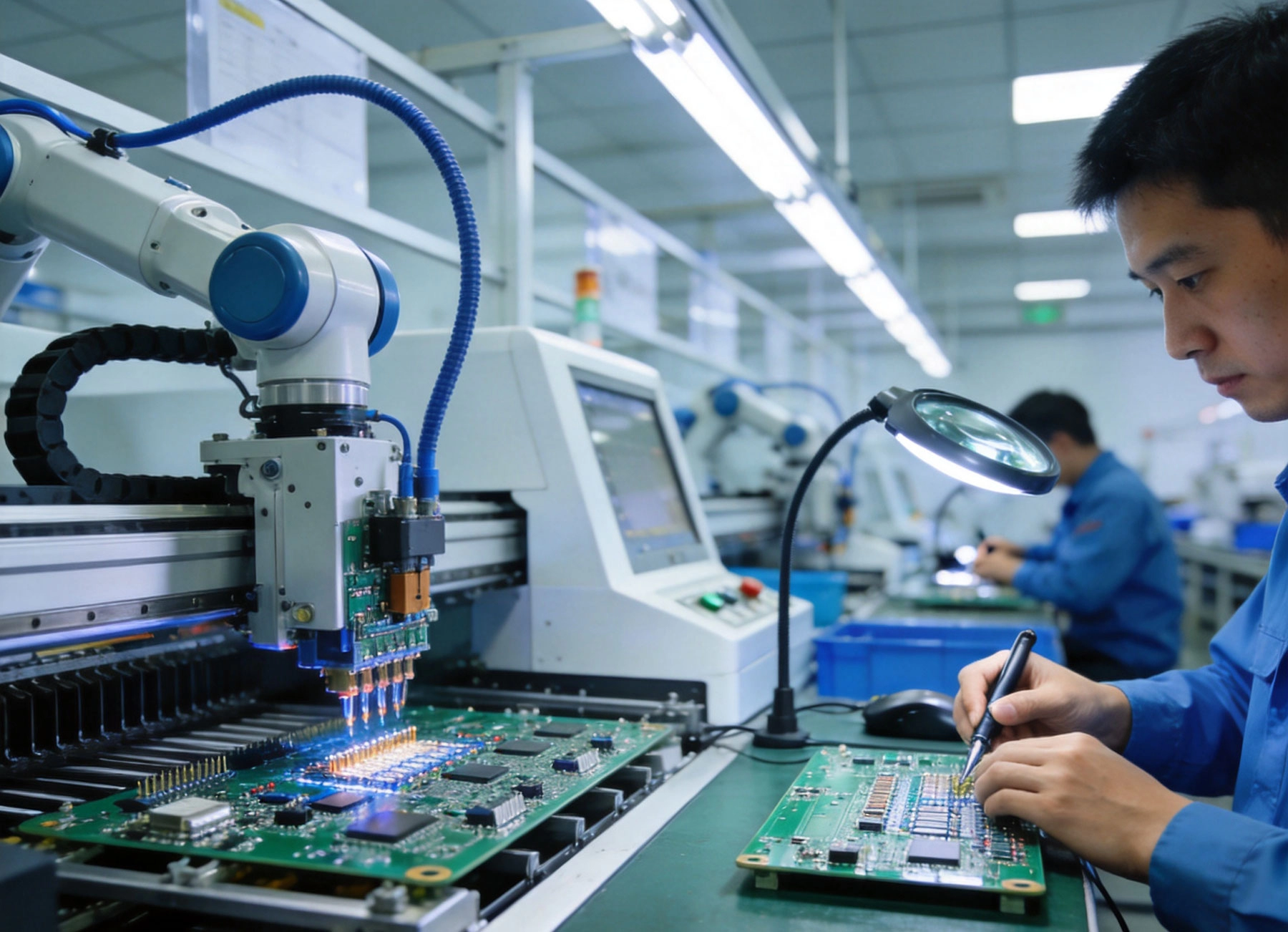
Understanding China's current position in automotive electronics requires appreciation of the industry's dramatic evolution and the unique factors that have shaped its development trajectory.
China's automotive electronics market has experienced explosive growth, driven by multiple converging factors. The sheer scale of vehicle production in China—exceeding 25 million vehicles annually—creates massive demand for electronic components and assemblies. China's aggressive push toward electric vehicles (EVs) has accelerated electronics content per vehicle, as EVs require substantially more electronic systems than traditional internal combustion vehicles.
Government policies supporting new energy vehicles (NEVs) have created a favorable environment for automotive electronics innovation and production. Subsidies, incentives, and regulatory requirements have stimulated both domestic and international investment in Chinese automotive Electronics Manufacturing. This policy-driven approach has helped China establish leadership positions in several key automotive electronics segments including battery management systems, Power Electronics, and advanced driver assistance systems (ADAS).
Consumer expectations have also evolved rapidly. Chinese consumers, particularly younger demographics, demand the same level of electronic sophistication in vehicles that they experience in smartphones and other Consumer Electronics. This expectation pressure has accelerated adoption of advanced infotainment systems, connectivity features, and smart vehicle capabilities.
China has moved beyond mere manufacturing to develop substantial domestic innovation capabilities in automotive electronics. Chinese technology companies have entered the automotive electronics space, bringing expertise from mobile devices, artificial intelligence, and telecommunications. Companies including Huawei, Xiaomi, and Baidu have invested heavily in automotive electronics, creating sophisticated solutions for autonomous driving, connectivity, and vehicle intelligence.
This domestic innovation has created a virtuous cycle of technology development. Local engineering teams develop solutions specifically optimized for Chinese market conditions and consumer preferences. These innovations then feed back into manufacturing processes, creating capabilities that can serve global markets as well as domestic requirements.
Research and development investment has grown substantially. Chinese automotive electronics companies allocate significant percentages of revenue to R&D, often exceeding the investment levels of established Western companies. This R&D focus has accelerated development of next-generation technologies and reduced dependence on foreign intellectual property.
China has developed one of the world's most complete automotive electronics supply chains. From raw materials and components to assembly and testing, China possesses end-to-end capabilities that reduce dependence on foreign suppliers and improve supply chain resilience. This localization strategy accelerated during the COVID-19 pandemic when global supply chain disruptions highlighted the risks of dependency on distant suppliers.
Component manufacturers including chip foundries, passive component producers, and specialized component suppliers have established substantial Chinese operations. This proximity to assembly facilities reduces lead times, lowers logistics costs, and improves coordination throughout the supply chain. Local supply chains also facilitate rapid response to design changes and quality issues.
The Chinese government has encouraged supply chain localization through various industrial policies and incentives. These policies have been particularly successful in attracting advanced manufacturing capabilities and fostering development of domestic suppliers for critical components.
While domestic markets provide substantial volume, Chinese automotive electronics manufacturers have also developed significant export capabilities. Chinese SMT PCBA facilities serve global automotive brands, shipping completed assemblies to manufacturing locations worldwide. This export orientation has pushed Chinese manufacturers to achieve global quality standards and develop capabilities to serve diverse market requirements.
Chinese companies have also established manufacturing facilities internationally, particularly in Southeast Asia, Europe, and North America. These overseas facilities serve regional markets while maintaining ties to Chinese manufacturing expertise and supply networks. This global expansion has accelerated technology transfer and capability development.
Automotive electronics impose reliability requirements far more stringent than Consumer Electronics. These requirements shape every aspect of SMT PCB Assembly in China's automotive industry.
Automotive electronics must operate reliably across extreme environmental conditions. Vehicles experience temperature ranges from -40°C to +125°C, far exceeding the operating ranges of most consumer electronics. This temperature cycling creates stress on solder joints, components, and PCB materials that can lead to premature failure if not properly addressed.
Humidity presents additional challenges. Vehicles operate in diverse climatic conditions from arid deserts to tropical rainforests. High humidity combined with temperature cycling creates condensation that can cause short circuits or accelerate corrosion. Moisture ingress through connectors, seals, or enclosures can cause immediate failures or latent defects that manifest over time.
Vibration is a constant presence in automotive applications. Engine vibration, road surface roughness, and vehicle motion create continuous mechanical stress on electronic assemblies. These vibrations can cause solder joint fatigue, component damage, and connection failures over time. The vibration spectrum varies significantly between different vehicle types and operating conditions, requiring design solutions that account for specific vibration profiles.
Chemical exposure creates additional environmental stress. Vehicles encounter road salt, cleaning chemicals, fuel vapors, and various automotive fluids. These chemicals can degrade materials, cause corrosion, or create conductive paths that lead to failures. Protective coatings, material selection, and enclosure design must account for chemical exposure throughout the vehicle's service life.
Many automotive electronic systems are safety-critical, meaning their failure could result in injury or death. These systems including brakes, steering, airbags, and stability control impose the highest reliability requirements. Safety-critical systems require fail-safe designs, redundancy, and extensive testing to ensure that single component failures do not compromise safety.
Functional safety standards including ISO 26262 provide frameworks for developing safety-critical automotive electronics. These standards require systematic processes for hazard analysis, risk assessment, and safety validation. Smt Pcb Assembly processes must support these safety requirements through controlled manufacturing, Traceability, and verification.
Even non-safety-critical systems affect vehicle safety indirectly. Infotainment system failures that distract drivers, connectivity failures that prevent emergency communications, or sensor failures that reduce system awareness all contribute to overall vehicle safety risk. This creates an environment where essentially all automotive electronics require high reliability considerations.
Automotive electronics must support vehicle lifetimes typically exceeding 10-15 years, far longer than consumer electronics replacement cycles. This longevity requirement affects component selection, material choices, and manufacturing processes. Components must remain available and manufacturable throughout the product lifecycle, requiring careful planning and supplier relationships.
Aging effects accumulate over long service lives. Material degradation, solder joint fatigue, and component performance drift gradually reduce reliability margins. Designers must account for these aging effects through robust design margins and accelerated life testing that simulates long-term degradation.
Maintenance and repair considerations also influence design and assembly. While many automotive electronic systems are not designed for field repairability, some systems must support serviceability through modular design or component replacement. These requirements affect assembly approaches including component accessibility and test point design.
Automotive production volumes create unique manufacturing challenges. Production runs of hundreds of thousands or millions of units require extremely consistent, repeatable processes. Small variations in assembly parameters that would be acceptable in low-volume production become critical at automotive scale because they can produce significant numbers of defective units.
Yield management becomes critically important at high volumes. Even a yield reduction of 1% can represent millions of dollars in scrap costs and lost revenue. Manufacturers must achieve and maintain exceptional yield levels while managing product complexity and technological advancement.
Cost efficiency at high volumes drives continuous process optimization. Equipment utilization, material utilization, and throughput optimization all contribute to competitive advantage. The scale of production enables substantial investment in automation and process improvements that would not be justified at lower volumes.
High-reliability Smt Pcb Assembly in China's automotive industry operates within a comprehensive framework of quality standards and certifications that ensure products meet the demanding requirements of automotive applications.
IATF 16949 represents the international automotive quality management standard that defines requirements for quality management systems in the automotive industry. This standard builds upon ISO 9001 with additional automotive-specific requirements covering product safety, defect prevention, and Continuous Improvement.
Chinese automotive electronics manufacturers achieve Iatf 16949 Certification to demonstrate their quality system capabilities. Certification requires rigorous audits of processes, documentation, and quality management practices. The standard emphasizes process approach, risk-based thinking, and customer-specific requirements.
Iatf 16949 Certification is not a one-time achievement but requires ongoing maintenance through regular surveillance audits and recertification. This continuous audit pressure drives ongoing process improvement and quality system maturity. Many Chinese manufacturers have developed highly sophisticated quality management systems that exceed minimum IATF 16949 requirements to achieve competitive advantages.
The Automotive Electronics Council (AEC) provides qualification standards for automotive electronic components. AEC-Q100 specifically addresses integrated circuits, while other standards cover passive components and discrete semiconductors. These standards define test procedures and requirements for temperature, vibration, humidity, and other automotive stress conditions.
SMT Pcb Assembly processes must work with components that have undergone AEC qualification. This qualification provides confidence that components will perform reliably in automotive environments. However, assembly processes themselves must also accommodate component specifications including moisture sensitivity, thermal profiles, and handling requirements.
Chinese automotive electronics manufacturers work closely with component suppliers to ensure proper component selection, handling, and assembly processes. Component engineering teams evaluate new components for automotive suitability and develop assembly processes that respect component limitations while achieving production efficiency.
ISO 26262 addresses functional safety for electrical and electronic systems in road vehicles. This standard defines safety lifecycle requirements from concept through production and service. For SMT PCB assembly, ISO 26262 requirements affect process control, Traceability, and verification of safety-critical assemblies.
Safety-critical assemblies require special handling throughout production. These assemblies may receive additional inspection, testing, or traceability measures beyond standard production. Separate production lines or controlled production runs may be established for safety-critical products to prevent cross-contamination with non-critical products.
Documentation requirements for ISO 26262 compliance are extensive. Assembly processes, test procedures, and quality records must be maintained to support safety analysis and certification activities. Chinese manufacturers have developed sophisticated documentation systems to meet these requirements while maintaining production efficiency.
Ipc Standards provide widely accepted requirements for Pcb Design, fabrication, and assembly. Key standards for automotive applications include IPC-6012 for rigid PCB Fabrication and Ipc-a-610 for acceptability of electronic assemblies. These standards provide objective criteria for quality assessment and facilitate communication between design, fabrication, and assembly stakeholders.
Chinese automotive electronics manufacturers typically target Ipc Class 3 requirements, which specify the most stringent quality requirements for high-reliability applications. This class includes requirements for plated through holes, solder joint quality, Component Placement, and visual acceptability.
Training and certification of personnel in Ipc Standards ensures consistent application of quality criteria. Many Chinese manufacturers maintain large staffs of IPC-certified specialists who serve as quality experts and trainers for production personnel.
Chinese automotive electronics manufacturers have invested heavily in advanced Smt Manufacturing technologies to meet automotive quality requirements while maintaining competitive production costs.
Solder Paste Printing represents the foundation of Smt Assembly Quality, and Chinese facilities have invested in state-of-the-art printing technology. High-precision stencil printers with vision alignment systems ensure accurate paste deposition on fine-pitch components and high-density boards.
Advanced stencil technologies including laser-cut stencils with nanocoatings provide exceptional paste release characteristics and consistent volume control. Stencil design capabilities allow Rapid Prototyping and optimization for new products while maintaining production quality for established products.
Real-time paste inspection systems verify paste deposition quality immediately after printing. These systems detect insufficient paste, bridging, misalignment, and other defects before components are placed, enabling rapid process adjustment and preventing defective boards from progressing through the assembly line.
Print parameter optimization uses statistical process control and design of experiments to achieve optimal paste deposition for each product. This optimization considers paste properties, stencil design, board characteristics, and component requirements to achieve consistent, reliable printing performance.
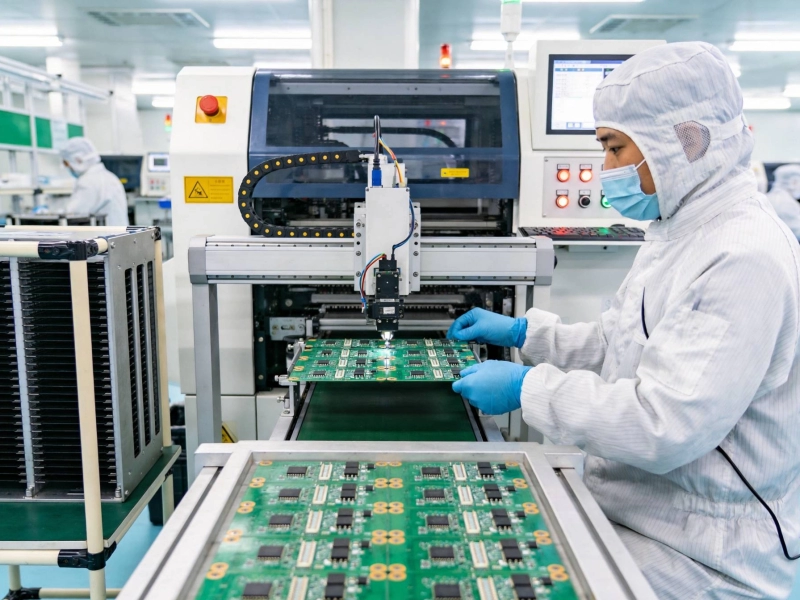
Modern SMT lines in Chinese automotive facilities feature high-speed pick-and-place machines capable of placing thousands of components per hour. These machines combine precision placement with high throughput to meet automotive production volume requirements while maintaining quality standards.
Multiple-head configurations enable simultaneous placement of different component types. Some lines incorporate specialized heads for large or unusual components that cannot be placed on standard equipment. This flexibility allows assembly of diverse product types on the same production lines while maintaining efficiency.
Vision systems provide sub-micron placement accuracy for fine-pitch components and High-density Interconnect packages. These systems verify component orientation, lead coplanarity, and package integrity before placement, preventing defective components from being assembled onto boards.
Force-controlled placement systems apply appropriate placement pressure for different component types, preventing damage to delicate components while ensuring proper registration. This capability is particularly important for automotive components including large BGA packages and complex multi-chip modules.
Re soldering automotive assemblies requires sophisticated control of thermal profiles. Chinese facilities use advanced reflow ovens with multiple independently controlled heating zones and real-time temperature monitoring. These systems create precise thermal profiles that achieve proper soldering while protecting components from thermal damage.
Nitrogen atmosphere reflow reduces oxidation and improves solder joint quality, particularly important for reliability-critical automotive applications. Some facilities implement vacuum reflow technology to eliminate voids in large area solder joints, which improves thermal performance and reliability under thermal cycling.
Profile optimization systems automatically adjust reflow parameters based on board characteristics, component requirements, and environmental conditions. These systems ensure consistent soldering quality across different production lots and changing conditions.
Thermal profiling capability allows rapid verification and optimization of reflow profiles. Thermocouples attached to test boards provide detailed temperature data that profiles re thermal performance. This profiling capability supports process development and ongoing Quality Assurance.
Inspection represents a critical quality control function in automotive Smt Assembly. Chinese facilities have invested extensively in automated inspection systems that provide comprehensive quality verification without slowing production.
Automated Optical Inspection (Aoi) systems with high-resolution cameras and advanced image analysis detect placement defects, soldering issues, and quality problems at multiple stages throughout production. Multi-angle imaging and 3D capabilities provide comprehensive inspection of complex assemblies.
X-ray Inspection provides visibility into hidden solder joints, particularly important for BGA components and other packages where visual inspection is limited. 3D X-ray tomography provides complete volumetric inspection of complex structures, detecting voids, insufficient solder, and bridging that would be invisible to surface inspection.
Functional testing systems verify electrical performance of assembled boards. These systems include in-circuit testing (ICT), boundary scan testing, and functional testing capabilities. Testing is integrated into production lines with automated handling and result logging to maintain throughput while ensuring quality.
Comprehensive Quality Assurance systems ensure that automotive SMT assemblies meet reliability requirements consistently across high-volume production.
Statistical process control (SPC) provides ongoing monitoring of production processes to detect variations before they produce defects. Chinese automotive electronics manufacturers implement SPC on critical process parameters including paste deposition volume, placement accuracy, reflow temperatures, and solder joint quality.
Control charts track parameter variations over time, allowing operators and engineers to identify trends and process drifts before they exceed acceptable limits. Alarms and notifications alert operators when parameters approach control limits, enabling proactive intervention before defective products are produced.
Process capability analysis quantifies how well processes meet specification requirements. Capability indices (Cpk values) provide standardized metrics for process performance. Automotive applications typically require Cpk values above 1.33, with safety-critical applications requiring even higher capability.
Real-time SPC data feeds into manufacturing execution systems (Mes) that provide visibility across production. This real-time visibility enables rapid decision-making and coordinated response to process issues. Quality dashboards and trend analysis support Continuous Improvement initiatives.
Complete traceability supports automotive quality requirements and enables effective problem resolution when issues arise. Chinese manufacturers implement comprehensive traceability systems that track materials, processes, and test results throughout production.
Lot tracking records which lots of components, PCBs, and materials are used in each assembly. This traceability enables rapid identification of affected units if quality issues are discovered in specific material lots. Serial tracking of individual assemblies provides even more granular traceability when required.
Process parameter logging records settings and actual values for critical process parameters. This data enables analysis of how process variations affect quality and supports root cause analysis of defects. Automated data logging reduces human error and ensures comprehensive data collection.
Test result logging captures the results of all inspection and testing operations. This data supports quality analysis, process optimization, and customer documentation requirements. Historical test data provides insights into long-term quality trends and process performance.
Preventive maintenance programs ensure equipment reliability and consistent performance. Chinese facilities implement comprehensive maintenance strategies based on manufacturer recommendations, operating conditions, and performance data.
Preventive maintenance schedules replace wear items before failure occurs, preventing unscheduled downtime and quality variations. Critical systems including placement heads, reflow zones, and inspection cameras receive particularly frequent attention to prevent performance degradation.
Predictive maintenance uses sensor data and performance trends to predict when maintenance will be required. This approach optimizes maintenance timing, performing work when needed rather than on fixed schedules. Vibration analysis, thermal monitoring, and other condition monitoring techniques support predictive maintenance.
Calibration programs ensure measurement accuracy across inspection and testing equipment. Regular calibration with traceable standards maintains measurement accuracy and supports quality assurance requirements. Calibration records support audit activities and customer documentation.
Supplier quality management ensures that incoming materials meet specifications and support overall quality objectives. Chinese automotive electronics manufacturers implement comprehensive supplier quality programs covering all material suppliers.
Supplier qualification processes evaluate new suppliers for quality capabilities, reliability, and compatibility with automotive requirements. Qualification includes facility audits, process capability assessment, and sample testing. Only qualified suppliers are approved for automotive production.
Supplier development programs help suppliers improve quality capabilities. Technical assistance, process engineering support, and quality training help suppliers achieve the high standards required for automotive applications. These development relationships create supply chain resilience and continuous improvement.
Incoming inspection verifies that materials meet specifications before use in production. Inspection scope varies based on supplier performance, material criticality, and risk assessment. Statistical sampling plans balance inspection thoroughness against inspection efficiency while maintaining quality assurance.
Continuous improvement programs drive ongoing quality enhancement and cost reduction. Chinese manufacturers have embraced various improvement methodologies and have developed sophisticated continuous improvement capabilities.
Kaizen programs encourage small, incremental improvements suggested by employees at all levels. These programs tap the operational knowledge of production personnel who are closest to day-to-day operations. Recognition and reward systems motivate employee participation in improvement activities.
Six Sigma methodologies apply statistical tools to reduce process variation and defects. Green Belt and Black Belt certified practitioners lead improvement projects that address specific quality or efficiency issues. These projects target significant improvements in quality, yield, or productivity.
Lean manufacturing principles eliminate waste and improve efficiency throughout production. Value stream mapping identifies non-value-added activities that can be eliminated or optimized. Cellular manufacturing, pull systems, and standardized work support lean principles in Smt Assembly environments.
High-reliability SMT PCB assembly in China's automotive industry faces unique challenges that require innovative solutions and continuous adaptation.
Global semiconductor shortages and supply chain disruptions have created significant challenges for automotive Electronics Manufacturing. Chinese manufacturers have developed multiple strategies to address these supply chain vulnerabilities.
Dual sourcing strategies maintain qualified alternative suppliers for critical components. When primary suppliers experience disruptions, alternative sources can maintain production. This approach requires upfront investment in qualification and testing but provides substantial resilience benefits during supply chain disruptions.
Design for flexibility enables substitution of alternative components when needed. Standardized interfaces, component footprints, and electrical specifications facilitate component substitution without requiring complete redesign. This flexibility requires careful design work upfront but provides operational agility during supply disruptions.
Strategic inventory programs maintain buffer stocks of critical components with long lead times or limited suppliers. These buffer stocks provide protection against supply disruptions while balancing inventory carrying costs against disruption risks. Inventory optimization models determine optimal buffer levels based on supply risk and cost considerations.
Local supply chain development reduces dependence on international suppliers and improves supply chain resilience. Chinese manufacturers work with domestic component suppliers to build local capabilities for critical components. This localization strategy requires time and investment but provides long-term strategic benefits.
Automotive market dynamics create intense cost pressure while requiring exceptional quality. Chinese manufacturers must balance these competing objectives through efficiency improvements and strategic technology investments.
Process optimization improves yield and reduces scrap cost, directly addressing both quality and cost objectives. Statistical process control, root cause analysis, and process engineering work together to eliminate defects and improve first-pass yield. Even small yield improvements represent substantial cost savings at automotive production volumes.
Automation investment reduces labor costs while improving consistency and quality. Chinese manufacturers have invested heavily in automation technologies including automated material handling, robotic assembly support, and automated testing. These investments require substantial capital but provide long-term competitive advantages.
Lean manufacturing principles eliminate waste throughout production, reducing costs while improving quality. Value stream analysis identifies non-value-added activities that can be eliminated. Standardized work reduces variation and improves efficiency. These lean principles have been widely adopted across Chinese automotive electronics facilities.
Technology upgrades provide opportunities to reduce costs while improving quality. Newer equipment often offers better performance, higher throughput, and improved quality capabilities. Strategic technology investments balance immediate cost against long-term benefits, prioritizing upgrades that provide the greatest return on investment.
Automotive electronics technology evolves rapidly, requiring manufacturers to continuously adapt capabilities and processes. Chinese manufacturers have developed strategies to manage this technological change.
Flexible production lines accommodate diverse product types and technology changes. Modular equipment designs, reconfigurable line layouts, and programmable process parameters support flexibility. This investment in flexibility enables rapid response to new product introductions while maintaining efficient production.
Technology scouting and partnership programs keep manufacturers informed about emerging technologies. Relationships with equipment suppliers, component manufacturers, and research organizations provide early visibility into technology trends. This foresight enables proactive capability development before market demand accelerates.
Training and development programs ensure workforce skills keep pace with technology changes. Technical training on new equipment, quality methods, and automotive standards maintains workforce capabilities. Partner relationships with technical schools and universities support development of new talent with appropriate skills.
Phased technology adoption spreads the investment burden and reduces risk. Technologies are piloted on limited production, refined based on experience, and gradually expanded to full production. This phased approach manages risk while maintaining competitive capabilities.
Managing large workforces in high-technology manufacturing environments presents unique challenges. Chinese automotive electronics manufacturers have developed sophisticated workforce management strategies.
Skills development programs build technical capabilities across the workforce. Structured training programs, certification systems, and career development paths help employees develop and apply their skills. These programs create a skilled workforce capable of supporting advanced manufacturing operations.
Engagement and motivation programs maintain workforce commitment to quality objectives. Recognition systems, incentive programs, and communication strategies create environments where employees take ownership of quality and continuous improvement. High engagement levels correlate with quality performance and operational excellence.
Knowledge management systems capture and distribute operational knowledge throughout the organization. Best practice libraries, problem-solving databases, and technical documentation systems enable knowledge sharing across facilities and teams. This knowledge management prevents loss of expertise and accelerates learning across the organization.
Talent acquisition strategies ensure access to skilled personnel for growth and technology changes. Partnerships with universities, competitive compensation packages, and career development opportunities attract and retain talent. Strategic workforce planning aligns talent acquisition with business growth needs.
The future of high-reliability SMT PCB assembly in China's automotive industry will be shaped by several emerging trends and technological developments.
China's leadership in electric vehicle technology will continue driving automotive electronics requirements. EV battery management systems require sophisticated SMT assemblies with high reliability and thermal performance. Power Electronics for motor control and charging systems create new assembly challenges for high-current and high-voltage components.
Electric vehicle architectures enable new electronic system approaches that leverage the available electrical power. These architectures create opportunities for more sophisticated electronics and require new assembly capabilities. The rapid evolution of EV technology ensures continuous demand for innovation in PCBA manufacturing.
Charging infrastructure represents another growth area for automotive electronics. Public and private charging stations require electronic assemblies with outdoor durability, safety features, and connectivity capabilities. These applications require specialized assembly approaches and testing capabilities.
ADAS technology continues to advance, requiring increasingly sophisticated electronic assemblies. Sensor fusion systems that combine camera, radar, and lidar data require high-speed signal processing and exceptional Signal Integrity. These systems push SMT assembly capabilities toward higher frequencies and more complex interconnect structures.
Autonomous driving technology will create new requirements for safety-critical electronics. Redundancy, fault tolerance, and fail-safe operation will require specialized assembly approaches and testing capabilities. The extremely high reliability requirements of autonomous systems will drive advances in quality assurance and reliability prediction.
Sensor Miniaturization and integration will create new assembly challenges. As sensors become smaller and more integrated, assembly precision requirements become more demanding. Micro-scale components and 3D packaging technologies will require new assembly equipment and process capabilities.
Industry 4.0 technologies will transform SMT PCB assembly through increased automation, connectivity, and intelligence. Smart factories will feature extensive sensor networks that monitor process conditions and equipment health in real time. This data will enable predictive maintenance, process optimization, and automated quality control.
Digital twins of production lines will enable simulation and optimization before physical implementation. These virtual models will support new product introduction, process optimization, and capacity planning. Digital twins will reduce development time and improve first-pass yield for new products.
Artificial intelligence will analyze production data to identify optimization opportunities and predict quality issues. Machine learning algorithms will detect subtle patterns that human analysts might miss. AI-powered decision support will help operators and engineers make better decisions faster.
Augmented reality technologies will provide operators with real-time guidance and information during assembly and quality inspection. AR headsets can overlay work instructions, component information, and quality criteria directly on the physical work area. This technology will reduce training time and improve consistency.
Environmental sustainability will increasingly influence SMT assembly operations. Energy-efficient equipment, waste reduction programs, and recycling initiatives will become more important. Chinese manufacturers will face regulatory pressure and customer expectations to reduce environmental impact.
Material selection will consider lifecycle impacts and recyclability. Solder alloys, component packaging, and cleaning processes will be evaluated for environmental characteristics as well as technical performance. Lead-free and halogen-free technologies will become more prevalent.
Manufacturing processes will optimize energy consumption and reduce waste generation. Advanced process control and equipment design will minimize energy use. Waste reduction programs will target scrap, chemicals, and consumables. Circular economy approaches will find new applications in automotive electronics manufacturing.
Chinese automotive electronics manufacturers will face increased global competition as other regions develop advanced manufacturing capabilities. At the same time, Chinese companies will expand their global presence through international facilities and partnerships.
Quality capability will become increasingly important as global competition intensifies. Manufacturers that can demonstrate exceptional quality, reliability, and consistency will have competitive advantages in global markets. Quality differentiation will become a key competitive strategy.
Service offerings will expand beyond pure manufacturing to include design support, engineering services, and Supply Chain Management. Chinese manufacturers will offer integrated solutions that address customer needs throughout product development and production. These value-added services will create deeper customer relationships and competitive differentiation.
Regional customization capabilities will enable manufacturers to serve diverse global markets with localized products and services. Understanding regional requirements, standards, and customer preferences will support effective global expansion. This localization strategy will require global operational capabilities while maintaining quality consistency.
High-reliability SMT PCB assembly in China's automotive industry represents one of the world's most advanced and demanding manufacturing environments. The combination of massive market scale, exceptional reliability requirements, and rapid technological evolution creates challenges that have driven development of sophisticated manufacturing capabilities throughout China.
Chinese manufacturers have responded to these challenges with substantial investment in advanced equipment, comprehensive quality systems, and skilled workforces. The results are world-class manufacturing capabilities that serve both domestic and global automotive markets. China's automotive electronics manufacturers have moved beyond mere cost leadership to establish true competitive advantages in quality, reliability, and innovation.
The future holds both challenges and opportunities. Supply chain disruptions, competitive pressures, and technological change will continue testing manufacturers' capabilities. However, the growth of electric vehicles, autonomous driving, and smart vehicle technologies will create new demand for sophisticated electronic assemblies. Manufacturers that can adapt to these changing requirements while maintaining exceptional quality and reliability will thrive in this dynamic market.
The success of Chinese automotive electronics manufacturers in achieving high-reliability SMT PCB assembly capabilities demonstrates the potential for emerging manufacturing regions to achieve global excellence in demanding industries. This success story provides lessons for manufacturers worldwide about the combination of technology investment, quality system development, and workforce engagement required to achieve manufacturing excellence.
As the automotive industry continues its transformation toward greater electronic content, higher functionality, and increased autonomy, the role of high-reliability SMT PCB assembly will only grow in importance. China's automotive electronics manufacturers are well-positioned to lead this transformation, bringing advanced capabilities, innovative approaches, and relentless focus on quality to the evolving automotive electronics market.
Automotive SMT PCB assembly in China requires compliance with multiple quality standards including IATF 16949 for quality management systems, ISO 26262 for functional safety, AEC component qualification standards, and IPC standards for PCB Fabrication and assembly acceptability. Manufacturers typically target Ipc Class 3 requirements which specify the most stringent quality criteria for high-reliability applications. These standards are not optional but are essential requirements for serving the automotive market.
Automotive SMT assembly has much stricter quality requirements, more comprehensive testing, and higher process control compared to consumer electronics. Automotive electronics must operate reliably across extreme environmental conditions (-40°C to +125°C) for 10-15 years, versus typical consumer electronics lifetimes of 2-5 years. Safety-critical systems require functional safety compliance per ISO 26262. Documentation requirements, traceability, and testing are far more extensive. Automotive manufacturers maintain much larger quality organizations and more sophisticated quality systems than typical consumer electronics manufacturers.
Chinese manufacturers ensure quality through comprehensive quality systems including statistical process control with real-time monitoring, automated inspection at multiple production stages, complete traceability of materials and processes, preventive maintenance programs, and supplier quality management. They use advanced inspection equipment including Aoi, X-ray, and automated test systems. Statistical process control tracks key parameters and alerts operators to variations before defects occur. Traceability systems enable rapid problem resolution when issues arise. These systems work together to maintain consistent quality across high-volume production.
Key future trends include continued growth in electric vehicle technology requiring new assembly capabilities for power electronics and battery systems, advancement of ADAS and autonomous driving creating demand for more sophisticated electronics with higher reliability requirements, adoption of Industry 4.0 technologies including smart manufacturing and artificial intelligence, increased focus on sustainability and environmental considerations, and expanded global competition and market expansion. These trends will drive continued investment in advanced manufacturing capabilities and quality systems while requiring manufacturers to adapt to changing market requirements.
Top Applications of SMT PCB Assembly in China: From Automotive to IoTJune/15/2026
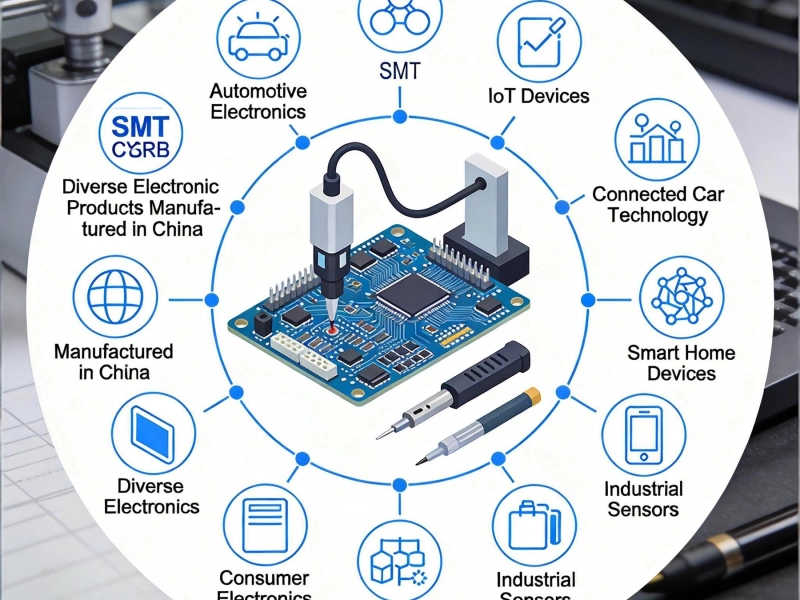
Top Applications of SMT PCB Assembly in China From Automotive to IoTMay/29/2026
When to Use Through-Hole Technology Alongside SMT Assembly in Chinese FactoriesJuly/16/2026
Why DFM is Critical for High-Density BGA SMT Assembly in ChinaJuly/25/2026
The Demands of Industrial SMT PCB Assembly in ChinaMay/29/2026
SMT PCB Assembly for Harsh Environments: Conformal Coating Solutions in ChinaJuly/18/2026
Optimizing PCB Design for Chinese SMT ManufacturersJuly/02/2026
Why IPC Class 3 Standards Matter for Industrial SMT PCB Assembly in ChinaJune/28/2026