
The industrial control and automation sector is one of the most demanding environments for Electronics Manufacturing. The products that keep factories running — programmable logic controllers, variable frequency drives, human-machine interfaces, safety controllers, and industrial sensors — must operate reliably for years in conditions that include temperature extremes, electrical noise, vibration, and humidity. When these products fail, the cost is measured not just in repair bills but in production downtime, making reliability a non-negotiable requirement. China has become the manufacturing center for a substantial share of the world's Industrial Automation electronics, and understanding the intersection of Smt Assembly capabilities with the specific demands of industrial control applications is essential for anyone sourcing or designing in this space.
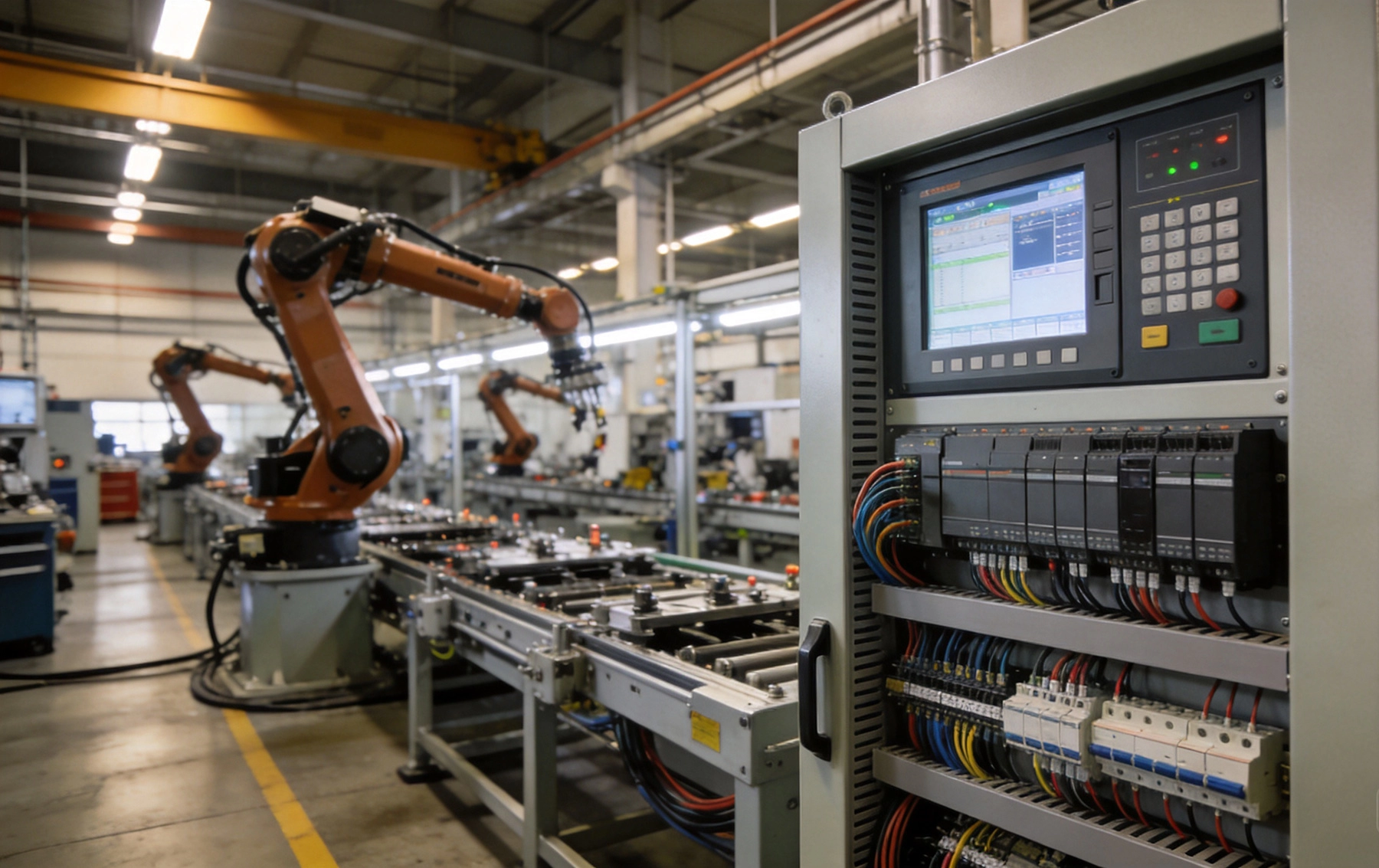
China's Industrial Automation market has grown dramatically over the past two decades, driven by rising labor costs, government manufacturing upgrade initiatives, and the rapid expansion of the Electronics Manufacturing sector. Domestic Chinese PLC and drive manufacturers — companies such as Xinje, Inovance, and Hollysys — have built substantial market share in the domestic market and are increasingly competitive internationally. Simultaneously, the global industrial automation giants — Siemens, ABB, Schneider Electric, Mitsubishi, and Rockwell Automation — have established significant manufacturing and sourcing operations in China, taking advantage of the cost structure and supply chain depth that the country offers.
This dual presence — domestic Chinese brands competing on cost and international brands demanding high quality — has created a Contract Manufacturing ecosystem in China with unusually broad capability. CMs that serve this market must be able to produce both commodity automation electronics at competitive prices and sophisticated high-reliability assemblies that meet the quality standards expected by global industrial brands. The result is a pool of manufacturing partners with deep process knowledge across the full range of industrial control applications.
PLCs are the foundational building blocks of factory automation. A modern PLC processes inputs from sensors and switches, executes control logic according to a programmed rule set, and drives outputs that actuate motors, valves, and other process actuators. The PCB assemblies inside a PLC include the CPU module, the power supply module, and a range of input and output modules that handle digital and analog signals at various voltage and current levels.
The Smt Assembly challenges in PLC PCBs are driven by the diversity of components and the need for long-term reliability. CPU modules typically carry high-pin-count processors, FPGAs, and memory components in fine-pitch packages alongside a large number of passive components. Power supply modules carry power semiconductors — MOSFETs, diodes, and inductors — that must handle the thermal loads associated with converting AC line voltage to the regulated DC rails that power the rest of the system. I/O modules carry optocouplers for isolation, field-effect transistors for switching, and screw-terminal connectors for external wiring.
China's CMs serving the PLC market have developed specialized processes for this product category, including Conformal Coating application for boards that will operate in damp or chemically active factory environments, ICT and functional test programs that exercise the full I/O range of each module, and long-lead component management programs that support the ten to fifteen year product lifecycles typical of industrial automation equipment.
Variable frequency drives control the speed and torque of AC and DC motors by varying the frequency and voltage of the power supplied to the motor windings. The PCB assemblies in a VFD include the rectifier and DC bus stage, the inverter stage with IGBT or MOSFET power modules, the gate drive circuitry, the control processor, and the user interface and communication modules. The power stages operate at current levels that generate significant heat, placing demands on the PCB Thermal Management infrastructure that are among the most challenging in Industrial Electronics.
The transition from silicon IGBTs to silicon carbide MOSFETs in modern VFD designs has raised the bar for both Pcb Design and assembly. SiC devices switch faster and at higher frequencies than silicon, which means that the gate drive circuitry and power stage layout must be designed with attention to parasitic inductance and ringing that was less critical in silicon designs. Assembly tolerances for high-current connections — bus bars, power connectors, and thermal interface surfaces — must be tighter because the thermal and electrical stresses are higher.
Chinese CMs with experience in motor drive assembly have developed processes for handling IMS substrates, Heavy Copper Pcb constructions, and press-fit terminal insertions that are commonly used in VFD power stage assemblies. The test programs for these products typically include burn-in testing under load, thermal imaging to identify hot spots, and high-potential testing to verify isolation between the high-voltage and low-voltage sections of the board.
HMIs are the visual interface between operators and the machines they control. Modern industrial HMIs are essentially ruggedized computers — they run operating systems, display graphics-intensive screens, communicate over industrial Ethernet networks, and are mounted in enclosures on factory floors where they are exposed to dust, wash-down, and accidental impacts. The PCB assemblies in an HMI include a display panel with integrated touch controller, a main processor board running embedded Linux or Windows CE, a power supply board, and a backlight driver for the display.
The SMT assembly challenges for HMI electronics are less about power density and more about the combination of high component diversity, fine-pitch processor packages, and the ruggedization requirements that come with factory floor deployment. Displays with LVDS or MIPI DSI interfaces require careful routing and connector selection to maintain Signal Integrity at the high data rates these interfaces use.
Assembly of HMI products in China benefits from the country's strong Consumer Electronics manufacturing base, which has developed expertise in display integration, embedded system assembly, and ruggedized enclosure design that transfers directly to industrial HMI applications. CMs that have produced tablets and industrial monitors for consumer brands often have the process discipline and equipment necessary to produce HMIs to industrial quality standards.
Industrial sensors — temperature sensors, pressure transducers, flow meters, encoders, and proximity switches — represent a category where Miniaturization and integration are driving increasingly sophisticated PCB designs. A modern industrial pressure sensor integrates the sensing element, signal conditioning electronics, and communication interface into a single compact assembly, often in a housing that must survive high pressure, temperature extremes, and corrosive media exposure.
The PCBs in sensor assemblies are typically small and dense, often built on flexible substrates or rigid-flex constructions that allow the board to conform to the mechanical constraints of the sensor housing. The assembly challenges include precision placement of small components, wire bonding for the sensing element die attach, and overmolding or potting processes that encapsulate the assembly in a protective material.
Chinese CMs in the sensor and instrumentation space include both specialized small-volume operations that serve High-mix Low-volume market segments and larger facilities that produce sensors at high volume for the automotive and consumer markets. The automotive sector in particular has driven significant investment in sensor assembly capabilities in China, as domestic EV manufacturers and their suppliers have created demand for proximity sensors, current sensors, and position sensors at volumes that justify dedicated assembly lines.
Safety controllers — the devices that implement safety functions such as emergency stop, safety light curtain monitoring, and safety brake control — operate under a different set of constraints than standard PLCs. Functional safety standards such as IEC 61508 and its sector-specific derivatives (IEC 62061 for machinery, ISO 13849) mandate specific architectural choices, diagnostic coverage levels, and proof test intervals that directly affect Pcb Design and assembly requirements.
The PCBs in safety controllers often use redundant architectures — two processors running the same logic simultaneously, with comparison logic that halts the machine if the two processors disagree. This architectural choice has direct PCB implications: the processor boards must be duplicated, the communication between redundant channels must be carefully isolated, and the power supply must be designed with sufficient redundancy to survive single-component failures without losing the safety function.
Assembly of safety-related PCBs in China must meet the documentation and Traceability requirements of the applicable functional safety standard. For CMs serving this market, this means maintaining configuration control of assembly programs, tracking component lots and process parameters in a way that supports failure investigation, and being able to demonstrate process capability through statistical data collected over time.
The transition to Industry 4.0 — the integration of digital connectivity, edge computing, and data analytics into manufacturing operations — is creating demand for a new category of Industrial Electronics: the connected I/O modules, edge gateways, and industrial IoT sensors that populate the modern smart factory. These products combine traditional industrial control electronics with modern connectivity: industrial Ethernet protocols like EtherCAT, PROFINET, and EtherNet/IP alongside newer protocols like MQTT and OPC-UA over standard Ethernet.
The PCB assemblies in connected factory devices must handle both the industrial control domain — robust power supply design, isolated communication ports, Conformal Coating for harsh environments — and the IoT domain: wireless modules for Wi-Fi and Bluetooth connectivity, cellular IoT modules for remote deployment, and secure element ICs for certificate-based authentication and encrypted communication. The combination of high component density and the need to support multiple communication interfaces in a compact enclosure makes the board layout and stack-up design more complex than traditional industrial control boards.
Chinese CMs are actively developing capabilities for these new product categories, building on their experience with consumer IoT electronics while adding the industrial-quality processes — extended temperature range testing, isolation verification, long-term reliability qualification — that the factory floor environment demands.
Conformal coating is nearly universal in industrial control and automation electronics assembled in China for deployment in factory environments. The coating — typically acrylic, urethane, silicone, or Parylene — provides a protective barrier against moisture, dust, and chemical contamination that would otherwise degrade board performance and reliability over time. The selection of coating type involves trade-offs between moisture protection, temperature range, reworkability, and cost.
Acrylic conformal coating is the most widely used for general-purpose industrial applications, offering good moisture protection, reasonable reworkability with standard solvents, and cost-effectiveness. Urethane coatings provide better chemical resistance and are preferred in environments with exposure to fuels, oils, or cleaning solvents. Silicone coatings offer the broadest temperature range and flexibility, making them suitable for outdoor or high-temperature industrial environments. Parylene provides the best moisture barrier performance of all and is used in the most demanding applications, but at substantially higher cost and with limited rework options.
The CM's coating process — application method, cure profile, coverage inspection — must be tightly controlled for consistent results. Spray application is the most common method; the CM should verify coverage over tall components, under chip components, and in via-in-pad structures where coating can pool or bridge. Inspection under UV illumination is the standard quality check for acrylic coatings that contain trace fluorescent dyes.
The testing requirements for industrial control PCBs in China span multiple levels of complexity. At the most basic level, Aoi Inspection verifies Component Placement and solder joint quality across the entire board surface. Flying probe or ICT testing verifies electrical continuity of all nets and the presence and value of passive components. Boundary scan testing with JTAG controllers provides access to high-pin-count devices that are difficult to probe physically.
Functional testing — applying power, loading a test program, exercising inputs and verifying outputs — is the most comprehensive test approach and the one most relevant to industrial control products. A functional test that simulates the PLC or drive operating in a representative system configuration catches defects that electrical testing alone will not: logic errors, timing problems, communication failures, and thermal issues that only manifest under load. For motor drives, functional testing under load — connecting the drive to a motor and running it through its operating envelope — is the gold standard for test coverage.
Burn-in testing — operating the board at elevated temperature with electrical load for an extended period — is used by many CMs for industrial products to accelerate the failure of components with latent defects. A burn-in period of 4 to 24 hours at 40 to 50 degrees Celsius is typical for industrial control boards; components that would fail in the first months of field deployment are identified and replaced before shipment.
Finding the right CM for industrial control and automation Pcb Assembly in China requires evaluating several factors beyond general assembly capability. Relevant sector experience is the most important: a CM that has produced PLC modules and motor drive boards for known industrial automation customers will have the process knowledge, the quality documentation infrastructure, and the supplier relationships to handle the requirements of the application.
Quality certifications provide a useful but incomplete signal. ISO 9001 is the baseline; ISO 14001 and Iatf 16949 for automotive applications add incremental assurance. CMs that serve international industrial automation brands are typically subject to periodic quality audits that go beyond what a certification audit covers, and a CM that can reference successful external audits from known industrial customers has demonstrated the ability to pass rigorous quality scrutiny.
The CM's engineering engagement model matters as much as their certifications. For industrial control products, the ability to participate in Dfm review, to develop custom test programs, and to support process changes across the product lifecycle — including component substitutions, engineering changes, and obsolescence management — differentiates a true industrial partner from a general-purpose assembler. Building this relationship early, before the first production order, is the most effective way to ensure that subsequent orders run smoothly.
Industrial control and automation electronics represent one of the most demanding and rewarding segments of the Pcb Assembly market in China. The combination of reliability requirements, Thermal Management challenges, functional safety standards, and long product lifecycles creates a manufacturing environment that rewards experience and punishes shortcuts. For buyers who understand what they need — and who invest the time to qualify their CM partners properly — China's industrial electronics manufacturing ecosystem offers a combination of cost, capability, and scale that is unmatched elsewhere. The key is to approach the sourcing relationship with the same rigor that the products themselves demand.
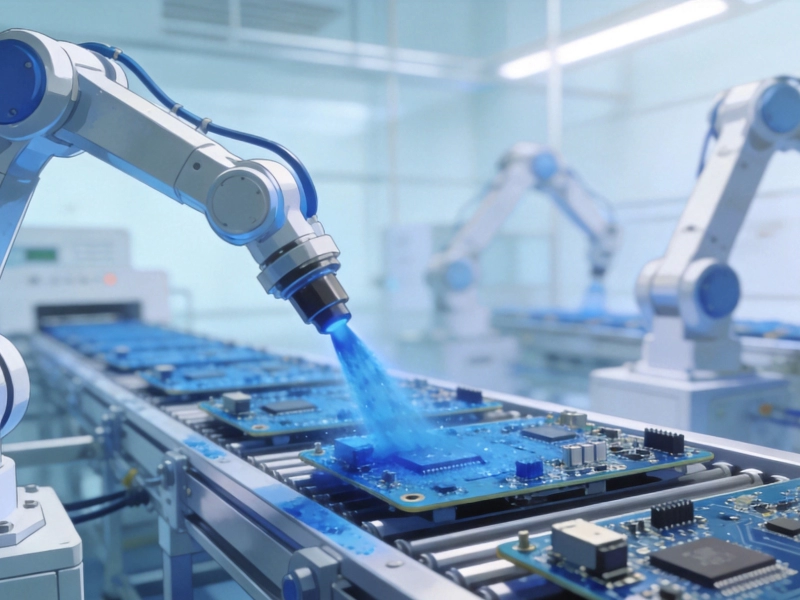
SMT PCB Assembly for Harsh Environments: Conformal Coating Solutions in ChinaJuly/18/2026
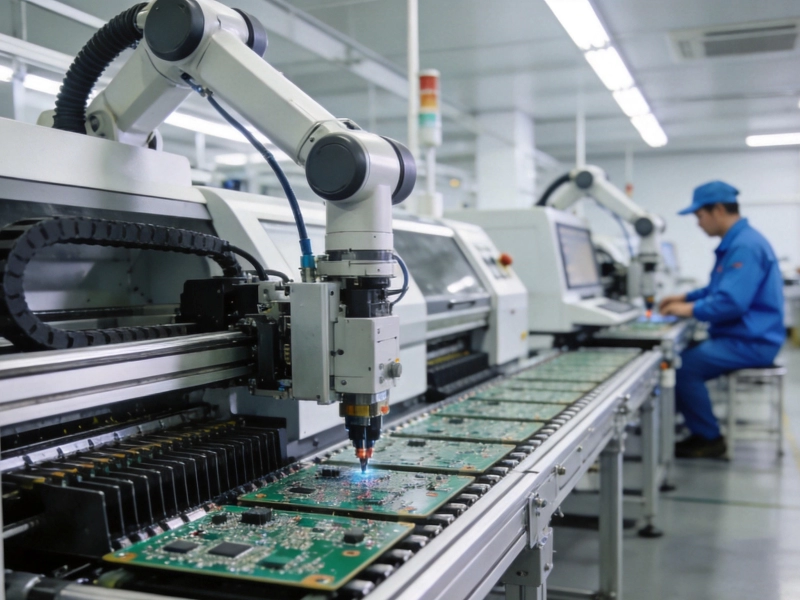
How DFM Analysis in China Can Prevent Costly SMT Assembly DelaysAugust/14/2026
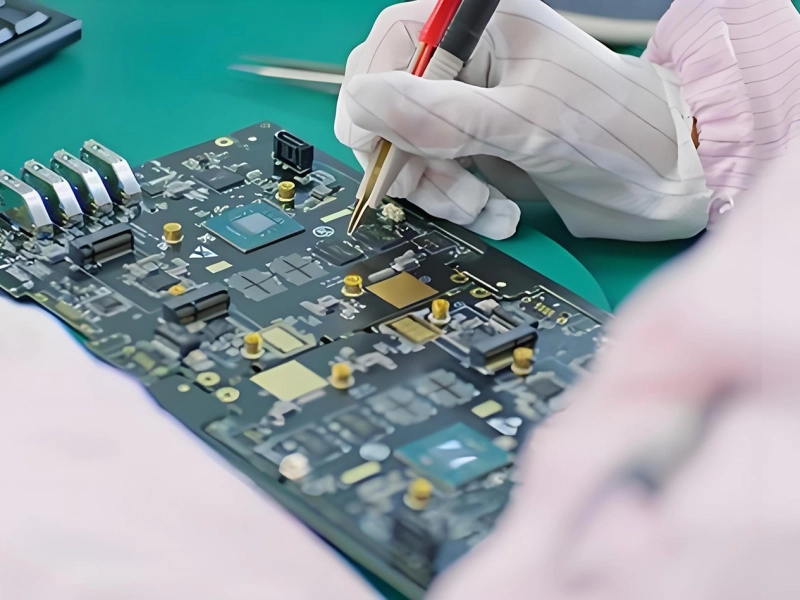
Overcoming BGA Challenges in a Complex SMT PCB Assembly China ProjectMay/29/2026

How Our China Factory Reduced Assembly Time by 30% for a Client's SMT ProjectSeptember/11/2026
Trends in Industrial Control Boards: Miniaturization in China's SMT Assembly SectorOctober/14/2026
Challenges and Solutions in Aerospace and Defense SMT PCB Assembly China ApplicationsSeptember/29/2026
How We Helped a US Startup Scale from Prototype to Mass SMT Assembly in ChinaJuly/07/2026
The Role of SMT Assembly in China's Modern Industrial Automation and Robotics SectorAugust/08/2026