
Electronics deployed in demanding conditions—from desert solar installations to underwater sensor networks—face environmental threats that would quickly destroy unprotected assemblies. Moisture intrusion, chemical exposure, thermal cycling, and vibration stress create failure modes that standard SMT PCB Assembly cannot survive. Conformal coating has emerged as the essential protective treatment that enables electronic assemblies to endure these harsh conditions throughout their operational lives.
China has established itself as a leading destination for conformal coating services, combining advanced manufacturing capabilities with competitive costs and established expertise in protective Electronics Assembly. Understanding how Chinese Contract Manufacturers approach conformal coating—and what questions to ask potential partners—helps product teams source protective assemblies effectively. This article explores conformal coating technology, material options, application methods, and the advantages of working with Chinese assembly partners for harsh environment electronics.

Conformal coating is a thin polymeric film that conforms to the contours of an assembled circuit board, providing a protective barrier without adding significant bulk or weight. Unlike potting compounds that completely encapsulate assemblies, conformal coating deposits only 25-250 microns of material over components and traces. This minimal thickness preserves the ability to inspect and rework assemblies while providing meaningful protection against environmental threats.
The protection conformal coating offers includes resistance to moisture and humidity, defense against chemical contamination, electrical insulation that prevents leakage currents, and mechanical support that reduces vibration-induced failures. These benefits make conformal coating the preferred solution for applications where full potting would be impractical but bare boards would fail prematurely.
Different environmental stressors demand different protective approaches. Moisture and humidity cause corrosion of exposed metallization and creep currents across surfaces, making moisture resistance the primary benefit for most coating applications. Chemical environments—including salt spray, industrial solvents, and fuel vapors—require chemical-resistant coating materials matched to specific exposure conditions.
Thermal cycling stress accumulates in coating-protected assemblies as well, though the flexible nature of most coating materials accommodates some differential expansion between the board and components. For extreme temperature ranges, specialized coating materials maintain flexibility at low temperatures while resisting softening at high temperatures. Vibration and mechanical shock receive some benefit from coating, particularly for components with marginal solder joints.
Acrylic conformal coatings provide excellent moisture protection with good dielectric properties and reasonable cost. They cure relatively quickly through solvent evaporation, with some formulations offering UV-cure options for rapid processing. The primary advantage of acrylic coatings is their excellent reworkability—these coatings dissolve readily in standard solvents, allowing component removal without damaging the underlying assembly.
The limitations of acrylic coatings include moderate chemical resistance and limited temperature capability compared to other coating types. Typical service temperature ranges reach approximately -40°C to +125°C. Acrylic coatings find widespread use in Consumer Electronics, automotive under-hood applications, and industrial controls where cost-effective moisture protection suffices.
Silicone conformal coatings offer exceptional temperature range capability, maintaining flexibility from -65°C to over +200°C in some formulations. Their rubbery nature accommodates significant thermal expansion mismatch without cracking or delamination. Silicone coatings also provide good chemical resistance, particularly against polar solvents and automotive fluids.
The challenges with silicone coatings include relatively poor abrasion resistance and difficulty in achieving thick coating layers. Rework requires careful mechanical removal or specialized solvent systems. Silicone coatings are particularly popular for Automotive Electronics, LED lighting, and applications involving high operating temperatures.
Polyurethane conformal coatings provide the best balance of chemical resistance among coating types, with excellent defense against solvents, fuels, and industrial chemicals. They offer good moisture protection and maintain properties across wide temperature ranges, typically -65°C to +130°C. These coatings cure by chemical reaction that provides good thickness buildup without running or sagging.
Polyurethane coatings cure more slowly than acrylics and require careful mixing of multi-component systems. Rework is more difficult than with acrylics, as polyurethanes resist most common solvents. These coatings are popular for automotive, marine, and industrial applications where chemical exposure is the primary concern.
Parylene conformal coating represents the premium option for demanding applications, applied through vapor phase deposition rather than liquid application. This process creates an extremely uniform coating with pinhole-free coverage even in deep crevices and around fine leads. Parylene provides excellent dielectric properties and chemical resistance while adding minimal mass.
The drawbacks of parylene include high equipment costs that limit processing capacity and higher material costs compared to liquid coatings. The coating process requires specialized vacuum equipment and extended cycle times. Parylene is specified for aerospace, medical devices, and other applications where maximum protection is essential and cost is secondary.
Spray application provides the highest throughput for conformal coating and suits most coating types including acrylics, silicones, and polyurethanes. Both manual spray guns and automated spray systems apply coating uniformly across board surfaces. The technique requires masking of connectors and other areas that must remain uncoated, typically using peelable masks or liquid latex.
Automated spray systems offer superior consistency compared to manual application, with programmable spray patterns that adapt to different board geometries. These systems incorporate UV tracking dye inspection and coating thickness monitoring that manual processes cannot match. Chinese Contract Manufacturers often employ automated spray equipment for high-volume production runs.
Brush application suits low-volume production and touch-up operations where selective coating is necessary. Skilled operators apply coating precisely where needed while avoiding connectors and test points. This method offers flexibility for complex board geometries but requires more labor and produces less consistent coverage than spray methods.
Brush application finds use in prototype builds, repair operations, and applications requiring spot coating of specific areas. The technique is less common in high-volume Chinese manufacturing but remains valuable for specialized applications where full-board coating is unnecessary.
Dip coating submurges the entire assembly in coating material, providing complete coverage including areas that spray application might miss. This method suits boards where all surfaces require coating and connectors can be adequately masked or are located at board edges. Dip coating can achieve higher throughput than spray for appropriate board designs.
The challenge with dip coating is controlling coating thickness and avoiding air entrapment. Viscosity control and appropriate withdrawal rates affect final coating uniformity. Boards with tall components may experience pooling or bridging between adjacent features that requires subsequent processing to address.
Parylene coating requires specialized vapor deposition equipment that vaporizes dimer raw material, pyrolyzes it to monomer, and deposits it polymer film on room-temperature assemblies. This process creates truly conformal coverage that follows every contour without liquid flow or bridging. The vapor phase deposition reaches into deep crevices and around fine features that liquid coatings cannot penetrate.
Vapor deposition processing occurs in dedicated equipment with limited batch sizes based on chamber volume. The process runs under vacuum for extended periods, with cycle times of several hours typical for standard coating thickness. Parylene processing capability is less common than liquid coating, so identifying suppliers with this capacity may require more searching among Chinese manufacturers.
China's Electronics Manufacturing industry has developed comprehensive capabilities across the supply chain, from raw material suppliers to assembly services to testing and inspection. This ecosystem enables Chinese contract manufacturers to source coating materials from local suppliers while maintaining relationships with international brands like Dow, Henkel, and MG Chemicals for customers requiring specific products.
The concentration of Electronics Manufacturing in regions like Shenzhen, Suzhou, and Shanghai has created clusters of specialized service providers. Companies focusing specifically on conformal coating and potting have emerged to serve customers needing dedicated capacity. This specialization enables better process control and expertise than general-purpose assembly shops might offer.
Labor costs in China remain significantly lower than in Western manufacturing locations, though this advantage has narrowed as wages have increased. The real value for conformal coating services comes from combining lower labor costs with modern equipment, experienced personnel, and efficient processes. Chinese manufacturers can offer competitive pricing without sacrificing quality when properly selected.
Material costs for conformal coating vary based on formulation and supplier, but Chinese manufacturers often source materials efficiently from regional suppliers. Volume purchasing power and established supplier relationships enable cost advantages that benefit customers. The total landed cost of conformal-coated assemblies, including shipping and import duties, often favors Chinese manufacturing for medium to high volumes.
Chinese contract manufacturers range from small operations with limited capacity to large facilities handling thousands of boards per day. This range enables matching production capacity to order requirements without excessive overhead or lead time penalties. Quick-turn prototype quantities and production volumes of tens of thousands can all find appropriate suppliers.
Many Chinese manufacturers offer flexible engagement models that accommodate varying customer needs. Some provide pure processing services where customers supply boards and coating materials. Others offer turnkey services including board procurement, component assembly, coating, and final testing. The flexibility enables customers to choose the engagement model that matches their capabilities and requirements.
The IPC industry organization provides standards that define conformal coating requirements and test methods. Ipc-a-610 covers acceptability criteria for electronic assemblies including conformal coating requirements. IPC-CC-830 establishes qualification and performance requirements specifically for conformal coating materials. These standards provide common language and acceptance criteria that manufacturers and customers can reference.
Chinese manufacturers serving international customers often maintain IPC certification and undergo regular audits from customers and third-party inspection organizations. When specifying conformal coating requirements, referencing relevant Ipc Standards ensures clear communication of expectations. Suppliers familiar with IPC requirements provide assurance that their processes meet recognized quality criteria.
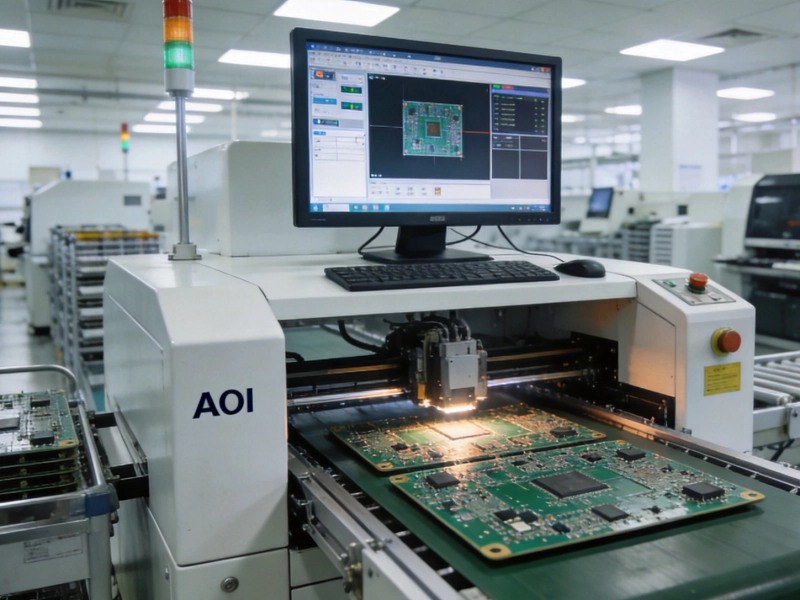
Conformal coating inspection employs various techniques depending on coating type and defect concerns. Visual inspection under magnification verifies coverage completeness and identifies defects like bubbles, crawls, or contamination. Thickness measurement using eddy current instruments confirms coating is within specified ranges. UV fluorescent dyes mixed into coating enable visual verification of coverage under black light illumination.
For critical applications, more rigorous testing verifies coating performance. Water immersion testing exposes assemblies to moisture and measures insulation resistance over time. Thermal cycling testing subjects coated assemblies to temperature extremes to verify coating integrity. Salt spray testing evaluates performance in corrosive environments. These accelerated tests correlate with field performance to validate coating adequacy.
When evaluating Chinese contract manufacturers for conformal coating services, assessing process capabilities is essential. Questions to ask include available coating types, application methods, maximum board size, and coating thickness range. Understanding their masking capabilities and rework processes indicates their ability to handle your specific requirements.
Requesting samples of previous work in similar coating types provides visual evidence of process quality. Visiting facilities when possible allows direct assessment of equipment condition, work area organization, and personnel competence. Many customers arrange virtual facility tours or third-party inspections when on-site visits are impractical.
Professional conformal coating operations maintain documentation including process parameters, material lot numbers, operator identification, and inspection results. This Traceability enables root cause analysis if field issues emerge and demonstrates quality system maturity. Ask potential partners about their documentation practices and how they would handle non-conformance situations.
Material certifications from coating suppliers should be available for review, confirming that materials meet datasheet specifications. For customers with specific environmental or safety requirements, confirming that manufacturers can provide material safety data sheets and environmental compliance documentation prevents future issues.
Effective communication across time zones and language differences requires explicit attention. Assess English language capabilities of sales and technical contacts. Evaluate responsiveness and clarity in email communication during the evaluation process. Clear communication prevents misunderstandings that could result in incorrect coating specifications or quality issues.
Understanding the project management structure helps set expectations for order handling, status updates, and issue resolution. Many Chinese manufacturers assign dedicated account managers for international customers. Establishing regular communication cadences and escalation procedures before placing orders prevents surprises when issues arise.
Automotive Electronics face challenging conditions including wide temperature ranges, vibration, road salt exposure, and moisture. Conformal coating protects engine control modules, dashboard electronics, safety systems, and infotainment equipment. Automotive Quality requirements like Iatf 16949 certification indicate suppliers capable of meeting rigorous automotive standards.
Chinese manufacturers have become significant suppliers to global automotive OEMs and tier-one suppliers. The combination of competitive pricing and improving quality systems has made China a preferred source for many automotive electronic assemblies. Conformal coating services for automotive applications often include additional requirements like thermal cycling verification and automotive-grade material sourcing.
Industrial environments expose electronics to moisture, dust, process chemicals, and temperature variations. Factory automation controllers, motor drives, sensors, and instrumentation benefit from conformal coating protection. The reliability requirements in industrial applications often demand coating quality verification and long-term stability testing.
Chinese contract manufacturers serve global industrial equipment manufacturers across diverse sectors including manufacturing automation, energy, water treatment, and process control. The ability to produce consistent quality at scale supports both original equipment manufacturing and aftermarket replacement assemblies.
Outdoor LED applications face continuous exposure to weather, UV radiation, and temperature cycling. Conformal coating protects LED drivers, control circuits, and communication modules in street lighting, stadium displays, and architectural installations. The long warranty expectations for outdoor LED products demand reliable protection from the assembly stage.
China dominates LED manufacturing globally, and Chinese assembly services for LED products benefit from integrated supply chains and manufacturing expertise. Conformal coating of LED assemblies has become a standard service offering from many Chinese manufacturers.
Aerospace and defense applications have demanding environmental requirements including altitude exposure, thermal cycling, and vibration. Conformal coating provides basic protection, though more demanding applications may require full potting or hermetic sealing. Military standards like MIL-PRF-46058 define coating requirements for Defense Electronics.
Chinese manufacturers serving aerospace and defense markets may require export control compliance depending on end-use applications. Understanding these requirements before engaging suppliers prevents complications in procurement and logistics. Some applications may have restricted sourcing options that limit Chinese supplier participation.
Board design significantly affects coating quality and cost. Components requiring masking—connectors, switches, potentiometers—should be placed at board edges where masking is easier. Heat-generating components may require spacing from surrounding components to allow coating access and prevent pooling. Test points should be accessible with masking that prevents coating from obscuring them.
Material selection for boards and components should consider coating compatibility. Some materials have poor adhesion to certain coatings, requiring adhesion promoters or alternative coating types. Silicone rubber components may be affected by certain coating solvents. Early coordination between design and coating processes prevents issues discovered after assembly.
Well-written coating specifications prevent disputes and ensure consistent results. Specify coating type by generic chemistry or brand name if material selection matters. Define required thickness range and how it will be measured. List areas that require coating and areas requiring masking. Reference applicable standards like Ipc-a-610 or IPC-CC-830.
Include acceptance criteria that define acceptable and unacceptable defect types. Specify any testing requirements beyond visual inspection. For high-reliability applications, require process documentation, First Article Inspection reports, and ongoing quality data. Clear specifications enable suppliers to deliver products that meet expectations.
Conformal coating provides essential protection for SMT assemblies deployed in harsh environments, enabling electronic products to operate reliably despite moisture, chemicals, and temperature extremes. China's manufacturing capabilities for conformal coating have matured significantly, offering competitive pricing, advanced equipment, and experienced personnel for customers worldwide.
Successful outcomes require thoughtful supplier selection based on coating capabilities, quality systems, and communication effectiveness. Understanding coating material options and application methods enables informed specification that matches requirements to supplier capabilities. Design for coating compatibility reduces manufacturing complications and improves first-pass yield.
Working with Chinese conformal coating partners can provide excellent value for harsh environment electronics when proper due diligence identifies qualified suppliers. The combination of cost competitiveness, manufacturing scale, and improving quality systems makes China an attractive source for protective Electronics Assembly. Building strong supplier relationships based on clear communication and mutual understanding creates partnerships that support long-term product success.

Ensuring Long-Term Supply Chain Stability for Industrial SMT Assembly in ChinaSeptember/03/2026
Why IPC Class 3 Standards Matter for Industrial SMT PCB Assembly in ChinaJuly/08/2026
High-Mix Low-Volume Success: Flexible SMT Assembly for Industrial Clients in ChinaOctober/13/2026
The Demands of Industrial SMT PCB Assembly in ChinaMay/29/2026
Why IPC Class 3 Standards Matter for Industrial SMT PCB Assembly in ChinaJune/28/2026
Quality Control Protocols Specific to Industrial SMT PCB Assembly in Chinese FactoriesSeptember/24/2026
Heavy Copper PCBs and High-Power Components in Industrial SMT Assembly ChinaSeptember/14/2026

The Pros and Cons of SMT and THT in China's Electronics Manufacturing LandscapeJune/25/2026