Open Nav

In electronics product development, speed matters more than almost anything else. A product that launches six months ahead of competitors captures market share, establishes brand recognition, and generates revenue while rivals are still debugging their designs. The difference between first-mover advantage and playing catch-up often comes down to one factor: how quickly you can get your first assembled boards. Quick-turn Smt Assembly in China has become the secret weapon for hardware startups, engineering teams, and product companies that need to compress development timelines without sacrificing quality.
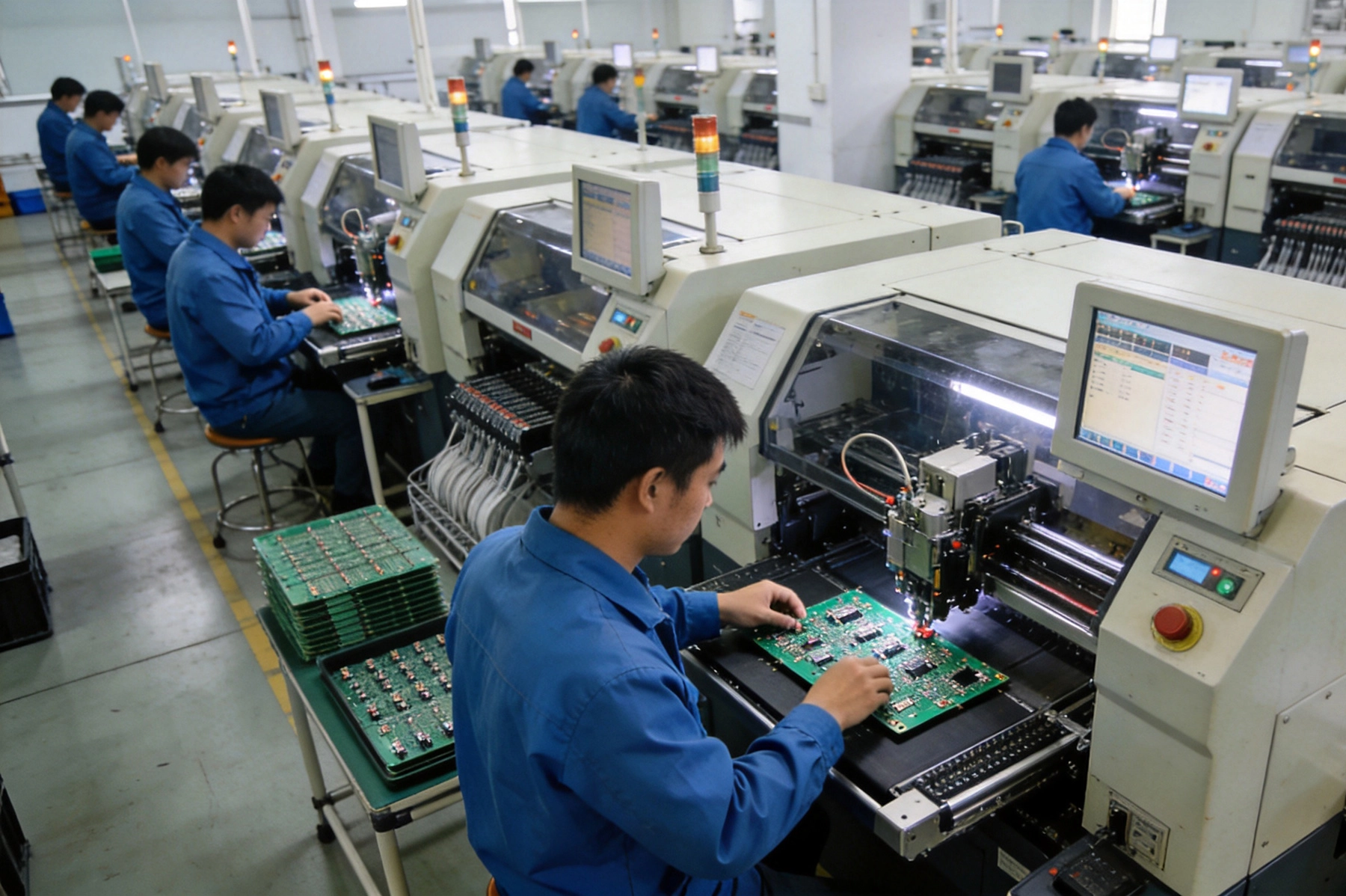
But quick-turn assembly isn't just about speed. The best quick-turn services combine rapid turnaround with manufacturing expertise that actually improves your design. Finding the right partner requires understanding what differentiates excellent quick-turn service from merely fast service. This article explores how quick-turn Smt Assembly in China works, what to look for in a manufacturing partner, and how to leverage these capabilities to accelerate your product development.
Quick-turn Smt Assembly refers to expedited manufacturing services that deliver assembled boards faster than standard lead times. While typical contract manufacturers quote 2-4 weeks for production runs, quick-turn services deliver prototypes and small batches in days rather than weeks. Standard quick-turn ranges from 5-10 business days for simple boards to 2-3 weeks for complex multilayer assemblies.
The speed advantage comes from dedicated resources, streamlined processes, and prioritization over standard orders. Quick-turn manufacturers often maintain equipment, materials, and personnel specifically for expedited work. When you submit a quick-turn order, your boards jump the queue instead of waiting behind larger production runs.
Not all quick-turn services are equal. Some manufacturers offer fast turnaround with compromised quality—rushed processes that introduce defects. Others deliver genuinely quick service while maintaining rigorous quality standards. Understanding what separates these approaches helps you choose partners wisely.
China's Electronics Manufacturing ecosystem has evolved far beyond low-cost commodity production. The Pearl River Delta—particularly Shenzhen and surrounding cities—has accumulated decades of manufacturing expertise, supplier networks, and infrastructure that no other region can match. This concentration enables quick-turn capabilities that would be economically impossible elsewhere.
Chinese quick-turn manufacturers often provide faster service than domestic alternatives despite shipping time. The combination of efficient production processes, readily available components, and logistics expertise overcomes geographic distance. A board assembled in Shenzhen and shipped express often arrives faster than one queued at a domestic manufacturer with longer standard lead times.
Cost structure differences make the economics of quick-turn assembly work in China's favor. Lower operational costs enable quick-turn pricing that would be unprofitable for manufacturers in higher-cost regions. This pricing makes iterative development economically viable—testing multiple design iterations without breaking development budgets.
Quick-turn starts with design file submission. Manufacturers need complete manufacturing packages including Gerber files, drill files, BOM (Bill of Materials), pick-and-place data, and any special instructions. The faster you provide complete, accurate information, the faster production can begin.
Engineering review happens concurrently with file verification. Experienced quick-turn manufacturers don't just check that files are present—they identify design issues that could cause manufacturing problems. Dfm feedback helps you fix potential issues before production, reducing iterations and accelerating final design maturity.
Component sourcing begins immediately upon order confirmation. For standard components, manufacturers often have inventory available for immediate assembly. For specialized parts, procurement timelines affect overall turnaround. BOM clarity about component availability helps set realistic expectations.
Solder paste stencils require laser cutting for quick-turn work. The stencil fabrication process takes hours, not days, with modern equipment. Some manufacturers maintain standard stencil inventory, reducing setup time for common board sizes.
Program preparation for pick-and-place machines involves importing Component Placement data, calibrating feeders, and setting placement parameters. Quick-turn manufacturers optimize this setup phase to minimize time between file submission and actual assembly.
Line changeover efficiency distinguishes excellent quick-turn services. When production must stop to reconfigure for a different board, turnaround time suffers. Manufacturers who handle quick-turn work regularly develop processes that minimize changeover impact.
Component Placement happens at speeds determined by board complexity and component density. Modern pick-and-place machines handle thousands of components per hour while maintaining placement accuracy that meets Ipc Standards. The actual placement time may be minutes for simple boards, hours for complex high-density assemblies.
Reflow Soldering bonds components to boards in controlled oven profiles. Lead-free Assembly dominates modern production, requiring higher peak temperatures and longer profiles than leaded processes. Quick-turn manufacturers optimize profiles for specific board characteristics rather than using generic defaults.
Visual inspection follows assembly to catch defects like tombstoning, bridging, or misplaced components. Automated Optical Inspection (Aoi) provides consistent quality faster than manual inspection, enabling rapid throughput while maintaining defect detection.
Boards with through-hole components require additional processing. Hand insertion handles simple through-hole parts quickly; Wave Soldering or selective soldering processes larger through-hole quantities. These processes add time that affects overall turnaround.
Some quick-turn services limit through-hole content to maintain speed. Designs with heavy through-hole requirements may face longer turnaround or additional fees. Understanding these limitations helps optimize designs for quick-turn compatibility.
Conformal Coating, potting, and other post-assembly processes add time proportional to handling requirements. Standard quick-turn usually excludes these special processes, providing basic assembled boards ready for your finishing operations.
Electrical testing validates board functionality beyond visual inspection. Flying probe testing checks connectivity without custom fixtures, enabling fast test setup. For higher coverage, in-circuit testing or functional testing may be available but requires more setup time.
X-ray Inspection catches hidden defects in BGA and QFN packages where solder joints are invisible to optical inspection. While not always included in standard quick-turn, X-ray Inspection is available for critical applications or when defect risk warrants additional verification.
Documentation accompanies shipped boards including inspection reports, test data, and certificates of conformance. This paperwork matters for regulated industries or when liability documentation is required.
Technical capability determines what products a manufacturer can produce successfully. Minimum feature sizes, layer count limits, and board size constraints define the envelope of possible work. Assess whether your designs fall within these boundaries before committing to a partnership.
Component library breadth affects turn-around speed. Manufacturers with extensive component inventory can assemble boards immediately; those requiring procurement face delays for non-stock parts. For quick-turn work, stock component availability dramatically affects delivery timelines.
Quality certifications indicate process discipline and customer focus. ISO 9001 certification demonstrates basic quality management; AS9100 or Iatf 16949 suggest automotive or aerospace quality systems; UL certification enables North American market access. Certification requirements depend on your target markets.
Relevant experience matters more than general manufacturing years. A manufacturer specializing in your application type—Consumer Electronics, industrial controls, medical devices—brings domain knowledge that improves outcomes. Ask for examples of similar projects they've completed.
Volume handling capability matters if your project will scale. Quick-turn prototype services may not translate directly to production capability. Understanding whether a partner can grow with your product avoids future transitions that consume engineering resources.
Customer references provide insight that capability lists cannot. Speaking with engineering teams who've used a manufacturer reveals practical realities about communication, problem resolution, and overall satisfaction. References from similar industries or applications provide the most relevant feedback.
Quick-turn work requires rapid information exchange. Delayed responses from manufacturers consume the time you're trying to save. Evaluate communication responsiveness during initial inquiries—manufacturers who respond slowly to early questions rarely improve after you commit to production.
Designated points of contact streamline communication. Dealing with different representatives for each question fragments information and creates confusion. Account managers or project engineers who understand your product provide continuity that accelerates problem resolution.
Transparency about status, issues, and timelines builds trust. Manufacturers who proactively communicate problems—delayed components, discovered defects, shipping issues—enable better decision-making than those who reveal issues only when boards are overdue.
Express shipping options enable fast delivery despite geographic distance. DHL, FedEx, and UPS offer global express service with 2-5 day delivery to most markets. Understanding shipping options and costs helps plan total timeline including delivery.
Customs clearance adds time and complexity for international shipments. Working with manufacturers experienced in export procedures reduces clearance delays. Proper documentation—commercial invoices, packing lists, HS codes—prevents shipments from sitting in customs.
Shipping damage prevention matters for prototype boards worth thousands in engineering time. Proper packaging, ESD protection, and fragile labeling reduce the risk of shipping damage destroying your expedited boards.
Design decisions affect turnaround time as much as manufacturing choices. Standard component packages—0603, 0805, 1206, SOIC, TSSOP—assemble faster than exotic packages requiring special setup. Larger components and wider spacing simplify placement and reduce defect risk.
BGA and fine-pitch packages increase assembly time and defect potential. While quick-turn services can handle these packages, the increased complexity adds risk and potentially slower turnaround. Reserve advanced packages for production designs where development iterations are complete.
Panelization efficiency affects manufacturing throughput. Standard panel sizes and configurations process faster than custom formats. Designing boards to fit common panel sizes speeds assembly without requiring special tooling.
Complete BOMs with clear, unambiguous part numbers prevent component substitution confusion. Manufacturer part numbers, not distributor codes, ensure correct components regardless of procurement source. Ambiguous BOMs cause delays while manufacturers verify intent.
Alternate parts pre-approved for substitution reduce delays when primary components are unavailable. Including second-source options on your BOM enables production to proceed without waiting for specific distributor stock.
Accurate quantity and mounting information prevents assembly errors. Through-hole versus Surface Mount designation, orientation requirements, and special handling instructions all affect assembly. Clear documentation eliminates guesswork.
Complete design packages avoid back-and-forth delays. Gerber files for all layers, drill files in correct formats, component placement data, and board outline information should all be present. Missing files trigger delays while manufacturers request replacements.
Design rule checks before submission catch obvious errors. DRC violations that would be flagged by CAM software should be resolved before manufacturing receives files. Finding errors during production consumes the time quick-turn aims to save.
Clear layer naming conventions prevent confusion about which file contains which layer. Ambiguous file names like "gerber3.gbr" require verification that wastes time. Descriptive names like "top_copper.gbr" communicate purpose immediately.
Quick-turn pricing includes premiums over standard production rates. The premium reflects dedicated resources, prioritized scheduling, and compressed timelines. Understanding what's included versus what costs extra helps compare quotes accurately.
Setup fees often dominate small-quantity pricing. Engineering time for program preparation, stencil fabrication, and first-article inspection applies regardless of board quantity. The per-board cost drops substantially as quantity increases, even with quick-turn premiums.
Component costs add to assembly pricing. Standard passives may be included in assembly quotes; specialized components often carry procurement costs. BOM transparency helps understand total cost before commitment.
Rushed design iterations that require multiple quick-turn runs cost more than thoughtful single iterations. Investing time in design review before submission reduces total development cost even if individual quick-turn runs seem expensive.
Quality problems that require rework or redos multiply costs quickly. Choosing the lowest-cost quick-turn option without evaluating quality may result in defects that cost more to fix than the initial savings.
Shipping costs accumulate for international delivery. Express shipping to distant markets may exceed assembly costs for small prototype quantities. Including shipping in total cost comparisons prevents budget surprises.
Not every development phase justifies quick-turn expense. Early prototypes exploring concepts may not need the speed of expedited service. Standard lead times work fine when schedules allow, reserving quick-turn for critical milestones.
Internal assembly capability suits some development styles. Having Prototype Assembly in-house eliminates shipping delays and enables same-day iterations. The capital investment in equipment and skills pays off for teams with frequent prototype needs.
Strategic quick-turn investment focuses expedited service on high-value activities—design verification, certification testing, investor demonstrations. Using quick-turn strategically maximizes its value without incurring premium costs for activities that don't need speed.
Dfm issues found during production cause delays while designs are modified. Conducting thorough design review before submission catches most issues. Manufacturers offering DFM services provide valuable feedback, but early internal review prevents delays.
Component availability surprises delay procurement when specified parts are unavailable. Verifying component stock before submission, or having alternates ready, prevents these surprises. Manufacturers with broad inventory reduce but don't eliminate this risk.
Solderability problems occur when component leads or pads don't accept solder properly. Surface finish compatibility between component leads and board finish matters. Standard finishes like HASL or ENIG avoid compatibility issues that specialty finishes may encounter.
Quick-turn doesn't have to mean compromised quality, but time pressure can introduce errors. Choosing manufacturers with demonstrated quality systems—ISO certification, IPC training, Aoi Inspection—protects against shortcuts that create problems.
Lead-free Assembly dominates modern quick-turn service. The higher reflow temperatures stress components and boards compared to leaded assembly. Understanding lead-free implications helps specify appropriate requirements.
First-article verification catches problems before committing to full production. Requesting inspection reports and test data validates that your design manufactured correctly. Finding issues in first articles prevents larger problems in subsequent batches.
Time zone differences complicate communication with Chinese manufacturers. Overlapping working hours, scheduled calls, and asynchronous updates help bridge time gaps. Setting expectations for response times prevents frustration.
Language barriers cause misinterpretation of requirements. Clear, simple communication reduces misunderstanding. Technical terminology with known meanings works better than colloquial expressions that may not translate clearly.
Expectation mismatches about scope or specifications cause friction. Written confirmation of requirements, capabilities, and limitations creates shared understanding. Verbal agreements without documentation create disputes when issues arise.
Startup product development depends on rapid iteration to find product-market fit. Quick-turn enables the frequent design cycles that hardware startups need. Shipping prototypes to China and receiving assembled boards within weeks enables development velocity that in-house prototyping cannot match.
Low-to-medium volume production through quick-turn services bridges prototypes to production. The same manufacturer that assembles your prototypes can scale to production quantities when your design matures. This continuity reduces redesign iterations and accelerates time-to-market.
Investor demonstrations and crowdfunding campaigns create timeline pressure that only quick-turn can satisfy. Having working prototypes ready for demonstration deadlines often determines funding success. Quick-turn services understand these pressures and respond accordingly.
Medical device development faces regulatory requirements that complicate quick-turn. Design controls, documentation, and traceability may seem incompatible with rapid iteration. However, quick-turn can fit medical development when appropriately scoped.
Prototype and feasibility builds for internal testing don't require full regulatory documentation. Quick-turn for these phases enables design exploration without compliance overhead. Production builds require different documentation but benefit from development learning.
Medical-grade assembly with appropriate certifications exists in China for production volumes. Understanding which quick-turn services provide documentation suitable for later regulatory submission helps plan development programs.
Industrial and aerospace development often prioritizes reliability over speed. However, development timelines still benefit from quick-turn for design verification. Balancing speed against rigorous quality requirements requires selecting partners appropriately.
Military and aerospace applications with ITAR or other regulatory requirements may face export complications with Chinese manufacturing. Understanding these restrictions before engaging manufacturers prevents costly compliance problems.
High-reliability quick-turn services exist with appropriate certifications and process controls. These services cost more than standard quick-turn but provide documentation and traceability that regulated industries require.
Successful quick-turn relationships often evolve into production partnerships. As your product moves from Prototype To Production, continuity with an experienced manufacturer accelerates the transition. Lessons learned during development inform production optimization.
Production pricing typically offers substantial savings compared to prototype rates. Volume economics, reduced documentation requirements, and process optimization all contribute to lower production costs. Understanding this transition helps plan development budgets.
Supply chain relationships built during development continue into production. Component sources identified during quick-turn work remain available for production, providing continuity that new relationships cannot match.
Companies with ongoing product development benefit from maintaining manufacturing partnerships across multiple products. Familiarity with your designs, documentation, and requirements accelerates each new project. Engineers don't need to re-explain basics; manufacturers don't need to rediscover your preferences.
Volume commitments in exchange for pricing breaks create mutually beneficial relationships. Manufacturers appreciate committed volume; companies receive better pricing and priority scheduling. Balancing commitment against flexibility requires judgment about future product plans.
Engineering roadmaps shared with manufacturing partners enable proactive capacity planning. Manufacturers who know your product pipeline can prepare resources, stock components, and optimize scheduling in advance. This preparation reduces lead times and improves outcomes.
Actual turnaround ranges from 5 days for simple boards with stock components to 3-4 weeks for complex multilayer boards requiring specialized parts. Express shipping adds 3-7 days for international delivery. The fastest quotes assume immediate file submission, complete documentation, and available components.
Quick-turn typically costs 30-100% more than standard lead-time production of equivalent quantity. Setup fees, expedited processing, and priority scheduling all contribute to the premium. For small prototype quantities, the per-board premium may be substantial; for larger quantities, the premium becomes proportionally smaller.
Yes, many quick-turn services handle multilayer boards up to 12+ layers and advanced technologies like HDI. However, complex boards take longer than simple two-layer boards. Verify that your manufacturer can handle your specific board complexity before committing.
Quality standards vary by manufacturer. Established quick-turn services typically follow Ipc Standards, maintain ISO certification, and implement Aoi Inspection. Higher-reliability services may hold automotive or medical certifications with corresponding process controls.
IP protection involves multiple strategies: working with reputable manufacturers with NDAs, avoiding single-source dependencies, protecting designs through patents where appropriate, and maintaining critical manufacturing elements domestically. No approach eliminates risk, but layered protection reduces exposure.
Quick-turn Smt Assembly in China has transformed electronics product development, enabling hardware teams to iterate faster and launch products more quickly than ever before. The combination of speed, capability, and cost effectiveness makes Chinese quick-turn services an essential resource for companies competing in fast-moving markets.
Success with quick-turn requires more than finding a fast manufacturer. Understanding how to prepare designs for rapid assembly, choosing partners with appropriate capabilities and quality systems, and managing the relationship effectively all contribute to outcomes. The investment in learning these practices pays returns across multiple development programs.
As manufacturing capabilities continue advancing, quick-turn services will push to even faster delivery and broader capability. Staying current with available services enables access to these improvements as they emerge. The companies that master quick-turn manufacturing will continue outpacing competitors who rely on slower development approaches.
The path from concept to market-ready product has never been faster. Quick-turn Smt assembly in China provides the acceleration that modern hardware development demands. Used strategically, it compresses timelines, reduces costs, and enables the rapid iteration that successful products require.
Industrial SMT PCB Assembly in China: Meeting Durability and Reliability StandardsJune/11/2026
Balancing Speed and Quality in Quick-turn SMT PCB Assembly China ServicesJuly/20/2026

Balancing Speed and Quality in Quick-turn SMT PCB Assembly China ServicesJuly/30/2026

How to Get Quick-turn SMT PCB Assembly in Just 24 Hours from ChinaMay/29/2026
The Benefits of Quick-turn SMT Assembly in China for R&D and PrototypingJuly/09/2026
How to Get Quick-turn SMT PCB Assembly in Just 24 Hours from ChinaJune/12/2026

Why Shenzhen is the Global Hub for Quick-turn SMT PCB AssemblySeptember/04/2026
What to Prepare for a Smooth Quick-turn SMT Assembly Order in ChinaAugust/10/2026