Open Nav

The smart home and wearable markets have experienced explosive growth, driven by consumer demand for convenience, connectivity, and health monitoring. Every smart thermostat, voice-activated speaker, fitness tracker, and wireless sensor relies on densely populated printed circuit boards assembled with Surface Mount Technology. The manufacturers who assemble these boards face unique challenges: extreme cost pressure, rapid design cycles, Miniaturization demands, and the expectation of reliable operation in consumer environments that may be far less forgiving than industrial or aerospace conditions.
China has emerged as the dominant location for SMT PCB Assembly serving these markets, combining manufacturing scale, component ecosystem depth, and process expertise that few other regions can match. Understanding how China-based assembly services apply SMT capabilities to smart home and wearable applications helps product teams make informed decisions about manufacturing partners and design choices that affect both cost and quality.
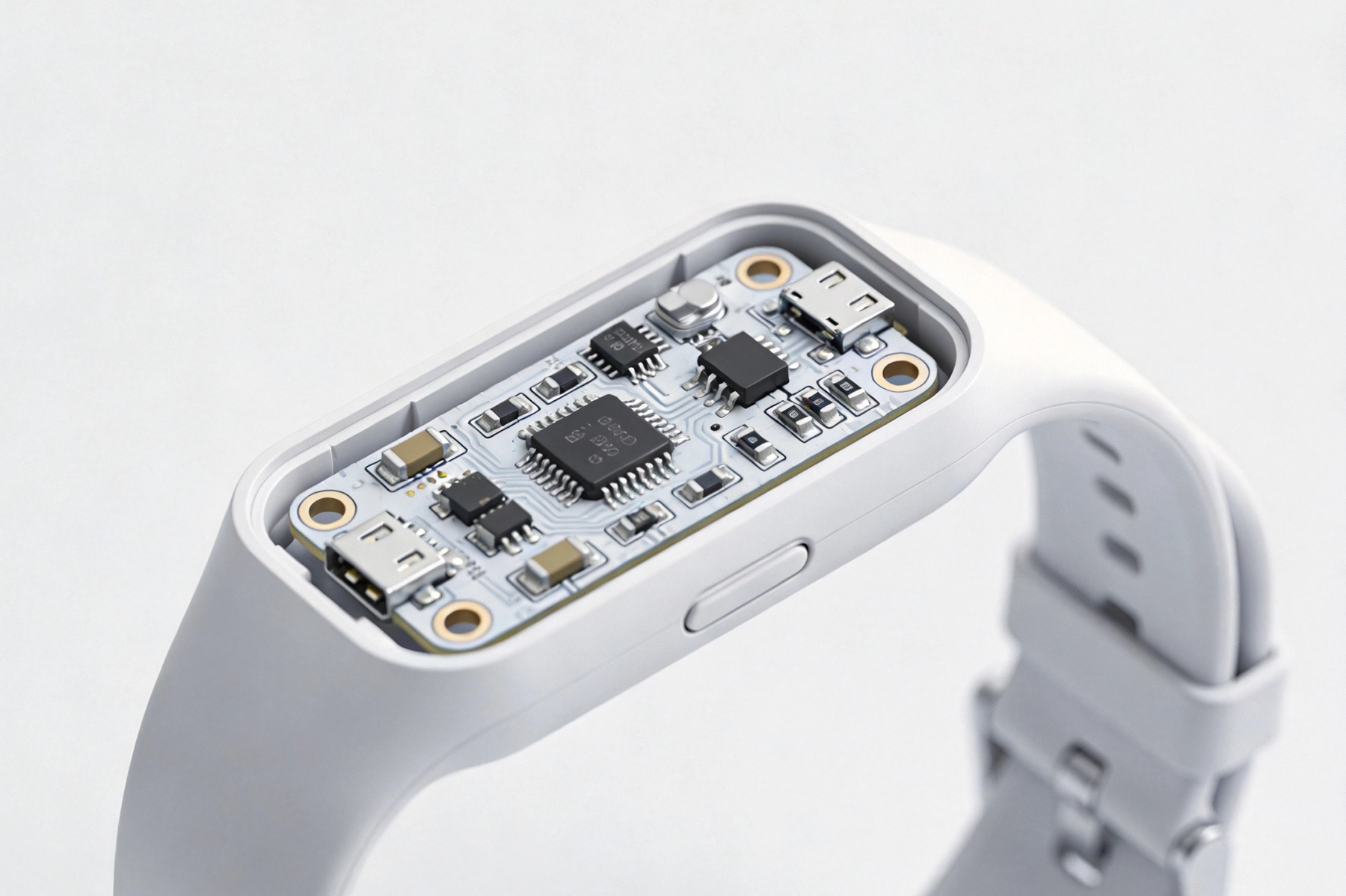
The smart home and wearable market encompasses diverse product categories, each with distinct assembly requirements. Recognizing these differences helps frame the manufacturing considerations that follow.
The smart home market spans products from simple sensor nodes to complex entertainment hubs. Key categories include:
Wearable electronics push miniaturization further than almost any other consumer category:
Both smart home and wearable categories share a relentless drive toward smaller, lighter products. Smt Assembly in China has developed capabilities specifically addressing these miniaturization demands.
Modern smart home and wearable boards use increasingly small component packages. Resistors and capacitors in the 0201 (0.6 mm × 0.3 mm) and 01005 (0.4 mm × 0.2 mm) packages reduce board area dramatically compared to the previously standard 0402 (1.0 mm × 0.5 mm). Microprocessors, wireless ICs, and sensors commonly appear in 0.4 mm and 0.5 mm pitch QFN and BGA packages.
China assembly facilities with modern pick-and-place equipment routinely handle 0201 Components and increasingly work with 01005 packages. The investment in high-precision placement equipment, combined with sophisticated vision systems for component verification, enables the density these products demand. When evaluating assembly partners, ask about their minimum component size capability and their demonstrated yield rates at these small geometries.
To maximize component density within limited board area, package-on-package (PoP) stacking places memory packages on top of processors. This technique, standard in smartphone manufacturing, has migrated to premium smart home products and advanced wearables where space is at a premium.
PoP assembly requires precise alignment, specialized flux dispensing, and careful Reflow Profile management to ensure reliable joints in both the top and bottom packages. Not all assembly facilities have PoP experience. Verify your partner's PoP process documentation and ask about their first-pass yield data for this challenging construction.
Wearables and compact smart home devices frequently use flexible or rigid-flex PCB constructions to fit electronics into non-rectangular enclosures. Flexible circuits bend around edges, thread through hinges, and conform to curved surfaces that rigid boards cannot address.
China has developed significant flex circuit assembly capabilities, with facilities experienced in handling delicate flex substrates, applying adhesive films, and performing precise lamination. Rigid-flex boards—combining rigid sections for component mounting with flexible sections for interconnection—present particular assembly challenges that require specialized equipment and process expertise. The best flex assembly providers offer design-for-manufacturing review to optimize flex usage before production begins.
Connectivity defines the value proposition of smart home and wearable devices. Assembly must support reliable wireless performance alongside power management and signal processing functions.
Most smart home devices include Wi-Fi connectivity, while wearables typically combine Bluetooth Low Energy with optional Wi-Fi or cellular for data offload. Integration approaches vary from discrete implementations with separate radio frequency circuits to fully integrated system-in-package solutions that bundle radio, processor, memory, and passive components.
Regardless of integration approach, the PCB must support RF performance. This means careful attention to ground plane integrity near antenna feed points, Controlled Impedance routing for RF traces, and separation of noisy digital signals from sensitive RF sections. Assembly quality affects RF performance—solder voids under RF shielding cans, misplaced components near the antenna, or contamination on RF pads can degrade wireless range and sensitivity.
Smart home devices integrate antennas in various configurations: PCB trace antennas, flexible antennas on flex substrates, or chip antennas mounted as discrete components. The antenna and its surrounding ground plane significantly affect wireless range and reliability.
During assembly, components must not be placed in antenna exclusion zones specified by the designer. Solder paste volume in these areas must be carefully controlled—excess paste can detune the antenna by altering the effective dielectric environment. RF assembly inspection should include verification that paste application matches the design intent, not just that solder joints are complete.
Wireless devices must meet electromagnetic compatibility regulations in all markets where they are sold. This requires EMI shielding cans over radio sections, careful filtering at connector interfaces, and attention to conducted and radiated emissions across the full frequency spectrum.
China assembly facilities offer various shielding options including stamped metal cans, conductive adhesive covers, and board-level conformal shielding. The choice affects assembly process flow—conformal shielding may be applied after final test while metal cans require placement and solder reflow during board assembly. Design For Manufacturing reviews should address shielding compatibility with the chosen assembly process.
Smart home and wearable devices are universally battery-powered or battery-backed, requiring careful power architecture design and assembly implementation.
Smart home devices typically operate from AC mains with integrated DC power supplies. The power supply section includes rectification, filtering, and switching regulator stages that must handle AC input variations while providing clean low-voltage power to digital circuits. Wearables operate from single-cell lithium-ion or lithium-polymer batteries, requiring charging circuits, fuel gauging, and multiple voltage rails generated by efficient DC-DC converters.
Assembly of power management circuits requires attention to thermal design—power semiconductors generate heat that must be conducted away through the PCB and into enclosures or dedicated thermal pads. Heavy Copper Pcb construction may be appropriate for higher-power sections. Verify that your assembly partner understands Thermal Management requirements and specifies appropriate PCB stackups for power sections.
Premium wearables and some smart home devices include wireless charging capability using the Qi standard or proprietary protocols. The charging coil—a wound litz wire or printed coil—is typically assembled as a separate flex or rigid sub-board that connects to the main board through connectors or direct soldering.
Assembly of wireless charging coils requires controlled placement within the product enclosure to maintain consistent coupling distance to the charging base. Coil alignment features and mechanical mounting must be specified carefully. China manufacturers experienced with wireless charging products understand these mechanical-electrical integration requirements.
For devices with user-replaceable batteries, the battery connector must survive hundreds of insertion-removal cycles without degradation. Spring-loaded contacts, friction-fit connectors, and tab焊接 connections each have different assembly and reliability characteristics.
For devices with embedded batteries—common in wearables and increasingly common in smart home products—the battery connection is made during assembly and never touched again. In these cases, the connection must be robust enough to survive drop testing, thermal cycling, and years of operation without intermittent contact. Solder joint quality and strain relief design both affect long-term reliability.
Sensors form the interface between the physical world and the digital processing core in smart home and wearable devices.
Smart home devices use occupancy sensors, temperature sensors, and light sensors to understand their environment. Wearables add accelerometers, gyroscopes, and magnetometers to detect motion and orientation. These sensors are typically small IC packages or modular assemblies that must be placed with high accuracy and protected from assembly stresses.
MEMS sensors in particular require careful handling during assembly. The fragile MEMS structures inside the package can be damaged by excessive mechanical shock or improper ESD handling. Assembly process documentation should specify appropriate handling precautions and verify that assembly equipment settings—placement force, nozzle pressure, and conveyor speeds—do not exceed sensor manufacturer recommendations.
Wearable devices increasingly incorporate biometric sensing: heart rate monitoring using photoplethysmography (PPG), blood oxygen measurement via pulse oximetry, and in premium devices, ECG and blood glucose sensing. These sensors require optical elements—LEDs, photodiodes, and sometimes custom optical modules—that must be assembled with precise alignment.
The optical path from LED through the device housing to the skin and back to the photodiode must be designed and manufactured to maintain consistent optical coupling. Assembly variation in LED placement, photodiode position, or window geometry directly affects sensor accuracy. China assembly providers with experience in optical sensor assembly understand these tolerances and implement process controls appropriate for biometric accuracy requirements.
Consumer products face different reliability challenges than industrial or aerospace applications, but the stakes remain high. Field failures generate customer returns, negative reviews, and reputational damage that can be more costly than the warranty claim itself.
Wearable devices and many smart home products are expected to survive accidental drops without failure. This requires assembly techniques that ensure robust solder joints under mechanical stress. For wearables, drop survival requirements typically extend to 1.5-meter drops onto hard surfaces. Smart home devices face less severe but still significant mechanical requirements.
Strategies for improving drop survivability include underfill or corner fillet adhesive for critical components, adequate clearance between components and board edges, and strain relief for connector terminations. Assembly process development should include prototype drop testing to validate that manufacturing approaches meet mechanical requirements.
Smart home devices operate in home environments with varying temperature and humidity. Wearables face the additional challenges of body heat, sweat, and occasional water exposure. Assembly must address these environmental realities.
For devices rated for outdoor use or high-humidity environments, Conformal Coating protects assemblies from moisture ingress. Assembly processes must ensure coating coverage on all critical surfaces while avoiding coating on connectors and other surfaces where it would interfere with function. China assembly providers offer various Conformal Coating options including acrylic, urethane, and Parylene with appropriate application and cure processes.
Consumer Electronics Assembly operates under extreme cost pressure. Every cost reduction in assembly translates directly to competitive advantage or improved margins. However, cost reductions that compromise reliability create long-term costs through returns, replacements, and brand damage.
The best China assembly partners help navigate this trade-off by identifying the highest-impact areas where quality investment pays dividends and the lower-impact areas where cost reduction is safe. This might mean investing in better inspection for critical joints while accepting standard inspection elsewhere, or specifying higher-quality components for safety-critical functions while optimizing BOM costs elsewhere.
The component ecosystem supporting smart home and wearable assembly in China offers advantages in availability and cost, but requires careful management to avoid quality and continuity issues.
China assembly providers typically source components through a combination of authorized distributors and trusted component brokers. Authorized distribution provides traceability and authenticity guarantees but at higher cost. Brokers offer cost savings but introduce counterfeiting and quality risks.
Reputable assembly providers maintain relationships with authorized distributors for safety-critical and long-lifecycle components while using brokers selectively for commodity parts with low counterfeiting risk. Ask potential partners about their component sourcing policies and how they balance cost optimization against authenticity assurance.
Component shortages and obsolescence affect smart home and wearable markets heavily, where rapid product cycles compound availability challenges. Designing with second-source components—alternative parts that can substitute for preferred parts—provides supply chain resilience without sacrificing functionality.
Assembly partners can advise on second-source feasibility during design review, identifying components where second-sourcing is straightforward versus areas where second-source qualification would require significant retesting or redesign. Building supply chain resilience into the design reduces the risk of production delays due to single-source dependencies.
Consumer product demand can spike unexpectedly due to seasonal factors, marketing campaigns, or viral popularity. Assembly providers who maintain component inventory or offer灵活的 inventory management help respond to demand changes without production delays.
Turnkey Assembly models where the provider manages Component Procurement and inventory against rolling forecasts reduce the buyer's supply chain management burden. The premium for this service is often justified by the reduction in working capital tied up in inventory and the flexibility it provides for demand variation.
Smart home and wearable devices must meet various regulatory requirements that affect assembly and component selection.
Wi-Fi, Bluetooth, Zigbee, and other wireless standards require regulatory certification before market release. In the United States, the FCC certifies wireless devices. In Europe, CE marking demonstrates compliance with Radio Equipment Directive requirements. Similar certifications apply in other markets.
Certification testing evaluates the complete product including its antenna, housing, and any nearby components that might affect radio performance. Assembly variations—different shielding configurations, antenna connector torque, or nearby metallic components—can affect test results. Manufacturing processes must be controlled to ensure that production units match the certified configuration.
Smart home devices that connect to AC mains must meet electrical safety standards. Wearables that charge from USB power supplies must meet relevant safety requirements. These certifications evaluate insulation, creepage distances, and protection against electric shock.
Assembly affects safety certification through proper component spacing, correct insulation barriers, and appropriate conformal coating or potting of hazardous voltage areas. Manufacturing changes that affect these features may require recertification. Quality systems should control change management to ensure modifications are evaluated for certification impact.
RoHS compliance—restriction of hazardous substances in electrical equipment—is mandatory in Europe and increasingly required in other markets. REACH registration applies to chemical substances in products sold in Europe. China has its own RoHS regulations that differ in scope and requirements.
Assembly providers must ensure that all components, PCB materials, and processes comply with applicable environmental regulations for the target markets. Documentation requirements include material declarations and compliance records that must be maintained and available for customer audit or regulatory inquiry.
Successful smart home and wearable assembly in China requires building effective relationships with manufacturing partners. Cultural and geographic distance can create communication challenges that proactive management addresses.
The design transfer process—moving design intent into producible manufacturing instructions—benefits from early engagement with the assembly partner. A Design For Manufacturing (Dfm) review before production launch identifies potential assembly issues, component availability concerns, and cost optimization opportunities.
Experienced China assembly providers have reviewed thousands of designs and can quickly identify common issues: components that are difficult to place, footprints with marginal tolerances, thermal profiles that conflict with component limits, or test access points that create production bottlenecks. This review, conducted before tooling commitments, prevents costly manufacturing problems that would otherwise emerge during production.
Clear communication across language and cultural barriers requires deliberate practices. Written documentation for assembly instructions, inspection criteria, and test procedures should be unambiguous and supplemented with visual references where possible.
Modern communication tools—video conferencing, shared document platforms, and real-time messaging—make it easier to maintain close collaboration despite geographic distance. Establish regular communication cadences, clearly define escalation paths for quality or schedule concerns, and build relationships with multiple contacts at your assembly partner including engineering, quality, and production management.
Even with trusted partners, periodic quality monitoring protects your product quality. This might include statistical yield tracking shared by the assembly partner, incoming inspection of samples from production runs, periodic facility audits, and review of first-pass yield and field failure data.
For higher-volume products, some buyers station resident engineers at the assembly facility to provide real-time quality oversight and faster issue resolution. This represents a significant investment but can be justified for high-volume products where quality problems would be costly.
Most China assembly providers offer flexible MOQs ranging from 5 to 100 units for prototype quantities and 100 to 500 units for production volumes. Some providers offer reduced MOQs for standardized platforms or shared production lines. For very low quantities, the per-unit cost is higher due to setup cost amortization, but the absolute total may still be reasonable for product validation and early market testing.
Lead times depend more on component availability than assembly complexity. Standard lead times of 2 to 4 weeks for assembled boards are typical once components are available. Components with long lead times (12+ weeks) can dominate the overall schedule. For wearables using specialized sensors or flexible components, factor in additional time for component qualification and flex-specific process setup.
Yes, many China assembly providers have dedicated flex circuit assembly capabilities including handling of flexible substrates, flex-specific lamination processes, and assembly of rigid-flex constructions. However, flex assembly expertise varies widely. Verify specific capabilities, ask for flex assembly references in similar applications, and consider the complexity of your flex design when selecting a partner.
Standard testing typically includes Automated Optical Inspection (Aoi) of all solder joints. Flying probe or in-circuit test (ICT) verifies electrical connectivity. Functional testing—which exercises the board's intended function—may be standard or quoted as an option depending on the complexity and test development cost. RF performance testing for wireless devices is typically outside standard assembly scope and quoted separately if offered at all.
IP protection in China requires multiple layers of legal and operational protection: signed non-disclosure agreements, clear contractual terms regarding IP ownership and usage restrictions, registration of patents and trademarks in China, and operational practices that share only necessary information. Work with legal counsel experienced in China IP matters to develop a comprehensive protection strategy. Reputable assembly providers are accustomed to IP protection requirements and have standard processes for handling sensitive designs.
SMT PCB Assembly in China serves the smart home and wearable markets with capabilities specifically developed for miniaturization, wireless integration, and consumer-grade cost structures. The combination of manufacturing scale, component ecosystem depth, and accumulated process expertise makes China the default choice for most products in these categories.
Successful assembly outcomes depend on matching product requirements to partner capabilities. Smart home products benefit from partners with RF expertise, flexible pricing for varying volumes, and experience with mainstream components and sensors. Wearable devices require partners with fine-pitch placement capability, flex circuit expertise, and understanding of the extreme miniaturization these products demand.
Design practices significantly affect manufacturing outcomes. Involving the assembly partner early through Dfm review identifies issues before production commitments. Building supply chain resilience through second-source components reduces availability risk. Clear documentation and communication practices bridge geographic distance and ensure manufacturing intent is executed correctly.
The best outcomes emerge from treating the assembly partner as a strategic collaborator rather than simply a vendor. Partners who understand your product roadmap, volume expectations, and competitive positioning can contribute insights that improve both design and manufacturing execution. Building these relationships over multiple product generations creates manufacturing partnerships that compound in value over time.
Ready to explore Smt Assembly options for your smart home or wearable product? Connect with a China assembly partner experienced in Consumer Electronics to discuss your specific requirements and volume projections.

Case Study: Achieving Zero Defects in Medical Device SMT Assembly in ChinaAugust/07/2026

Communicating DFM Rules Effectively with Your SMT PCB Assembly China PartnerAugust/03/2026

The Pros and Cons of SMT and THT in China's Electronics Manufacturing LandscapeJune/25/2026
PCB Design Best Practices for High-Quality SMT Assembly in ChinaMay/29/2026

From Concept to Reality: Custom IoT SMT PCB Assembly Project in Shenzhen, ChinaSeptember/02/2026

The Role of SMT PCB Assembly China in 5G Communication and Network EquipmentJuly/31/2026

Industrial Control and Automation: Key Applications of SMT PCB Assembly in ChinaAugust/11/2026
Essential DFM Guidelines for SMT PCB Assembly in ChinaMay/29/2026