
When your product fails in the field, the consequences extend far beyond a simple repair. For industrial applications, field failures mean production downtime, expensive service calls, and potentially dangerous situations. The difference between an assembly that works reliably for decades and one that fails prematurely often traces back to a single factor: whether the manufacturer followed Ipc Class 3 standards during assembly.
China has emerged as a dominant force in global Electronics Manufacturing, producing everything from consumer gadgets to complex industrial equipment. Within this vast manufacturing landscape, Ipc Class 3 standards serve as the common language of quality—a rigorous framework that defines what acceptable assembly looks like and separates hobbyist work from professional-grade production.
This article explores why IPC Class 3 standards matter specifically for industrial SMT PCB Assembly, what these standards require, how manufacturers in China meet them, and what buyers should understand when sourcing Industrial Electronics from Chinese facilities.
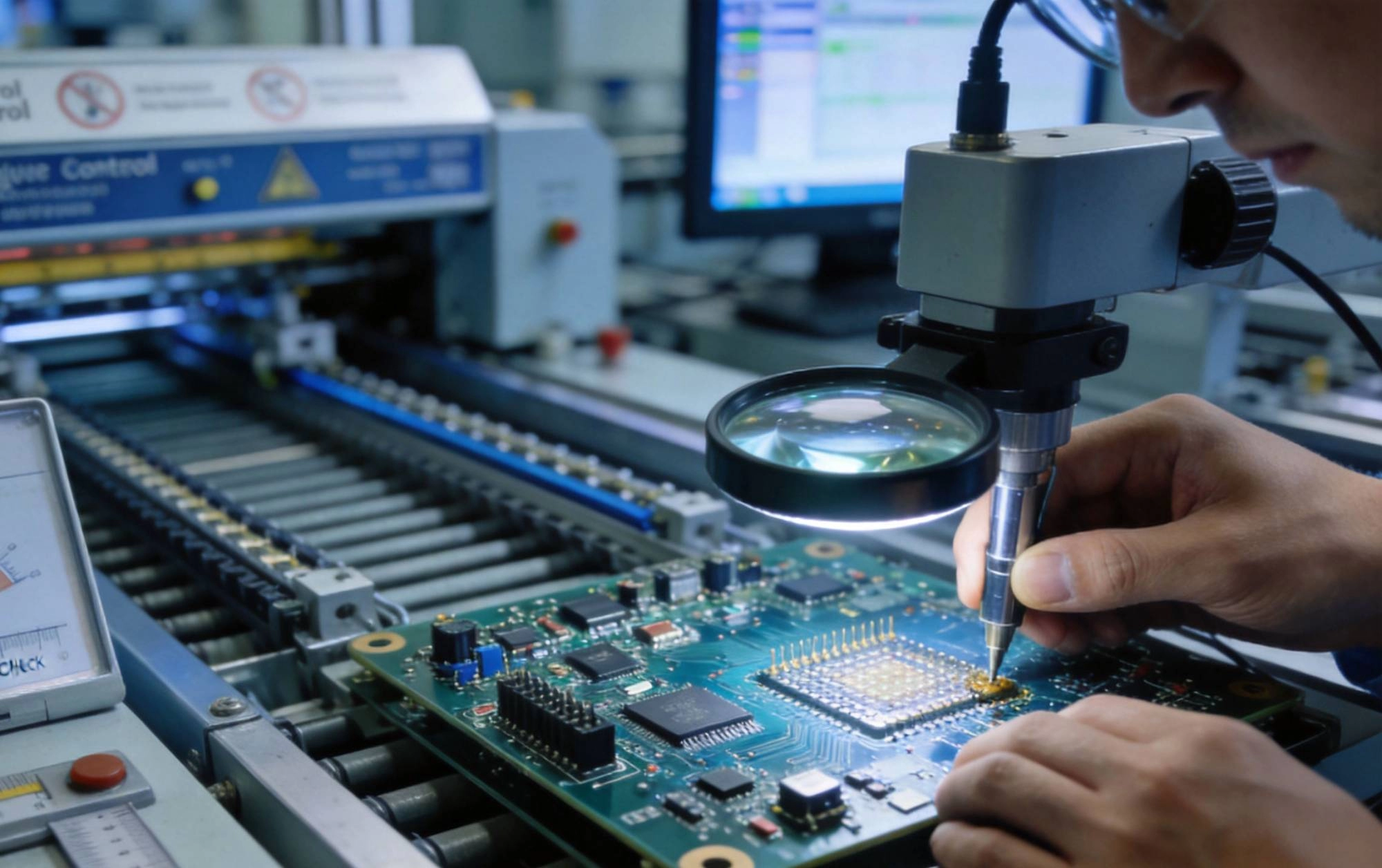
The Institute for Printed Circuits (IPC) develops industry standards that define acceptable quality levels for electronic assemblies. These standards emerged from the electronics industry itself, created by manufacturers, users, and equipment suppliers working together to establish consistent quality expectations.
Ipc Standards cover the complete assembly process: design requirements, component selection, manufacturing methods, inspection criteria, and acceptance testing. By following these standards, manufacturers ensure their products meet expectations and users can trust the assemblies they receive.
Ipc-a-610, the most widely recognized assembly standard, defines three distinct quality classes:
Each class specifies increasingly stringent requirements across every aspect of assembly. The differences are not minor—they represent fundamentally different approaches to quality verification and acceptable defect levels.
Class 3 requirements go far beyond simply "making the product work." These standards demand consistent excellence across every aspect of the assembly process.
Class 3 assemblies begin with proper component management:
The foundation of Smt Assembly Quality starts at Solder Paste Printing:
Class 3 placement requirements exceed typical manufacturing:
The reflow process creates permanent connections:
Class 3 inspection criteria are the most demanding:
Class 3 demands comprehensive records:
Industrial environments stress electronic equipment in ways consumer applications never encounter. Understanding these demands explains why Class 3 isn't optional—it's essential.
Industrial equipment operates in challenging conditions:
Assemblies built to Class 3 tolerances handle these stresses because quality margins exist for real-world conditions. Assemblies built to Class 1 or Class 2 tolerances may work initially but fail prematurely when environmental stress accumulates.
Industrial systems often run 24/7 with minimal maintenance windows:
Class 3 quality translates directly to lower total cost of ownership. The additional investment in quality during manufacturing prevents far larger costs from field failures.
Some industrial electronic failures create safety hazards:
Industries with safety implications—chemical processing, heavy manufacturing, transportation—face regulatory requirements that effectively mandate Class 3 quality for critical systems.
China's Electronics Manufacturing industry spans an enormous range of capabilities. Understanding this landscape helps buyers find partners who genuinely meet Class 3 requirements.
Chinese EMS providers range dramatically in quality approach:
The key challenge for buyers: finding manufacturers whose actual capabilities match their marketing claims.
Leading Chinese manufacturers have invested heavily in quality infrastructure:
These investments don't come cheap. Manufacturers charging Class 3 prices but operating Class 1 processes either cut corners or face unsustainable economics.
Legitimate manufacturers can verify their claims:
Buyers should verify certifications independently and conduct facility audits for critical applications.
Sourcing Class 3 assembly from China requires deliberate engagement strategies. The right approach transforms potential risks into advantages.
Evaluate potential partners systematically:
Clear specifications prevent quality disputes:
Before volume production, validate the manufacturing process:
Class 3 quality requires sustained attention:
Several persistent myths complicate sourcing decisions.
Class 3 does cost more than Class 1 assembly. But comparing unit prices misses the total cost picture. Field failures, returns, reputation damage, and customer loss dwarf the incremental cost of proper assembly. For industrial applications, Class 3 quality is an investment in lower total cost of ownership.
Many Chinese manufacturers produce world-class quality. Apple's supply chain includes Chinese manufacturers producing millions of units meeting stringent specifications. Industrial Class 3 requirements, while demanding, are well within reach of capable Chinese partners. The challenge is finding them.
ISO certification demonstrates a quality management system exists. It doesn't guarantee every order meets specifications. Buyers must verify actual compliance through audits, inspections, and ongoing monitoring. Certification is a starting point, not an endpoint.
Price alone doesn't indicate quality. Some manufacturers charge premium prices while cutting corners. Others offer competitive pricing because their processes genuinely operate efficiently. Evaluate quality systems, not just pricing models.
The best outcomes come from partnerships, not transactions.
IPC Class 3 standards represent the gold standard for industrial SMT PCB Assembly. For applications where reliability cannot be compromised, these rigorous requirements ensure assemblies meet expectations across demanding service conditions.
China's manufacturing capabilities have evolved dramatically. Leading Chinese manufacturers now produce Class 3 assemblies for global industrial customers, combining rigorous quality systems with competitive costs. The opportunity for buyers is real—but so are the challenges of identifying genuinely capable partners among many alternatives.
Success requires deliberate supplier selection, clear specification development, process qualification, and ongoing quality monitoring. Building true partnerships rather than transactional relationships creates sustainable quality outcomes that benefit both parties.
When your industrial product's reputation depends on assembly reliability, Class 3 is not optional. The question isn't whether to require Class 3 quality—it's how to find manufacturing partners in China who genuinely deliver it.
Class 2 and Class 3 differ primarily in acceptable defect levels and inspection rigor. Class 3 allows fewer cosmetic defects, requires more complete documentation, demands tighter process controls, and has stricter acceptance criteria for solder joints and Component Placement. Class 2 permits minor imperfections that Class 3 would reject. The practical result: Class 3 assemblies have greater quality margins for reliable long-term service.
Verification involves multiple approaches: request and verify ISO 9001 certification through accredited registrars, ask for IPC-A-610 operator certifications for assembly staff, conduct or arrange facility audits, review their quality documentation systems, request sample inspections, and establish ongoing quality monitoring for production orders. Don't rely solely on marketing claims.
Class 3 assembly typically costs 15-40% more than Class 2, depending on board complexity and order volume. The exact premium varies by manufacturer and specification details. Remember that this premium often pays for itself through reduced field failures, lower warranty costs, and preserved customer relationships.
Yes, Class 3 applies regardless of volume. Small-run industrial assemblies benefit even more from Class 3 because the cost of field failures isn't spread across high volume. Many manufacturers offer Class 3 assembly for prototype and low-volume production, though unit costs may be higher for small quantities.
Class 3 assemblies failing inspection require disposition through documented processes. Options include rework to correct defects, repair if repairable, or rejection if the assembly cannot meet specifications. Non-conforming material reports document the issue, root cause analysis identifies why the failure occurred, and corrective actions prevent recurrence. Documentation is critical for Class 3 compliance.
Quality Control Protocols Specific to Industrial SMT PCB Assembly in Chinese FactoriesSeptember/24/2026
Heavy Copper PCBs and High-Power Components in Industrial SMT Assembly ChinaSeptember/14/2026
Why IPC Class 3 Standards Matter for Industrial SMT PCB Assembly in ChinaJune/28/2026

SMT PCB Assembly for Harsh Environments: Conformal Coating Solutions in ChinaJuly/18/2026
The Demands of Industrial SMT PCB Assembly in ChinaMay/29/2026

Ensuring Long-Term Supply Chain Stability for Industrial SMT Assembly in ChinaSeptember/03/2026
High-Mix Low-Volume Success: Flexible SMT Assembly for Industrial Clients in ChinaOctober/13/2026
Overcoming BGA Challenges in a Complex SMT PCB Assembly China ProjectMay/29/2026