
When a European automotive Tier 1 supplier needed to scale production of a critical electronic control unit from pilot production to 100,000 units monthly, they chose a Chinese manufacturing partner with proven high-reliability Smt Assembly capabilities. The challenge wasn't just volume — Automotive Electronics demand zero-defect quality, first-pass yields above 95%, and supply chain resilience against component disruptions. This case study examines how they achieved these requirements through process optimization, quality system design, and strategic partnerships.
The supplier's original manufacturing facility in Europe could produce high-quality boards but lacked the capacity expansion flexibility and cost structure needed for the volume ramp. After evaluating multiple global options, they selected a Chinese Smt Assembly partner with Iatf 16949 certification, established automotive experience, and demonstrated capability to scale rapidly while maintaining quality consistency. The partnership spanned two years of collaborative development, three production line expansions, and ultimately successful mass production that exceeded reliability targets.
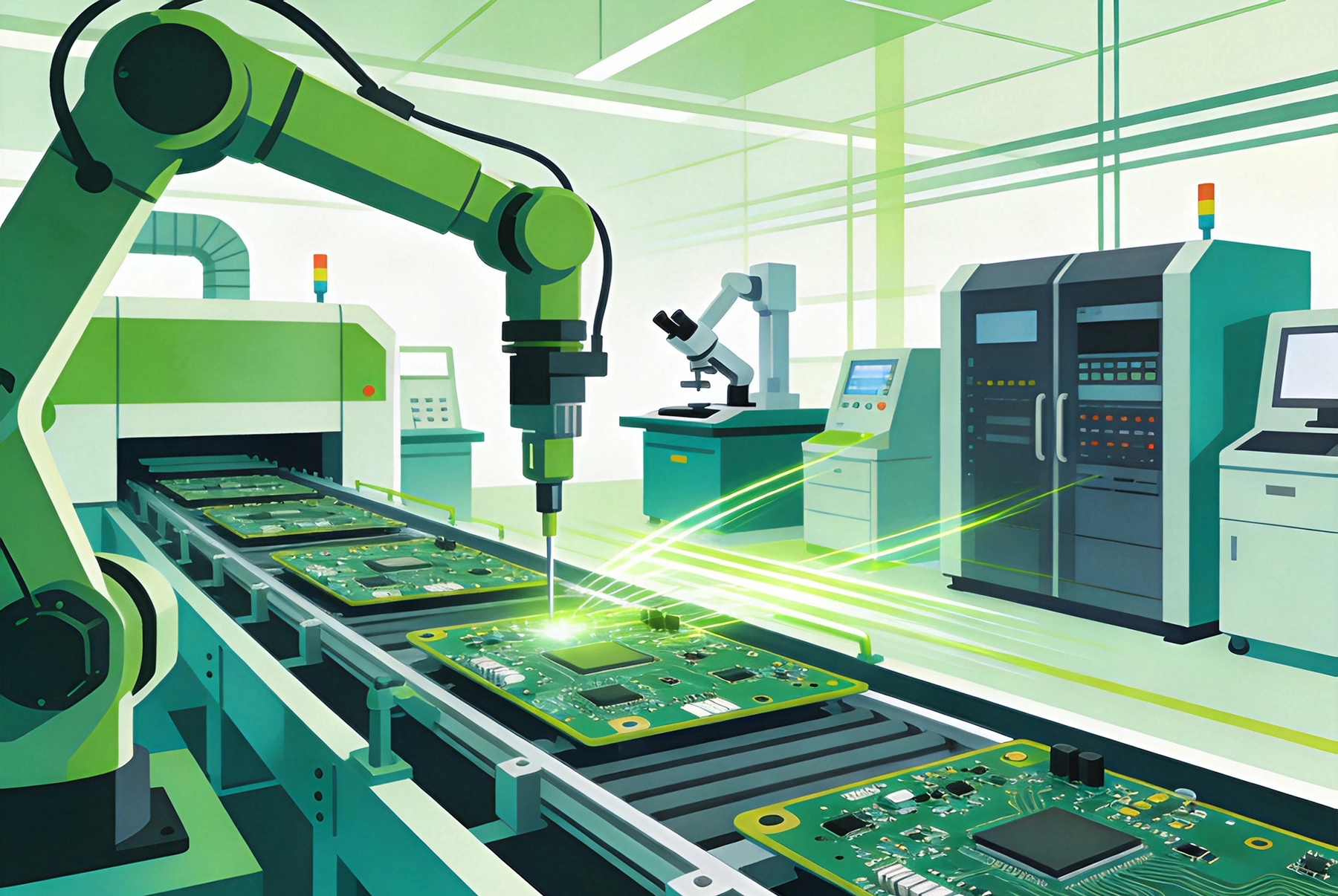
The electronic control unit (ECU) controlled a safety-critical vehicle function, placing it under automotive safety integrity level ASIL B requirements. The board contained complex mixed-signal circuitry including power management, sensor interfaces, communication modules, and a 32-bit automotive microcontroller. Component count exceeded 300 with multiple BGA packages, fine-pitch QFNs, and various passive components ranging from 0402 to 2512 sizes.
Technical requirements included automotive-grade AEC-Q100 qualified components, high-Tg FR4 substrate rated for -40°C to +125°C operation, and Conformal Coating for environmental protection. Quality requirements included first-pass yield above 95%, defect rate below 10 parts per million (PPM) for critical parameters, and full Traceability of components to their manufacturing lots.
Supply chain requirements presented additional challenges. The bill of materials included several long-lead components and a few single-source items. The manufacturing partner needed to demonstrate component sourcing strategies that could support production scaling without supply disruptions. This proved critical when semiconductor shortages emerged during the project timeline.
The automotive supplier evaluated eight potential manufacturing partners across China, Southeast Asia, and Eastern Europe before selecting the final partner. Selection criteria included quality certifications, automotive experience, production capacity, geographic proximity to their target markets, and cultural compatibility with their engineering approach.
Iatf 16949 certification served as a non-negotiable baseline. The Automotive Quality management standard provides the framework for process control, Continuous Improvement, and customer-focused quality that automotive customers require. Beyond certification, the supplier needed demonstrated experience with similar complexity boards and existing relationships with automotive component distributors.
Production capacity mattered for scalability. The initial requirement was 20,000 units monthly with planned growth to 100,000 units within 18 months. The selected partner had flexible line configurations that could scale by adding identical production lines rather than requiring re-tooling of existing lines. This approach maintained process consistency across capacity expansions.
Geographic considerations included both shipping logistics and supply chain access. China's established semiconductor distribution infrastructure provided faster component sourcing than alternatives in Europe, while proximity to ports supported efficient shipping to global markets. The selected partner's location near Shanghai logistics hubs provided additional supply chain flexibility.
High-reliability automotive SMT assembly begins with the quality system foundation. IATF 16949 compliance provides the framework, but effective implementation requires additional processes tailored to Automotive Electronics.
Automotive Quality systems emphasize process control over end-product testing. By controlling the process parameters that affect quality, the system prevents defects from occurring rather than catching them after production. This approach means investing in process monitoring equipment, maintaining tight parameter tolerances, and establishing control plans that define acceptable process variation.
For SMT assembly, process control includes solder paste inspection, Component Placement verification, Reflow Profile monitoring, and Automated Optical Inspection (Aoi) after reflow. Each process step has defined parameters with control limits. When parameters drift toward control limits, the system triggers corrective action before defects occur.
First Article Inspection (FAI) establishes that the manufacturing process produces conforming product before full production begins. FAI involves detailed dimensional and functional verification on the first production board or small batch, typically 3-5 boards. All critical dimensions, electrical parameters, and functional tests must meet specifications before production proceeds.
The FAI process generates documentation that becomes the baseline for ongoing production. Any deviations discovered during FAI require process adjustments and re-FAI before production authorization. This rigor prevents production of non-conforming product at scale, which would create significant scrap and potential liability.
Statistical process control (SPC) provides ongoing monitoring of process health. Rather than checking every unit for every parameter, SPC samples production at defined intervals and tracks parameter trends over time. Process drift becomes visible through control charts, allowing intervention before defective product is produced.
For this automotive ECU, SPC tracked placement accuracy, solder joint quality, and critical electrical parameters across all production lines. Data aggregation across lines allowed the manufacturer to identify whether problems were line-specific or systemic. When placement accuracy drifted on one line, maintenance addressed the specific issue without affecting other lines.
Automotive quality requirements include full Traceability from finished boards back to component manufacturing lots. Each board receives a unique serial number, and the manufacturing system records which components from which lots went into each board. If a field failure occurs, the system can identify which boards used components from potentially problematic lots.
Serialization required implementing board-level tracking infrastructure, but the investment paid dividends beyond compliance. The data supported Continuous Improvement by identifying which component lots had higher defect rates. These insights guided component sourcing decisions that improved overall yield over time.
Setting up production lines for automotive SMT assembly requires careful planning and qualification before full production begins. The process spans equipment selection, process development, and line qualification testing.
High-mix automotive production requires equipment capable of handling component diversity while maintaining precision. The selected equipment included multiple pick-and-place machines with component feeders ranging from 0402 tape to tray-based large components. Vision alignment systems handled fine-pitch BGAs and QFNs with placement accuracy below 25 microns.
Conveyorized reflow ovens provided precise Temperature Profile control essential for mixed-component assemblies. Different component packages have different thermal masses and heat absorption characteristics, requiring reflow profiles that accommodate this diversity. The selected equipment included zone temperature control with ±2°C stability and programmable profiles tailored to specific assemblies.
Inspection equipment included solder paste inspection before placement, Aoi after reflow, and X-ray Inspection for BGA and other hidden-connection components. The combination of inspection modalities caught different types of defects at appropriate points in the process where rework cost remained manageable.
Process development established optimal parameters for each assembly step before production began. Solder paste type, stencil thickness, squeegee speed, and print parameters were optimized based on the specific pad geometries and component packages used. Multiple iterations validated that the process produced consistent results across typical manufacturing variation.
Placement parameters included nozzle selection for each component type, placement speed balancing throughput and accuracy, and vision system parameters for fiducial recognition and component verification. The process development team created standard programs for each component type that could be replicated across multiple production lines.
Reflow Profile development involved thermocouple measurements on actual boards to ensure the profile delivered appropriate heat to all component packages. Large Power Components required more heat than small signal devices, requiring profiles that balanced thermal requirements across component diversity. Profile validation included both thermal requirements and solder joint quality assessment.
Before production authorization, each line underwent qualification testing that included producing sample boards at target rate, measuring key parameters, and verifying that the line produced consistent results. Qualification typically involved producing 50-100 boards and measuring placement accuracy, solder joint quality, and functional performance.
Qualification also validated that line changeovers between different assemblies could be performed efficiently. Automotive manufacturing often involves multiple assembly types on shared lines. Fast changeovers between assemblies are essential for maintaining throughput while supporting product variety.
Reliable component sourcing is particularly challenging for automotive electronics due to the combination of long production lifecycles and occasional component availability issues. This project's supply chain strategy proved critical when semiconductor shortages disrupted global markets.
All components were sourced through authorized distribution channels to ensure authenticity and traceability. Unauthorized channels pose risks of counterfeit components that would pass visual inspection but fail in the field — unacceptable risks for safety-critical automotive applications. Authorized distributors provide documentation tracing components to their original manufacturers.
Long-term relationships with major distributors provided priority access during supply shortages. The manufacturing partner maintained open lines of communication with distributors and provided accurate demand forecasts that helped distributors plan inventory. When shortages emerged, these relationships provided allocation priority.
Several components had single-source status at the beginning of the project, creating vulnerability to supply disruption. The engineering team worked with the automotive supplier to qualify second sources for critical single-source components. This qualification process required testing equivalency across electrical performance, package compatibility, and automotive qualification status.
Multi-sourcing eliminated several single-source vulnerabilities before production scaling began. When the global semiconductor shortage hit, components with qualified second sources continued availability while single-source items became constrained.
Automotive production typically spans multiple years, requiring inventory planning that extends beyond immediate production needs. The manufacturing partner established buffer stock agreements for long-lead components that locked in allocation for the entire production program. These agreements carried inventory carrying costs but provided Production Continuity that proved valuable during shortages.
Inventory management also included monitoring component lifecycle status. End-of-life notices trigger design updates well before production ends. Proactive lifecycle management prevented forced design changes that would have disrupted production schedules.
Scaling from pilot production to full production revealed challenges that needed resolution to maintain quality and throughput. Addressing these challenges required collaboration between engineering, production, and quality teams.
Initial first-pass yields of 89% fell short of the 95% target, requiring systematic root cause analysis and process optimization. The quality team used Pareto analysis to identify the most common defect types, finding that solder bridging on fine-pitch components and tombstoning of small passives represented 60% of defects.
Process adjustments included modifying stencil aperture design for fine-pitch components to reduce solder paste volume that caused bridging. For tombstoning issues, the team adjusted pad geometry and thermal relief to provide more balanced heat distribution during reflow. These adjustments pushed first-pass yield to 97% after three optimization iterations.
As production scaled from 20,000 to 100,000 units monthly, bottlenecks emerged that limited overall throughput. The initial line configuration had bottleneck stations that limited the entire line's capacity. Production engineers modeled line balance and identified the rework station as the primary bottleneck.
The solution involved adding a parallel rework line with additional technicians and equipment. This rework capacity absorbed the volume from the main production line, allowing the main line to operate at higher throughput. The balanced configuration increased overall line capacity by 30% without requiring additional production lines.
Scaling production required expanding the workforce from 50 technicians to over 200 technicians within 12 months. Maintaining consistent quality across this workforce expansion required standardized training programs and qualification assessments.
The training program covered assembly fundamentals, quality requirements, and specialized skills for different production stations. Technicians passed written and practical assessments before assignment to production roles. Experienced mentors supported new technicians during their first weeks on the line, ensuring knowledge transfer and maintaining quality consistency.
Quality systems that worked for pilot production didn't scale directly to high-volume production without adjustment. Data collection volume increased by fivefold, requiring automated data analysis tools rather than manual spreadsheet tracking. Quality control sampling strategies adjusted to maintain statistical confidence across higher volumes.
The quality team implemented automated data collection from inspection equipment and production monitoring systems. Real-time dashboards provided visibility into line performance and quality metrics. This automation enabled quality engineers to focus on analysis and improvement rather than data collection.
After 24 months of collaborative development and production ramp, the project achieved its targets and established a reliable manufacturing foundation for the automotive ECU. Key performance metrics validated the success of the partnership and the manufacturing approach.
First-pass yield stabilized at 97.3%, exceeding the 95% target. Customer returns due to manufacturing defects averaged 12 PPM, well below the automotive typical range of 25-50 PPM. Customer-reported field failures attributable to manufacturing averaged 3 per million units over the first year of production, demonstrating reliability exceeding expectations.
Audit performance validated quality system effectiveness. External automotive customer audits scored the manufacturing operation at 92% overall compliance, with all critical process areas scoring above 90%. The supplier maintained IATF 16949 certification with zero major nonconformities throughout the project.
Production throughput reached 105,000 units monthly, exceeding the 100,000 unit target through line balance optimizations and yield improvements. On-time delivery performance averaged 99.2%, with most delays caused by component shortages rather than manufacturing issues.
Production cost per unit decreased by 18% from pilot production to full production through yield improvements, throughput optimization, and volume effects on fixed cost allocation. The cost structure remained competitive with alternative manufacturing locations despite China's rising labor costs.
Component availability remained above 98% throughout the semiconductor shortage period, with most supply disruptions resolved within 2-3 weeks through alternative sourcing or schedule adjustments. The multi-sourcing strategy established during development proved critical, with second-source components maintaining availability while many single-source items experienced extended lead times.
Traceability records enabled two effective field failure investigations where specific component lots were identified as failure contributors. The traceability system facilitated targeted recalls rather than full production recalls, saving approximately €2.3 million in recall costs.
This automotive Electronics Manufacturing project generated lessons applicable to other high-reliability electronics production initiatives. These lessons span technical, operational, and strategic dimensions.
Investment in process control infrastructure pays returns in yield and quality. Advanced inspection equipment, solder paste inspection, and automated data collection required significant capital investment but enabled yield improvements that more than offset the capital cost over the production lifecycle.
Process optimization is iterative rather than一次性. Initial yield below targets wasn't surprising, but the systematic approach to root cause analysis and process adjustment enabled rapid improvement. The ability to iterate quickly relied on good measurement systems and data collection infrastructure.
Scalability requires thinking ahead to higher volumes during initial setup. Decisions about line configuration, equipment selection, and data systems made during pilot production either facilitated or hindered later scaling. Lines designed for expansion scaled smoothly; lines optimized only for initial volumes required costly re-configuration.
Personnel training quality determines consistency across workforce expansion. Standardized training programs, mentorship structures, and qualification assessments maintained quality consistency as the workforce expanded fourfold. Companies that invested less in training saw more quality variation as new personnel joined the operation.
Component sourcing strategy is as important as manufacturing strategy. The multi-sourcing and authorized distribution approach proved critical during supply disruptions. Companies that relied too heavily on spot market sourcing or single sources experienced greater disruption.
Partnership quality matters more than geographic proximity. While China offered logistical advantages, the critical success factor was the manufacturing partner's capability and commitment rather than location. Successful partnerships relied on shared quality philosophy and willingness to invest collaboratively in process optimization.
Successful automotive SMT assembly in China requires more than competitive pricing — it demands quality systems, process capabilities, and supply chain resilience that meet automotive's exacting standards. This case study demonstrates how these requirements translate into specific practices and investments.
Quality systems based on IATF 16949 provide the foundation, but effective implementation requires process control, statistical monitoring, and traceability beyond the baseline requirements. First Article Inspection, SPC, and serialization create quality infrastructure that prevents problems rather than just detecting them after production.
Production line setup begins with appropriate equipment selection but continues through process development and line qualification. The work done before production begins determines whether lines can scale smoothly to high volume while maintaining quality. Rushing through line qualification costs more in rework and yield loss than investing in thorough qualification up front.
Component sourcing strategies matter enormously in the current semiconductor environment. Authorized distribution, multi-sourcing, and strategic inventory planning provide resilience against supply disruptions. Companies that treat sourcing as a strategic capability rather than a procurement function experience fewer supply-related production disruptions.
Scaling production reveals new challenges that require systematic resolution. Yield optimization, throughput balancing, and workforce training all require attention as volumes increase. Addressing these challenges systematically rather than reactively maintains quality while increasing throughput.
Partnership quality determines success more than location or price. The manufacturing partner must share the customer's quality philosophy and be willing to invest collaboratively in process improvement. Mutual investment in the relationship yields returns in quality, flexibility, and long-term reliability.
High-reliability automotive SMT assembly in China is achievable and offers compelling advantages for companies that invest appropriately in quality systems, process capabilities, and supply chain resilience. The combination of technical capability, cost competitiveness, and supply chain infrastructure makes China a viable option for automotive electronics production when partnerships are built on mutual commitment to quality and continuous improvement.
IATF 16949 certification is mandatory for automotive Pcb Manufacturing. This quality management standard is specifically designed for automotive production and service parts organizations. Additional relevant certifications include ISO 14001 (environmental management) and ISO 45001 (occupational health and safety). For specific customers, additional certifications like UL, CE marking, or automotive customer-specific standards may also apply.
Authorized distribution channels are the primary safeguard against counterfeit components. Automotive manufacturers work directly with component manufacturers or their authorized distributors, who provide traceability documentation back to the original manufacturer. Additional safeguards include incoming inspection testing, supply chain audits, and maintaining long-term relationships with trusted suppliers. Some manufacturers implement X-ray Inspection or electrical testing to detect counterfeit components that pass visual inspection.
Typical automotive quality metrics include first-pass yield above 95%, defect rates below 10 PPM for critical parameters, customer returns below 25 PPM, and on-time delivery above 98%. Safety-critical systems like ASIL B or higher may have even more stringent targets. Quality system audit performance should maintain IATF 16949 certification with zero major nonconformities. Field failure rates attributable to manufacturing should be below 5 per million units for typical automotive electronics.
BGA quality requires X-ray inspection to verify solder joint quality under the package, as visual inspection cannot see hidden connections. The inspection process typically checks for missing solder balls, insufficient or excessive solder, voiding, and alignment issues. Process control for BGAs includes careful stencil design, reflow profile optimization, and placement accuracy control. Many automotive manufacturers also perform Automated Optical Inspection of BGA features visible from the top surface to supplement X-ray inspection.
China offers advantages in supply chain infrastructure, manufacturing scale, and engineering talent depth. The established semiconductor distribution ecosystem provides faster component sourcing and better availability during supply disruptions. Manufacturing infrastructure supports rapid scaling with equipment availability and skilled technicians. Engineering depth supports rapid problem-solving and process optimization. While labor costs have increased, overall competitiveness remains strong through automation and process efficiency improvements.
Automotive electronics production demands exceptional quality and reliability, but these requirements are achievable in Chinese manufacturing facilities that invest appropriately in quality systems, process capabilities, and talent development. The case study demonstrates that success requires mutual commitment between customer and supplier, strategic thinking about supply chain, and systematic attention to every aspect of the manufacturing process.
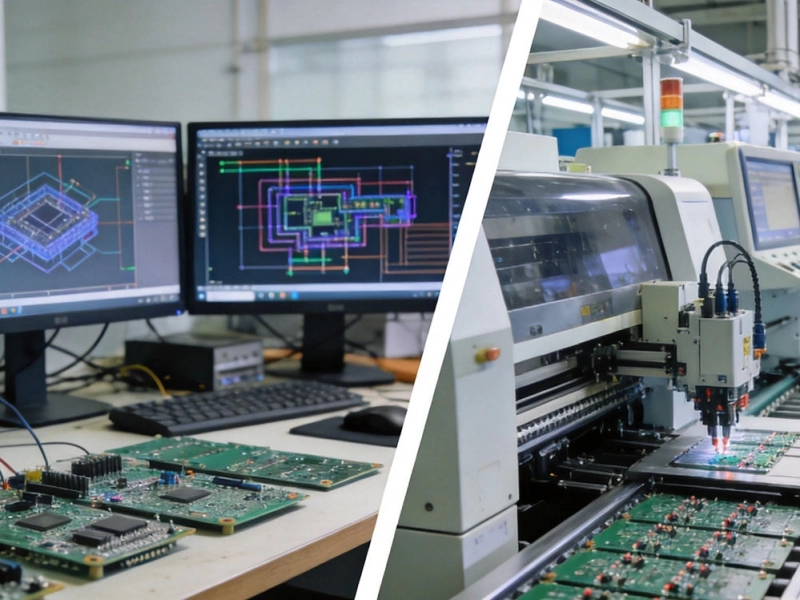
How We Helped a US Startup Scale from Prototype to Mass SMT Assembly in ChinaJuly/07/2026

How Our China Factory Reduced Assembly Time by 30% for a Client's SMT ProjectSeptember/11/2026
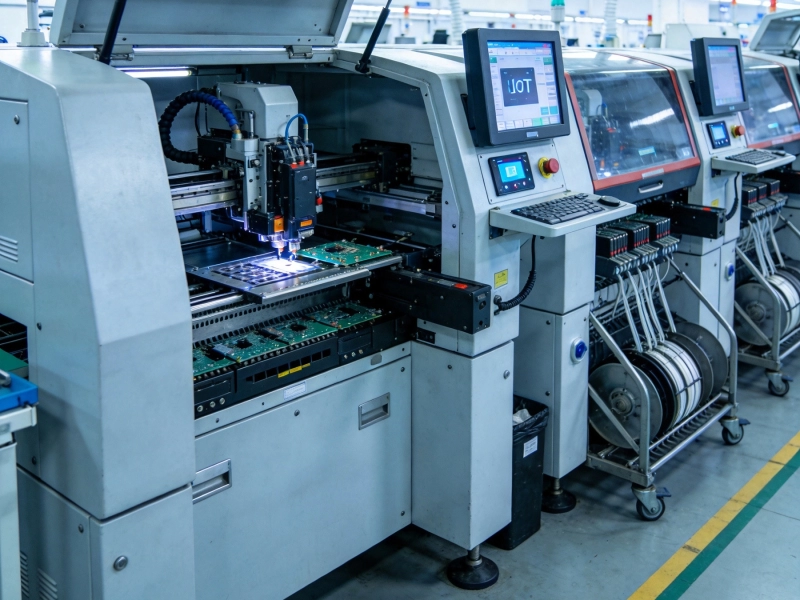
From Concept to Reality: Custom IoT SMT PCB Assembly Project in Shenzhen, ChinaSeptember/02/2026
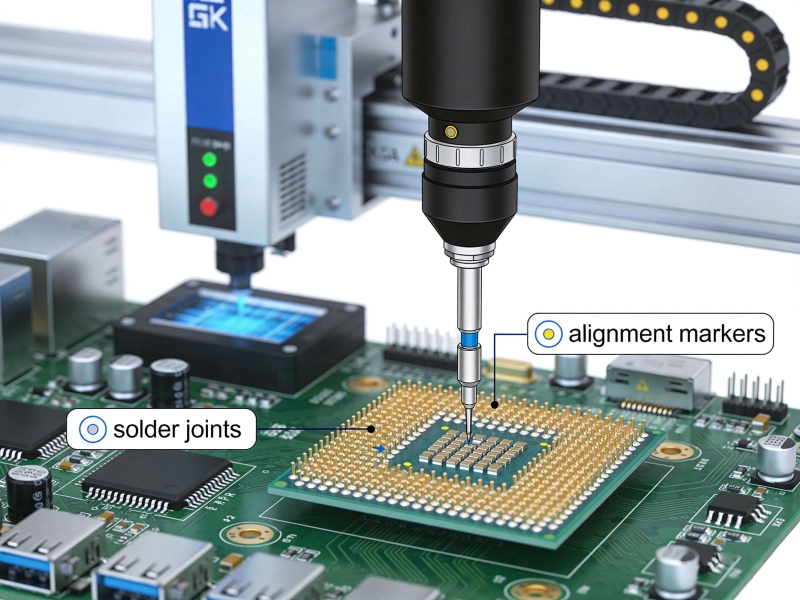
Overcoming BGA Challenges in a Complex SMT PCB Assembly China ProjectJune/09/2026
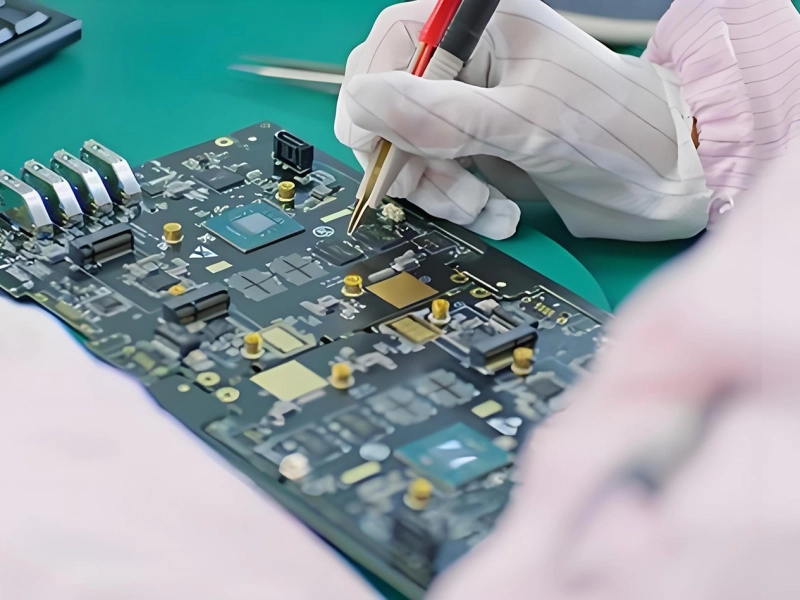
Overcoming BGA Challenges in a Complex SMT PCB Assembly China ProjectMay/29/2026
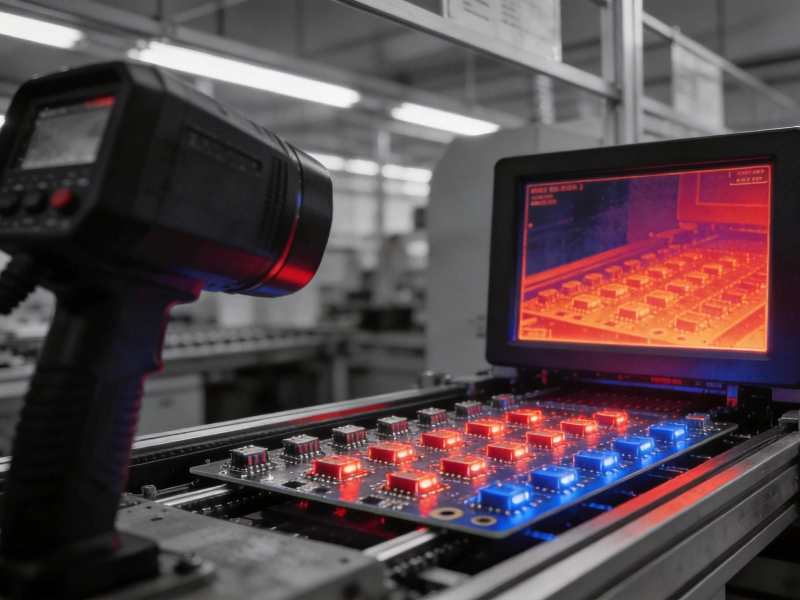
Solving Thermal Issues in LED SMT PCB Assembly: A Real-World China Factory ExampleJuly/28/2026
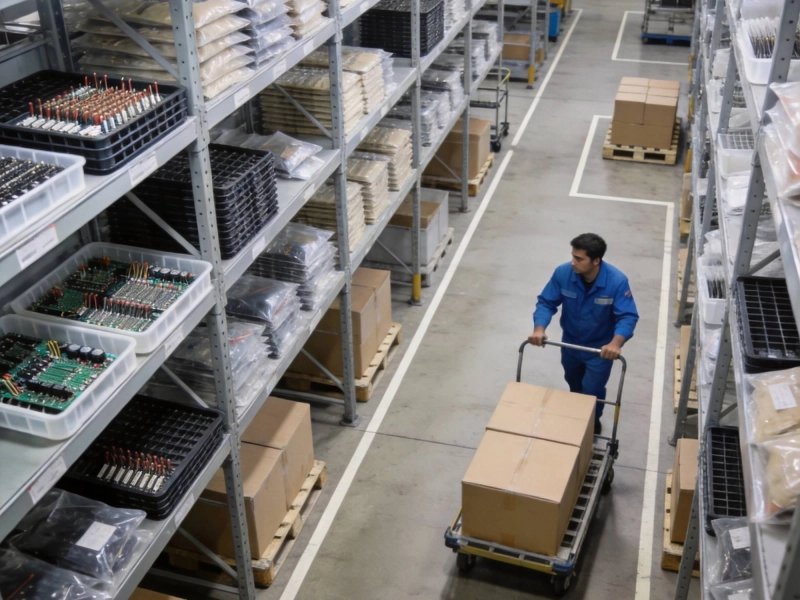
Case Study: Managing Obsolete Components in SMT PCB Assembly China Supply ChainsSeptember/23/2026
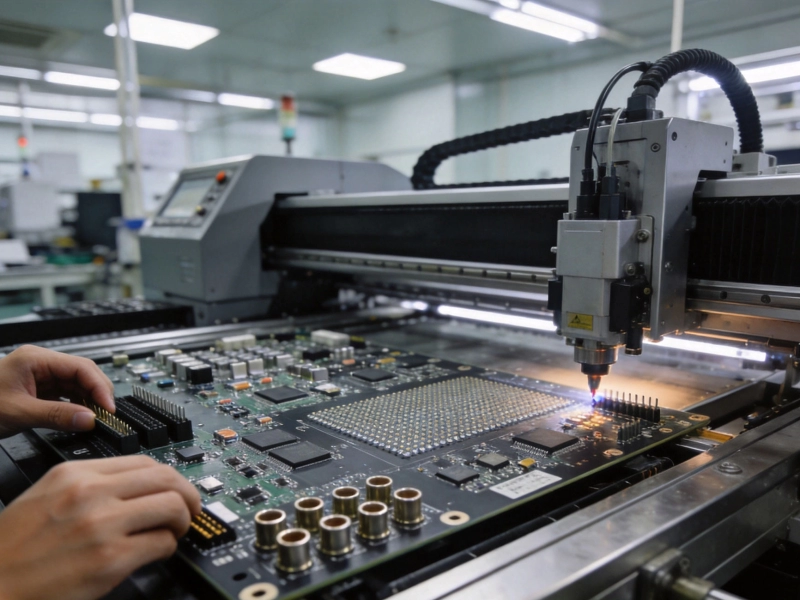
When to Use Through-Hole Technology Alongside SMT Assembly in Chinese FactoriesJuly/16/2026