
For electronics engineers and hardware startups, the choice of where to manufacture prototype PCBs is one of the most consequential decisions in the product development cycle. Every week saved on prototype lead time translates directly into faster iteration cycles, quicker investor demos, and a faster path to market. In recent years, an increasing number of R&D teams and prototyping shops have discovered that China-based quick-turn Smt Assembly services offer a compelling combination of speed, cost efficiency, technical capability, and supply chain depth that is difficult to match elsewhere in the world.
China is, of course, home to the world's largest Electronics Manufacturing infrastructure. But the quick-turn prototyping segment of that ecosystem is often misunderstood. It is not just a low-cost option for simple boards—it is a sophisticated, capability-rich manufacturing environment that has invested heavily in equipment, quality systems, and engineering talent specifically to serve the needs of R&D teams and small-batch production runs. This article examines the specific benefits that China-based quick-turn Smt Assembly services offer for prototyping and R&D applications, and how to navigate the process effectively.

The quick-turn SMT assembly market in China has matured significantly over the past decade. What was once a fragmented collection of small workshops with basic reflow ovens and manual assembly stations has evolved into a professional ecosystem of EMS providers ranging from small boutique shops serving hundreds of prototype customers to large-scale facilities that handle both prototype and low-to-medium volume production with equal competence.
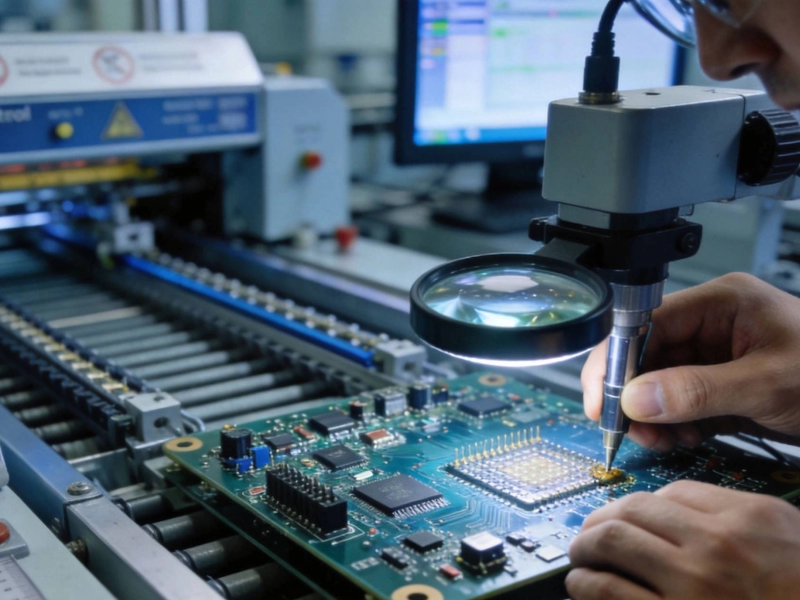
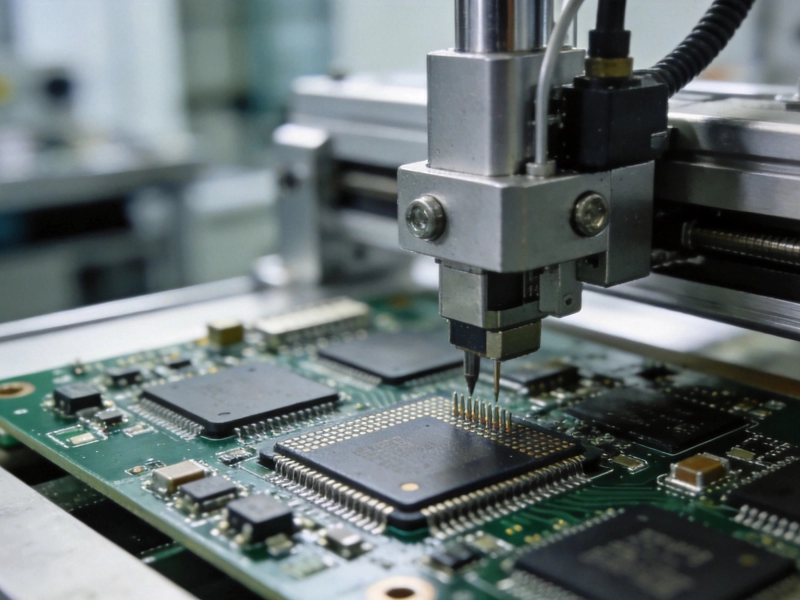
Many China-based quick-turn providers have invested in the same equipment used by leading prototype assembly shops globally: high-precisionYamaha, Panasonic, and Fuji pick-and-place machines capable of placing 0201 components, fine-pitch QFPs, and BGAs with accuracy below 50 microns; lead-free reflow ovens with precise temperature profiling; laser-cut stainless steel stencils; Aoi systems for automated defect detection; and flying probe testers for electrical verification. The technical capability gap between a well-run quick-turn shop in Shenzhen or Suzhou and an equivalent facility in the United States or Europe has essentially closed for most prototype and small-batch work.
The key differentiator in China is not equipment—it is scale, supply chain depth, and cost structure. The sheer volume of Electronics Manufacturing in China means that component distributors, stencil manufacturers, and supporting service providers all operate at a scale and efficiency that directly benefits even the smallest prototype customer.
Speed is the most obvious and most frequently cited benefit of using China-based quick-turn Smt Assembly Services. For straightforward prototype orders, many providers offer turnaround times of 5 to 7 business days from order confirmation to doorstep delivery, including international shipping. For urgent orders, many shops offer 48-hour or even 24-hour express service for a premium. While this is slower than a local prototype shop that might turn a simple board in 24 hours, the total time-to-part for a China order is often comparable when you factor in the additional time required to qualify and coordinate with a local shop for a first-time order.
The speed advantage becomes even more pronounced as board complexity increases. A local prototype shop with limited equipment may not have the capability to handle an 8-layer board with blind buried vias, BGA packages, and Controlled Impedance requirements. They would need to outsource some steps to a third-party manufacturer anyway, adding days or weeks. A China-based quick-turn facility with full in-house capability can handle the entire process—from bare board fabrication through assembly and testing—under one roof, which dramatically compresses the overall timeline.
For R&D teams running multiple iteration cycles, the cumulative time savings of even a few days per iteration cycle can be transformative. A product that would take 8 weeks to iterate through 4 prototype spins using a slow local manufacturer can be reduced to 4 weeks using a responsive China-based quick-turn provider, effectively doubling the development velocity.
The cost advantage of China-based manufacturing is well known, but in the quick-turn prototype context, it is important to be specific about what that advantage actually looks like and where it comes from.
For SMT assembly, the dominant cost components are setup costs and component costs. Setup costs—the programming of pick-and-place machines, the creation of the solder paste stencil, the setup of the reflow profile—are proportionally much higher for small prototype runs than for production runs. A China-based shop that runs hundreds of prototype orders per month spreads these setup costs across a large base of customers, which keeps the per-board price competitive even for single-board and five-board runs. In contrast, a local prototype shop serving a smaller market may have higher overhead that they must recover from fewer orders, leading to higher per-board pricing.
Component costs represent the other major variable. China-based quick-turn providers typically maintain large inventories of common passive and active components sourced from distributors in Shenzhen, Hong Kong, and across the Pearl River Delta. These distributors operate with tight margins and offer competitive pricing that reflects the enormous volume of electronics commerce flowing through the region. For standard components—resistors, capacitors, inductors, common ICs—the cost advantage is real. For specialty components with long lead times, the advantage may be smaller or nonexistent, but the supply chain depth in the region means that even obscure parts can often be sourced faster from local distributors than from international channels.
The quality delivered by capable China-based quick-turn providers is generally equivalent to what you would expect from a comparable domestic shop. The best providers maintain ISO 9001 quality systems, perform Aoi and flying probe testing on every board, and provide detailed quality reports. Many have been serving international customers—including major aerospace, medical, and telecommunications companies—for years and have developed the documentation, traceability, and quality management practices to match. The assumption that China Manufacturing implies lower quality is increasingly outdated for serious prototype providers.
One of the most significant but underappreciated advantages of using China-based quick-turn SMT assembly is the extraordinary depth of the local supply chain. Shenzhen and the surrounding Pearl River Delta region is the global epicenter of electronics component distribution, with thousands of distributors, trading companies, and component brokers operating within a few hours' logistics radius of any quick-turn assembly facility.
This supply chain depth translates directly into practical benefits for prototype customers. If your BOM includes a component that is out of stock at your usual distributor, a China-based provider may be able to source a locally available equivalent within hours rather than days. For prototype builds where a single unavailable component can block an entire assembly, this sourcing flexibility is invaluable. Many quick-turn providers in China offer BOM analysis as a complimentary service, flagging availability issues and proposing substitutions before manufacturing begins.
The logistics infrastructure that supports this supply chain is equally impressive. DHL, FedEx, and UPS all operate major hubs in Hong Kong and Shenzhen, and express shipping to North America, Europe, and most Asian destinations is fast and reliable. A board assembled in Shenzhen on Monday can be on a plane Tuesday and in your lab by Thursday or Friday in most international destinations. For domestic deliveries within China, same-day and next-day delivery is routine. This logistics advantage compounds the manufacturing speed advantage and makes the total time-to-part surprisingly competitive with local alternatives.
R&D and prototyping work has unique manufacturing requirements that do not fit neatly into high-volume production models. Quick-turn SMT assembly in China has developed specifically to serve these requirements with the flexibility that R&D teams need.
The best China-based quick-turn providers accept orders starting at a single assembled board. This is genuinely useful for very early-stage R&D validation, where you may want to test a single board of a new circuit topology before committing to even a small batch. As your testing needs grow, the same provider can assemble 5, 25, or 100 boards with the same ease of ordering and the same single point of contact. This scalability—from one board to hundreds—without changing vendors is a major operational advantage for growing companies.
China-based quick-turn providers typically offer both consignment (where you provide your own components) and full turnkey (where the provider sources everything) arrangements. Many R&D teams prefer consignment for prototype builds because it allows them to use exact components from their BOM without worrying about substitutions. Other teams prefer turnkey because it offloads procurement complexity and lets them focus on design and testing. Having both options available, with transparent pricing for each, lets you choose the right model for each phase of your project.
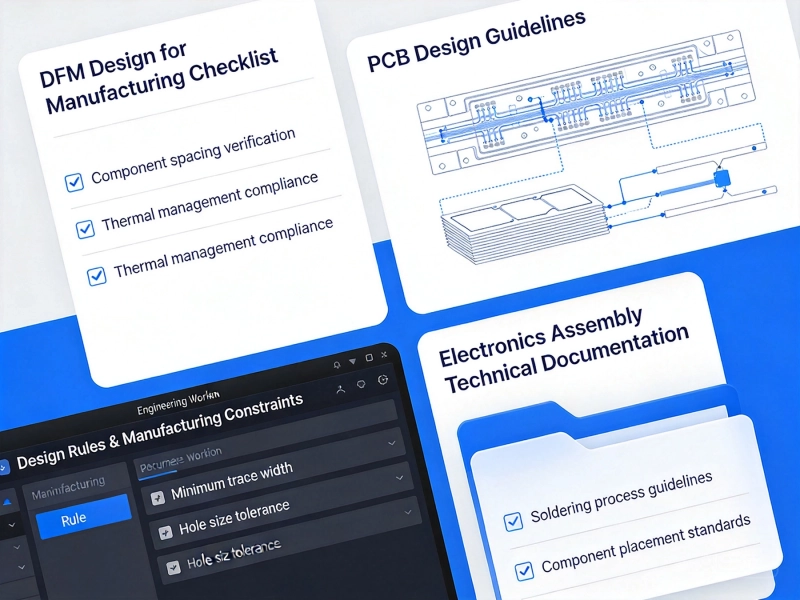
The better China-based quick-turn providers do not just execute manufacturing instructions—they provide active engineering support. Many offer complimentary Design For Manufacturability reviews, where an experienced CAM or process engineer reviews your design files for issues that could cause assembly problems, yield loss, or reliability issues. This feedback is particularly valuable for engineers who are less familiar with the specific manufacturing constraints of their assembly partner's equipment. Catching a footprint mismatch or a routing rule violation in the Dfm review costs nothing to fix. Discovering it after the boards come back from assembly costs both money and calendar time.
Modern electronics frequently require mixed-technology assembly: surface mount components on both sides of the board, through-hole connectors, press-fit components, and sometimes hand-soldered components that automated equipment cannot place. Capable China-based quick-turn providers handle all of these with equal facility, which means you can consolidate your prototype assembly with a single vendor rather than splitting the work between an SMT house for surface mount work and a separate shop for through-hole and hand assembly.
The most common concern about using China-based quick-turn SMT services is the perceived communication barrier. In reality, this concern is less founded than it once was. The best China-based quick-turn providers actively serve international customers and have developed English-language documentation, online ordering portals, and English-speaking sales and engineering staff to support them. Time zone differences do exist—China is 12 to 13 hours ahead of US Eastern Time—but for most prototype communication, which happens via email and online ticket systems, this is manageable. Quick-turn orders that are submitted with complete and clear documentation typically do not require real-time conversation to execute successfully.
The key to a smooth experience is providing complete and accurate inputs: well-organized Gerber files, a properly formatted BOM with manufacturer part numbers, a clear assembly drawing if needed, and any special instructions documented in writing. When you invest in clear communication upfront, the manufacturing execution typically goes smoothly. When you leave ambiguity in the documentation, any manufacturer—China-based or domestic—will either ask questions that delay the order or make assumptions that may not match your intent.
It is also worth building a relationship with your account representative. The same representative who handles your first prototype order will learn your product, your preferences, and your communication style over time, which reduces friction and accelerates subsequent orders. Many quick-turn providers offer priority scheduling and preferential pricing to established accounts, which rewards the relationship investment.
When evaluating the total cost of using China-based quick-turn SMT assembly, it is important to look beyond the unit assembly price and consider the full landed cost, including shipping, duties, and the value of your own time spent coordinating the order.
International express shipping for prototype quantities—typically 1 to 25 boards in a small package—is surprisingly affordable. Major carriers offer door-to-door service with customs clearance included for shipments under a certain value threshold, which eliminates the need for a customs broker for routine prototype imports. For shipments to the United States or Europe from China, express shipping typically costs between $30 and $80 for prototype quantities, depending on weight and carrier. When spread across 5 to 25 boards, this represents a modest per-board shipping cost that is usually more than offset by the lower assembly pricing.
Duty treatment for prototype PCBs varies by country and product classification. Many countries have provisions for sample or prototype imports that reduce or eliminate import duties for low-value prototype shipments. Consult your local customs authority or a trade advisor to understand the duty treatment for your specific product category.
The total landed cost of a prototype board from a China-based quick-turn provider—assembly price plus components plus shipping and duties—is typically 30 to 50 percent lower than an equivalent domestic prototype, and the quality is comparable for most applications. For high-reliability applications in aerospace, medical, or defense, you may need to factor in additional qualification requirements, extended lead times for specialty processes, or audit requirements for your supplier's quality system, all of which may shift the cost comparison.
China-based quick-turn SMT assembly is not the right choice for every situation. Understanding when the benefits outweigh the considerations helps you make the right decision for each phase of your project.
China quick-turn is ideal for late-stage R&D prototypes, pre-production validation boards, small-batch pilot runs, and any situation where you need 10 or more boards and are price-sensitive. It is also advantageous for boards with complex requirements—high layer counts, advanced component packages, Controlled Impedance—that may exceed the capability of smaller local prototype shops.
Domestic prototype services may be preferable for very early-stage concept verification where you need a board in 24 hours and are willing to pay a premium for speed. They may also be preferable when you need hands-on access to the manufacturing facility for iterative debugging, when you have extremely tight compliance or traceability requirements that demand a domestic supplier, or when the engineering team prefers face-to-face interaction with the assembly house during the build.
Many companies use both: a domestic provider for the fastest, most urgent early spins and a China-based quick-turn provider for subsequent iterations where speed is important but unit economics matter more. This hybrid approach gives you the best of both worlds for different phases of the development cycle.
If you decide to use a China-based quick-turn SMT assembly service, here is a practical checklist to ensure a smooth first order experience.
For a standard prototype order with in-stock components and complete documentation, a typical lead time is 5 to 7 business days for assembly, plus 3 to 5 business days for international express shipping to most destinations in North America, Europe, or Asia. This means approximately 8 to 12 business days from order submission to receipt. Express service options can reduce the assembly time to 48 hours for a premium, bringing the total time to approximately 5 to 7 business days.
For the best China-based quick-turn providers, yes. These facilities invest in the same equipment, run the same inspection processes, and maintain the same quality documentation as equivalent domestic shops. The key is selecting a reputable provider with a track record of serving international customers. Look for providers with ISO 9001 certification, demonstrated experience with your specific board complexity, and positive reviews from other R&D teams or startups in your industry.
Reputable China-based quick-turn providers offer rework and remake policies for quality defects. Before placing your order, review the provider's quality guarantee policy. Many offer free rework or remake if the defect is attributable to manufacturing error, while component-related issues or design errors are typically quoted separately for repair. Document all quality concerns with photographic evidence and communicate them promptly to your account representative so the issue can be resolved before the production records are closed.
This requires careful consideration. ITAR and EAR regulations impose restrictions on the handling, assembly, and distribution of defense-related electronics. Some China-based assembly facilities have obtained certifications and internal compliance programs to handle ITAR/EAR-sensitive work, but this is not universal. If your project involves controlled technology, verify your provider's compliance status before sharing any technical data. For some programs, using a domestic ITAR-compliant shop may be the only viable option regardless of cost and convenience.
Yes, for quantities up to approximately 1,000 to 2,000 boards per order, China-based quick-turn SMT assembly often remains cost-competitive with domestic alternatives, particularly when the provider offers volume pricing tiers. Above that quantity, the economics shift based on shipping costs, lead time trade-offs, and the provider's production vs. prototype focus. Many companies use China-based quick-turn providers for both prototypes and low-volume production runs, which simplifies the supply chain and builds a relationship that benefits both stages of the product lifecycle.
China-based quick-turn SMT assembly has matured into a genuinely competitive option for R&D and prototyping applications. The combination of sophisticated equipment, deep component supply chains, experienced engineering staff, and favorable cost structures makes it an attractive choice for hardware teams across industries—from startup founders validating their first product concept to established companies running rapid iteration cycles on next-generation designs.
The speed advantage, cost efficiency, and supply chain depth that China-based quick-turn providers offer are most valuable when your project involves complex boards, multiple iteration cycles, or tight budget constraints. The key to success is selecting a reputable provider, investing in clear and complete documentation, and building a relationship that grows more efficient over time.
For engineering teams willing to adapt their workflow to manage international sourcing, the benefits—faster iteration cycles, lower prototype costs, and access to a manufacturing ecosystem that can scale with your product—are substantial. As the global electronics supply chain continues to evolve, China-based quick-turn Smt Assembly Services will remain a critical resource for teams that need to move fast without breaking the bank.
This article is provided for general informational purposes regarding quick-turn SMT assembly services in China. Specific capabilities, lead times, pricing, and quality standards vary by provider. Always conduct your own due diligence and verify requirements directly with your chosen manufacturing partner.
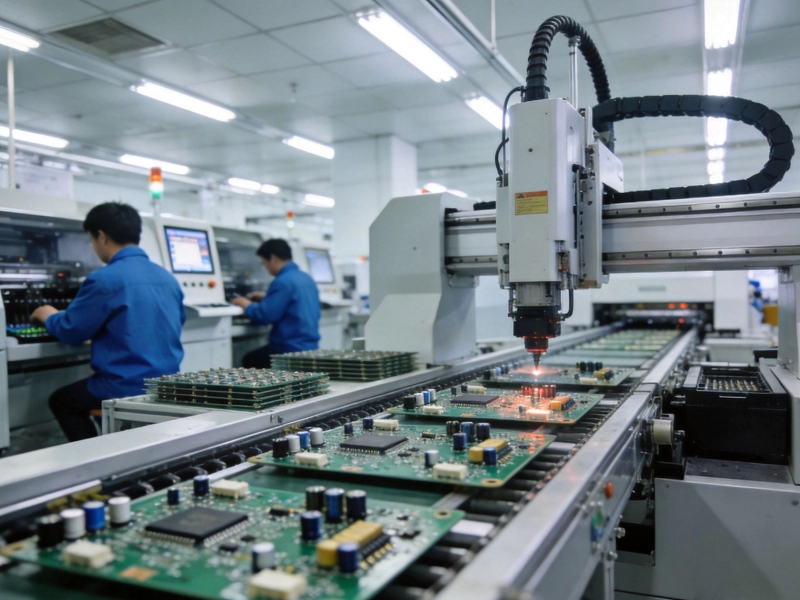
How to Get Quick-turn SMT PCB Assembly in Just 24 Hours from ChinaJune/12/2026

How to Get Quick-turn SMT PCB Assembly in Just 24 Hours from ChinaMay/29/2026
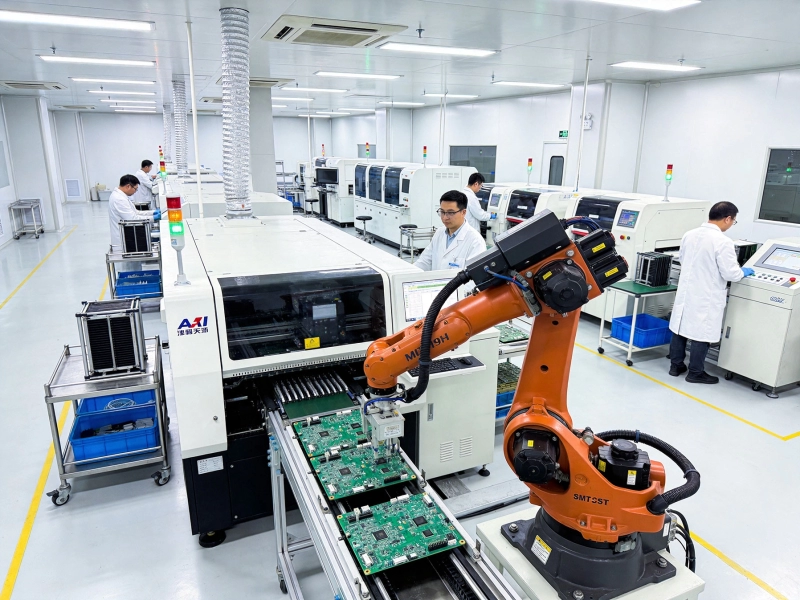
Industrial SMT PCB Assembly in China: Meeting Durability and Reliability StandardsJune/11/2026
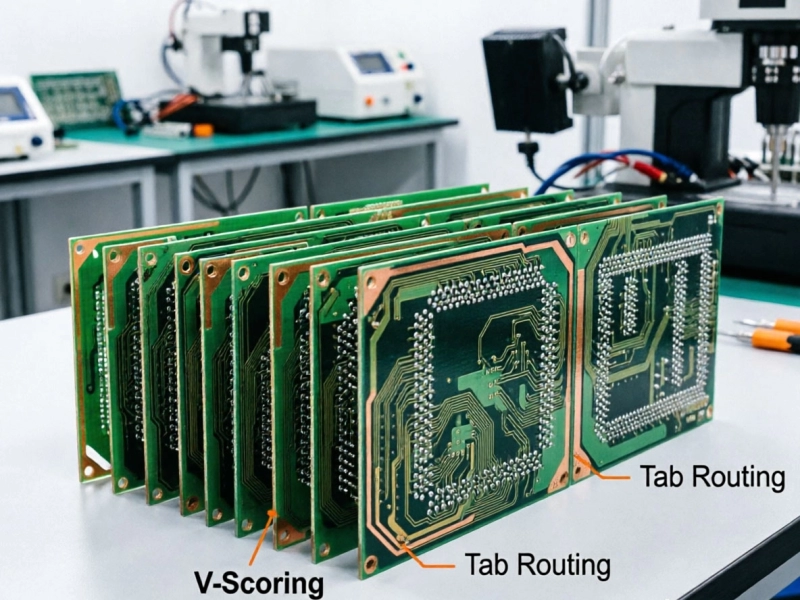
PCB Panelization Guide for SMT Assembly China: V-Scoring vs. Tab RoutingJuly/03/2026
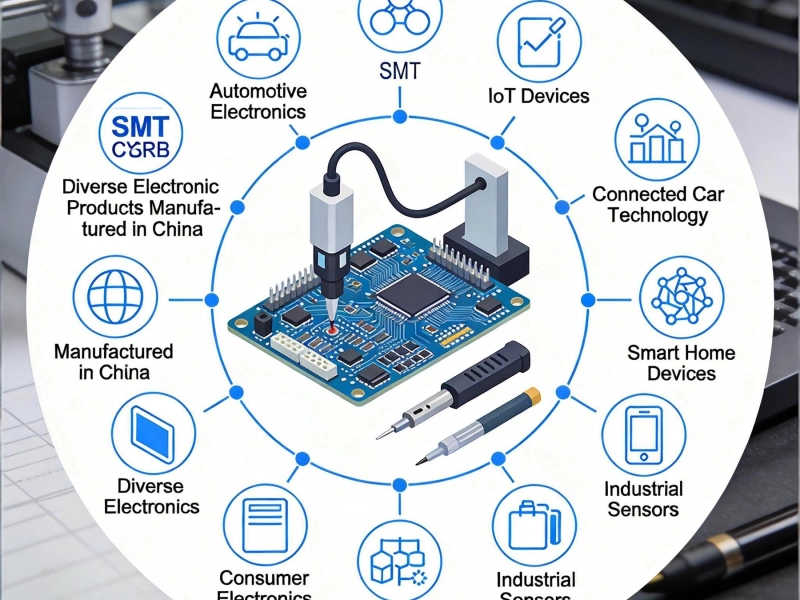
Top Applications of SMT PCB Assembly in China From Automotive to IoTMay/29/2026
Essential DFM Guidelines for SMT PCB Assembly in ChinaMay/29/2026
Why IPC Class 3 Standards Matter for Industrial SMT PCB Assembly in ChinaJuly/08/2026
Customizing SMT PCB Assembly China Applications for High-Density Interconnect (HDI) BoardsJune/22/2026